Your printer leaves a hidden code on every page you print. Here's how to see it
The code is hidden in plain sight until you dim the lights and shine a blue LED light


We often view printers as noisy, slightly irritating devices, or as glorified ink stampers that only draw our attention when they run out of toner or jam a piece of paper. What most people fail to realize is that many modern printers keep detailed information about everything it prints. In fact, almost all printers use a secret code made up of yellow dots that marks every paper back to the very device it was printed out from, according to a report from Protect Star.
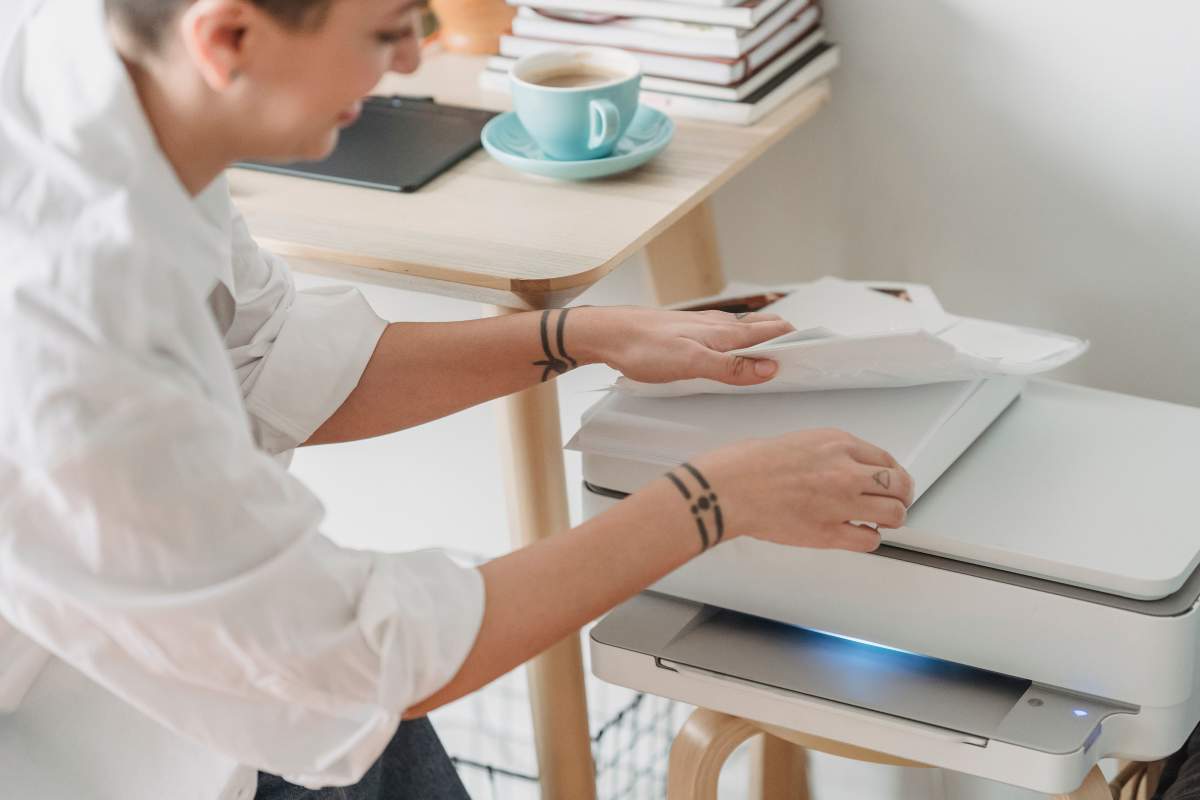
Printers are much smarter than we think
To understand this code, you need to look closely at a freshly printed piece of paper. You would notice nothing but the information on it. It's not until you dim the lights and shine a blue LED light that you see yellow specks appearing throughout the page. These specks are known as the Machine Identification Code (MIC). Each dot, which is about 0.1 millimeters in size, is spaced roughly one millimeter apart and arranged in a grid, giving specific information about the printer's serial number and the date and time of the print job.
TIL that your printer puts information in every sheet you print that will allow authorities to track any printed page back to your printer. This hidden information most likely survives scans and photos of your printed documents, allowing those to be tracked as well.
by u/theamazingjizz in todayilearned
Unique identification code
These dots act as a diary of information permanently stamped onto the paper. In fact, that is exactly why mass manufacturers like Xerox and Canon developed this technology back in the 1980s, as colored printers and copiers were becoming more affordable than ever. They developed this code so that the source could be uniquely identified. Soon, it was picked up to address counterfeits, and Xerox even obtained a U.S. patent for a system that scattered these tiny dots across the paper.

It wasn't until 2005 that it became the norm
Nonetheless, even though these early traces of this code remained internal for a while until 2005, when EFF decided that this should no longer be limited to a few models but should be spread across the world. Although there were several concerns around keeping it hidden from consumers and breaching their privacy, it became widely used over the next few years. And why not? After all, it could be traced even after the paper was shredded and became a useful tool for various agencies, especially the forensic department, as they could trace back the prints.
How does this affect a normal person?
This technology is predominantly found in laser printers, and the evidence is strongest on professional color copies. Nonetheless, even though the EFF lists only a few printers that contain this code, it does in fact warn people that "it is likely that all recent commercial color laser printers print some kind of forensic tracking code, not necessarily yellow dots."

As for inkjet and black and white printers, seemingly they are off the grid. But that doesn't mean they are completely safe; there could be other ways of using codes on them. That said, perhaps the best way to tackle this is by avoiding rather than fixing, simply because it's built into these printers, and you cannot just switch it off as per your liking.
Print security
Only about 17% of IT decision makers across Europe and the U.S. believe and are completely confident in the security of their print infrastructure, according to a survey held by Quocirca. Although this number in itself is quite concerning, what makes it even more worrying is that this is the third straight year of confidence decline from 19% in 2023 and 23% in 2022. Despite that, 70% of companies think that the situation might improve in the future.
Brand new information


The information also came to light through a Reddit post by u/theamazingjizz, and people were surprised by it. u/alexxerth asked, "I scan a paper, and the actual text barely survives, you're telling me hidden encoded messages can survive that, though?" u/Unkorked wrote, "This doesn't matter as soon as I run out of the ink they gave me with the printer, I throw it out as a new printer is cheaper than an ink refill."
More on Scoop Upworthy
A secret code hidden in a silk dress baffled people for over a century, until now
Millennials invented a secret language adults couldn’t understand — even Gen Z is lost
TikTok theory claiming secret codes on toothpaste tubes gets unbelievable response from Colgate
 Share on Facebook