Can a college yearbook photo predict your marriage? This Berkeley study thinks so
One traits could shape how people responded to them and their future relationships


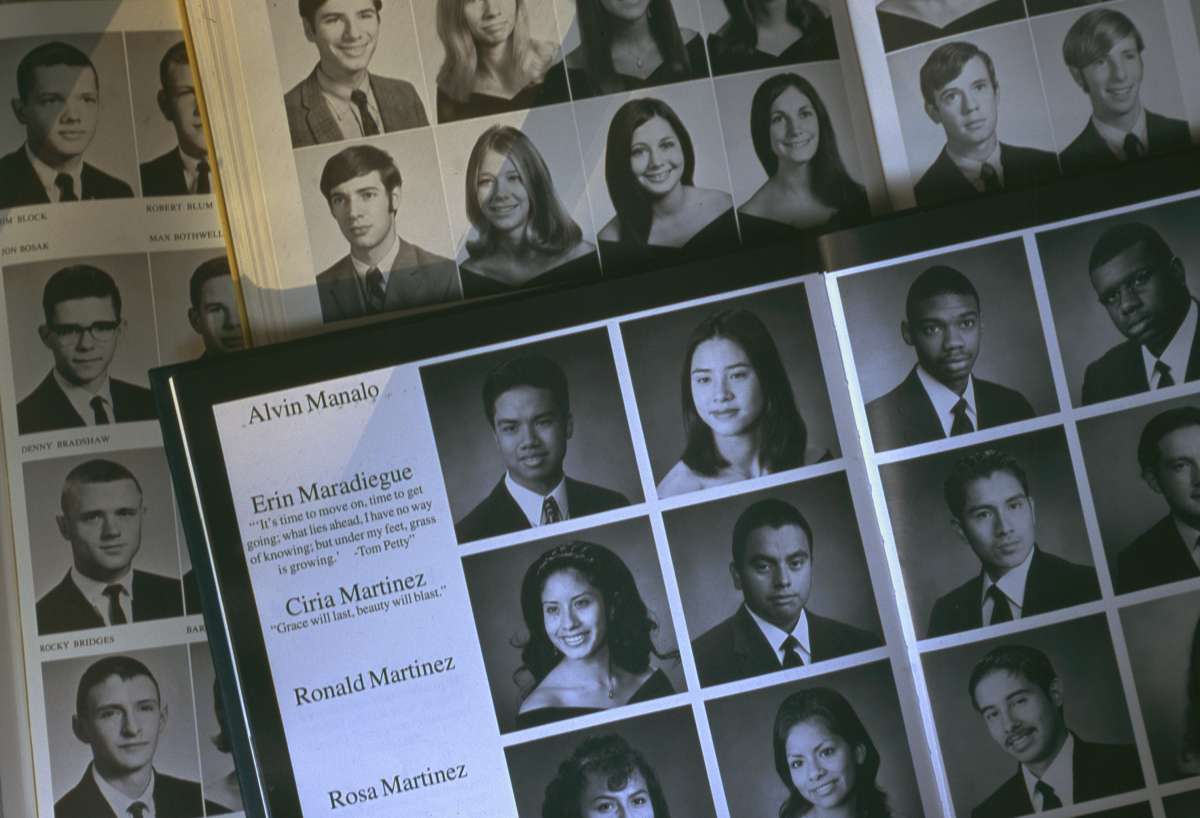
Researchers at the University of California, Berkeley, studied whether the way women smiled in their college yearbook photos was associated with aspects of their lives decades later. The study, authored by LeeAnne Harker and Dacher Keltner, was published in the 'Journal of Personality and Social Psychology' in 2001. The study examined yearbook photos of 141 women from the Mills College classes of 1958 and 1960. The women were part of the Mills Longitudinal Study and were reassessed at ages 27, 43, and 52, Silicon Canals revealed. While the study has its limitations, researchers believed the women's smiles were confessions in themselves.
The Duchenne Smile
For the study, researchers categorized the women's smiles as posed or genuine, with the latter called the 'Duchenne smile.' Science Direct described the 'Duchenne Smile' as a "smile characterized by eye constriction and cheek elevation, associated with intense joyful emotion." The main sign of a Duchenne smile was that it reached the person's eyes. When they smile, their eyes crinkle. On the other hand, a posed/fake smile looked flat around the eyes. The study found that, on average, women with Duchenne smiles later reported more stable marriages and higher well-being. But it should be noted that the study found a 'correlation' and not 'proof.' Researchers believed the smiles offered a glimpse into the women's personalities, such as being warm, positive, and comfortable around others. These traits could shape how people responded to them and their future relationships.

Not a universal result
It should also be noted that the study was conducted on a small group of women at a certain point in time. It focused on women from middle-class families who were predominantly white. Furthermore, ideas about marriage and marital satisfaction have changed considerably since the women were first photographed in the late 1950s. The findings therefore cannot automatically be generalized to men, people from different cultural or demographic backgrounds, or younger generations.

Another study tested these results
Another study conducted by Jeremy Freese, Sheri Meland, and William Irwin in 2007 tested the same idea using the 'Wisconsin Longitudinal Study.' Their group was larger and more diverse compared to the Mills College group. However, they could not reproduce the original results that Harker and Keltner did. This does not mean that because Freese's study did not produce the same results, the Mills study was wrong. Instead, it shows that the results may not work for everyone.
What smiles reveal
In the end, the main idea of the study was that our faces can reveal pieces of our personality. Even though a yearbook photo is staged and posed, a small sliver, such as someone's eyes crinkling naturally when they smile, pointed to a characteristic or trait that remained throughout their lives. However, it would be wrong to conclude that women without genuine smiles were unhappy. The researchers found a difference between the two groups, but this was true only on average and did not apply to every individual.
More on Scoop Upworthy
Groundbreaking research finds that plants are not silent and they make popping sounds
Toddlers can remember smells from the womb and it could explain why some kids hate vegetables
 Share on Facebook