Parents called her disrespectful for laughing at the worst moments — until a brain scan revealed it was never her fault
Since infancy, she had experienced sudden bursts of laughter that arrived in waves and disappeared within seconds, often followed by feelings of dread


Laughter is usually seen as a sign of happiness and joy. But for one 31-year-old woman, it became a symptom of something far more troubling. Since infancy, she had experienced sudden bursts of laughter that arrived in waves and disappeared within seconds, often followed by feelings of dread. Her parents spent years asking her to stop, believing it was behavioral, until doctors eventually discovered that the episodes were actually a rare form of seizure completely beyond her control. In a 2017 study published in Epilepsy & Behavior Case Reports, they described her behavior as a “brief mirthless laughter” that resulted from a rare condition in her brain, per an October 2025 report by Live Science.

Laughter of dread
Up until this age, the woman's condition was never investigated or diagnosed. All she knew was that each outburst of laughter lasted a few seconds, typically once a day, usually after she woke up in the morning. Each episode began with a sinking “feeling of dread” in her neck and chest, as the report describes. For a few seconds, she would have an involuntary fit of laughter during which she remained conscious. Sometimes, she would start weeping, and she had trouble breathing. Her speech was interrupted, and she had trouble swallowing. Each episode lasted for at most 2-3 minutes, and she experienced not more than one attack per day.

Family misunderstood her intentions
While she was growing up, her parents didn’t fathom that it was beyond her control. They often thought it was deliberate and a mistake in her behavioral mannerisms, not realizing what she was actually going through. Initially, even the MRI and EEG tests showed no abnormalities or unusual conditions in her brain. Later on, a repeat MRI revealed a tiny, 5 mm area of abnormality in her hypothalamus, which closely resembled “gelastic seizures.”
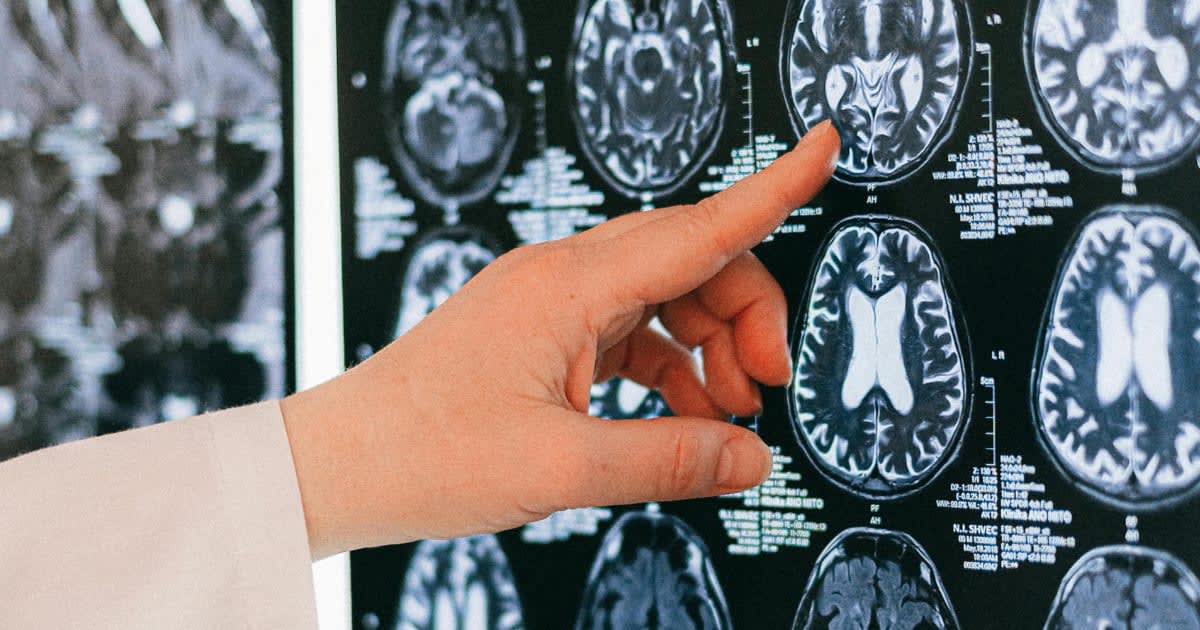
Doctors were aware that this type of seizure triggers uncontrolled laughing, giggling, or smirking, the exact symptom that the woman was experiencing. According to a report published in the Arquivos de Neuro-Psiquiatria, gelastic seizures come from the Greek word for laughter: gelastikos. Though rare, the seizure provokes uncontrollable laughing fits in the patient.
The disease of joyless laughter
The report surveyed several patients, 27 of whom reported laughing seizures, while 12 said they experienced smiling. 2 patients reported crying and laughter without mirth. Statistics shared by Epilepsy Action suggest that these seizures affect around one in every 200,000 children and young people, mostly starting in the first year of a child’s life. Symptoms include feeling flushed, lip-smacking, mumbling, fidgeting hands, increased breathing rate, and so on.
Researchers noted that this type of seizure often suggests “hypothalamic hamartomas (HH).” In the case of the 31-year-old, the doctor explained this condition as a “noncancerous lesion that occurs during fetal development.” They noted that it is a potential complex entity with a hallmark association with gelastic seizures, occasionally with other seizure types, cognitive-behavioral issues, and precocious puberty.

Her case was different
Doctors mentioned that the case of this woman was unusual because of the benign course of epilepsy. She had previously taken trial doses of anti-seizure drugs like levetiracetam and lamotrigine, but since they had no impact, they were soon discontinued. As she grew up, the episodes became shorter, less frequent, and less intense. While the majority of patients with this condition have some degree of cognitive impairment, mood disorders, or behavioral issues, she reported no cognitive defects. She, in fact, completed her university education and was working as a normal employee in a government job.
Since her attacks were constantly declining in severity and frequency, doctors suggested that no treatment or medication was required. The case, they said, “highlights the relevance of recognizing the association of gelastic seizures with HH, which can be easily overlooked on routine MRI scans, as they may be small with minimal signal change on conventional sequences.”
More on Scoop Upworthy
 Share on Facebook