Woman received a bill for cancer treatment she’d never received — a year later, she found 10 claims linked to doctors she’d never met
Prentice has two decades of experience in the insurance industry knew something was fishy.

People rely on insurance for a reason. They expect their provider to protect them when they need it most. Unfortunately for Sarah Prentice, a woman from Royal Oak, Michigan, she discovered that her medical insurance records included treatments she did not even receive. The first time she received an explanation of benefits (EOB) was in November 2025. Her insurance provider told her not to worry about it, but a year later, the same issue emerged. When Prentice investigated, she was surprised by what she uncovered. The story was covered by Kyla Russell (@kylarussellnews), a journalist for Local 4, on November 15, 2026. The video reached 69,700 views, 2,824 likes, and 132 comments.
False records
In September 2026, Prentice was sorting out her life insurance when her application was flagged. Her previous records showed that she had been treated for cancer, but she knew that was not true. Prentice, with two decades of experience in the insurance industry and a financial adviser husband, knew something was fishy, so she started asking questions.
List of treatments
Prentice told Local 4, "I started requesting the raw data." She discovered that there were 10 EOBs, and her insurance even paid some of the false claims. Prentice listed out the "treatments" and "equipment-related services" she had supposedly gotten. "It wasn't just cancer, it was CPAP treatments...I was receiving surgery out in Colorado for the lacerations to the trunk of my body. I was receiving treatment in Florida. I had just as recently as July 20, 2026, I was receiving a SARS infusion," she said.
One of the chemotherapy claims was from an Arizona doctor whom she did not recognize. She contacted the doctor's office, and staff confirmed that there were medical records that showed the provider approved her treatment. But what did not make sense to Prentice was that the billing listed Safemed, a Florida durable medical equipment company, when the provider was in Arizona. Prentice added, "I can't put a face to this doctor, even though they have something called an NPI, which is their national provider ID number.. I couldn't match the doctor." Russell also tried to match the doctor to the NPI but was unsuccessful. Prentice shared her story because she knew these false claims could impact her ability to get coverage and wanted to warn other victims.
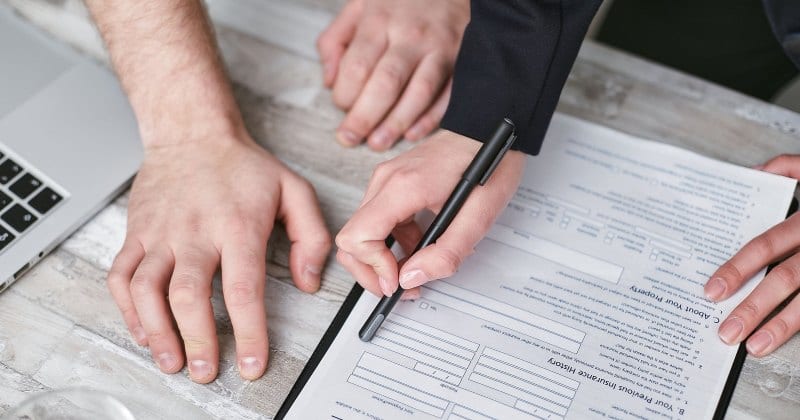
Inaccurate medical records
Sadly, Prentice is not the only person who has experienced problems with inaccurate medical records and claims. A Ricoh survey conducted by The Harris Poll found that 55% of respondents avoided seeing a healthcare provider because they would rather not handle billing errors in insurance claims. Another 73% said that the lack of efficiency while handling billing and insurance claims can have serious health implications. More than half (52%) admitted that their medical records had inaccurate information during the last five years. Prentice received 10 EOBs, all of which were false claims within a year. This shows how easily inaccurate medical records can go unnoticed and create serious problems for patients.
Paid non-existent claims
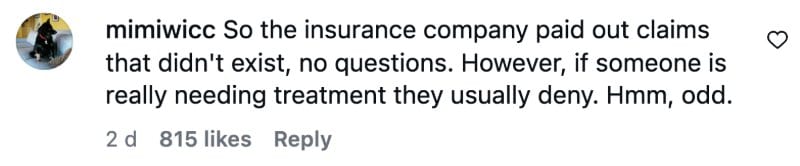
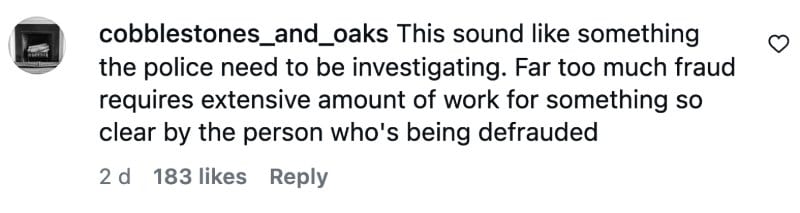
Some viewers shared that something similar happened to them in the comments section, while a few others suggested that Prentice file a report. @edwardmatthewsayers shared, "This same thing happened to us when my wife had our son. All kinds of providers said they saw her and/or gave care. St. Elizabeth was absolutely horrible for this, as most doctors are actually private clinics to reduce liability to the hospital." @msmelissa04 asked, "Sounds like the providers need accountability. Why is it on the consumer to watchguard the professional, accredited criminal?"
More on Scoop Upworthy
 Share on Facebook