Widow found Martin Luther King’s final ‘I have a dream’ draft in her husband’s desk drawer and put it back. Now it could fetch $10 million
'Now that I’m older, I’m wiser. It just seems like something that important ought to be shared,' Clayton said.

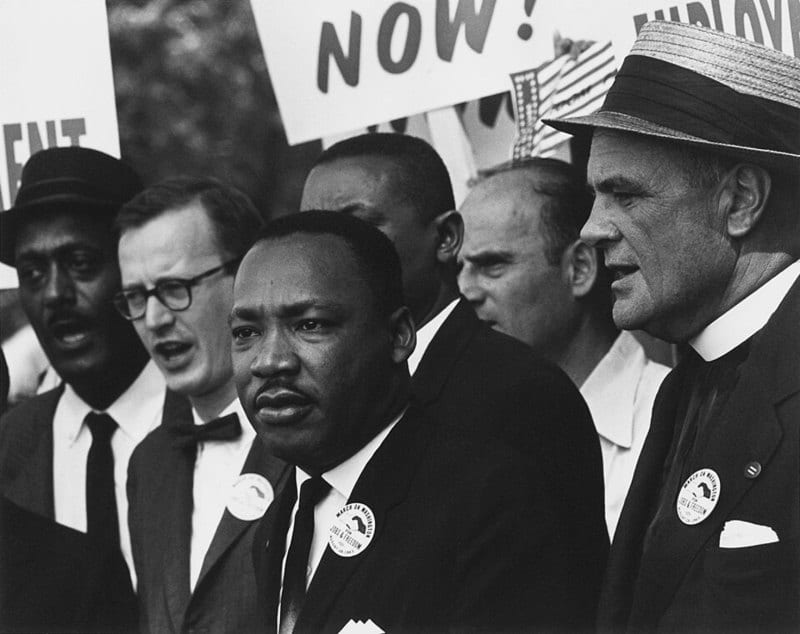
On August 28, 1963, more than 250,000 people gathered at the Lincoln Memorial to hear Martin Luther King Jr. deliver the iconic “I Have a Dream” speech, whose words have since echoed through the annals of history. For decades, scholars believed King’s handwritten final draft of the speech had been lost. In the late 1990s, civil rights leader and philanthropist Xernona Clayton opened her late husband’s desk drawer and found this draft. She knew the pages were important, but not that they were the only known handwritten final draft, so she returned them to the drawer. Years later, she realized that the rest of the world needed to see the draft too, so she pulled it out. Now the same draft is about to fetch over $10 million at Christie’s auction house, according to a November 9, 2026 report by The New York Times.
Discovery by chance
Decades after Edward Clayton’s death in 1966, Xernona found the pages tucked inside an envelope labeled “speech” among papers in his desk. nestled among other papers in his desk drawer. “He saved everything,” Clayton said, referring to her husband. When she first stumbled upon it, she knew that it was an important document related to the “I Have a Dream” speech; she kept it back for the reason of not wanting to disrespect King’s memory by selling or displaying it.
She changed her mind
Years later, she changed her mind. “Now that I’m older, I’m wiser. It just seems like something that important ought to be shared,” Clayton told the New York Times. In 2024, she shared the pages with her financial manager, who worked with the Christie’s team to identify it as the only known original draft of the famous speech. When Christie’s manuscripts specialist Peter Klarnet first saw the seven pages of the draft, he was struck with disbelief, according to a statement.
'Universally important'
In his 30 years of working with manuscripts, Klarnet had handled everything from important letters from physicist Albert Einstein and the U.S. founding fathers—and even a printed draft of the original U.S. Constitution. But none compared to this draft. "I have never had the privilege and the honor to handle something so universally important, not just to our nation's history but to world history," Klarnet said. The draft vividly captures the fateful night when King scrawled it down on the paper to be read the following day.
A fateful night
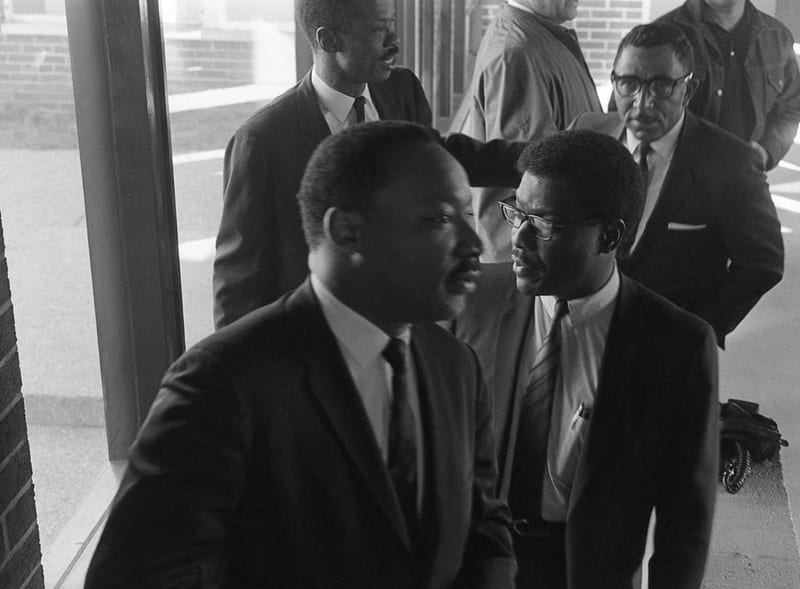
It was a late night on August 27, 1963. As the Smithsonian describes, King was huddled with a group of his closest advisors in the lobby of the Willard Hotel in Washington, D.C. They were drafting King’s closing remarks for the “March on Washington,” set to start in just 12 hours. As the night passed, King eventually asked to retire from the group. "Okay, brothers,” Clarence B. Jones, an activist and speechwriter for King, recalled him saying. “Thank you so much, everybody, for your suggestions and input… I am now going upstairs to my room to counsel with my Lord.”
Up until 4 am
Sitting alone in his suite, King stayed up until 4 am, writing and revising his speech on a yellow notepad, scribbling in blue ink. The draft also includes his edits and cross-outs, along with a small brown smudge that could be a coffee stain, per CBC, or a “rusted ghost of a paper clip,” per the Times. Lerone Martin, one of the scholars who reviewed the discovery, was sent travelling back in time when he saw the draft. "It really puts you in the moment, almost puts you into the room with him as he's wrestling with these ideas and preparing to make what he knows will be one of the biggest speeches of his life," said Martin, the director of Stanford University's Martin Luther King Jr. Research and Education Institute, told As It Happens host Nil Köksal, per CBC.
To be seen by the entire world
The draft doesn’t contain the speech’s most famous refrain—"I have a dream"—because it was probably improvised on the spot, but it includes the closing remark “Free at last.” Per the Smithsonian, the handwritten manuscript is nearly identical to the final, typeface draft King carried with him to the lectern, a copy of which is currently on view at the Smithsonian's National Museum of African American History and Culture (NMAAHC).
The pages of this yellow draft will be exhibited at Christie’s New York at 20 Rockefeller Plaza, starting from Dr. King's birthday, January 15 to 21, 2027. On January 22, they will be sold in a single-lot sale, the proceeds of which will go to philanthropic organizations including the Xernona Clayton Foundation and the King Center in Atlanta, which was founded by King’s wife and fellow civil rights activist Coretta Scott King.
The Christie's press release also noted, "Prior to its moment at Christie's, the document will be publicly displayed for the first time at the National Center for Civil and Human Rights in Atlanta from November 16 to 22, and then in Chicago at a later date to be determined." Looking back on the discovery, Clayton remarked, “I’m just glad I looked at the drawer. Now, the world will have the opportunity to see those words of wisdom that continue to inspire hope, freedom, and the pursuit of equality.”
More on Scoop Upworthy
Julia Roberts reveals the surprising role Martin Luther King Jr. played when she was born
A 30-year-old letter reveals Princess Diana's unfulfilled wish for her boys
 Share on Facebook