Scientists studied the moon in Van Gogh’s ‘Starry Night’ against the 1889 sky — and found the accepted date may be off by a month
'I was standing where Vincent had stood 130 years earlier,' noted lead author Elijah Jeong-hyun Kim.

For more than a century, experts have debated how much of Vincent Van Gogh’s The Starry Night came from imagination and how much reflected the real sky outside his asylum in France. Now, a team of astronomers says the heavens depicted in the masterpiece may offer another clue — including evidence that its accepted June 1889 date could be off by about a month. Multiple news channels, including The Guardian and @todayshow, are now breaking down the research. TODAY posted their news clip on October 24, 2026, and it has gathered over 12,500 likes and 456,000 views.
A misdated masterpiece
For decades, experts agreed Van Gogh painted the masterpiece in mid-June 1889. That timeline came from a letter he sent his brother Theo, where he mentioned "a new study of a starry sky". However, a research team in South Korea decided to check the math. They mapped out the view right outside Van Gogh's window in Saint-Rémy-de-Provence. What they found was surprising. They found that the celestial arrangement, particularly the thin crescent moon, did not fit comfortably with the traditional mid-June dating! By tracking the position of the waning crescent moon, Venus, and the Hyades star cluster, researchers realized that the researchers concluded that a late-July sky offered a closer match than the traditionally accepted June timeframe.
The 1889 mystery
To solve the puzzle, the team used advanced forensic astronomy software to recreate the dawn sky for every single day of June and July 1889. They systematically analyzed the geometry and statistical alignment of the stars. Of the possible dates identified, July 22, 1889, provided the closest overall match to the celestial arrangement the researchers reconstructed. "I was standing where Vincent had stood 130 years earlier," noted lead author Elijah Jeong-hyun Kim, a doctoral candidate at Kyung Hee University's School of Space Research and CEO of South Korean telescope company SLLAB. "To bring the question into science, which needs quantitative data, we had to measure the degree of resemblance between the star patterns in the painting and the real sky, using shape geometry and statistics."
Museum experts object
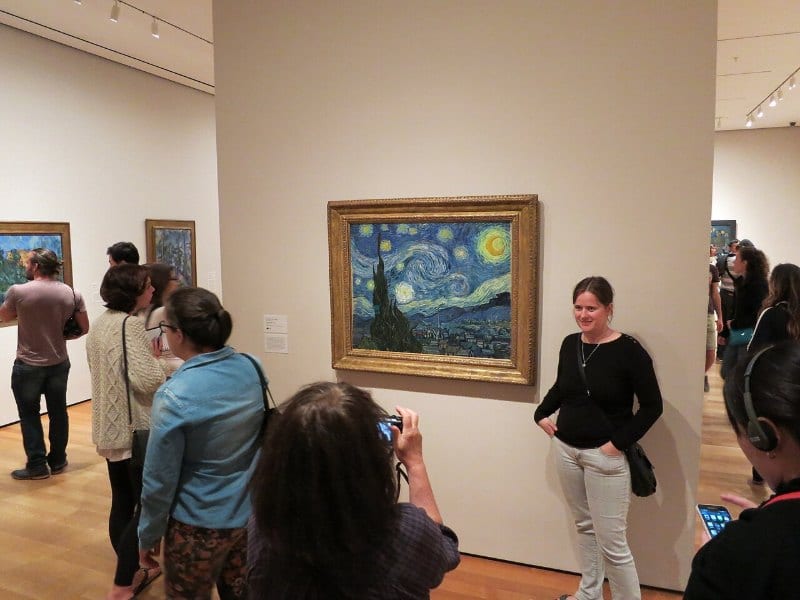
If the researchers are right, the painting may have drawn more directly from Van Gogh’s observations of the real sky than some interpretations have assumed. However, the revelation has sparked a fierce debate within the art world. Experts at the Van Gogh Museum in Amsterdam pointed out that Van Gogh had a major breakdown around July 22 that stopped him from painting for weeks. They also noted he sent a sketch of the painting to his brother earlier that month. "Van Gogh was not concerned with exact likenesses," a museum spokesperson explained. "The positions of the celestial bodies depicted can therefore not form a reliable basis for dating the work."
Why iconic masterpieces matter
American audiences remain deeply captivated by historic art discoveries like this. Findings from a 2022 report published by the National Endowment for the Arts reveal that roughly 18% of U.S. adults visit an art museum or gallery "in person during the prior 12 months." Millions flock to see iconic masterpieces like The Starry Night in person. On top of that, official economic data released by the U.S. Bureau of Economic Analysis shows that arts and cultural economic activity accounted for 4.2 percent of GDP or $1.17 trillion, in 2023, underscoring the broader economic scale of the country's arts and culture sector.
'What if he was just using imagination?'
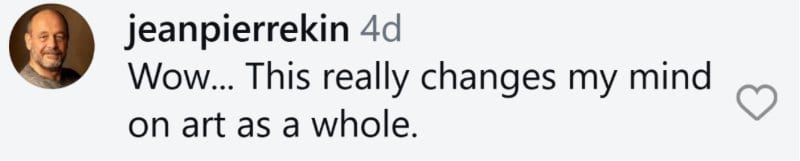
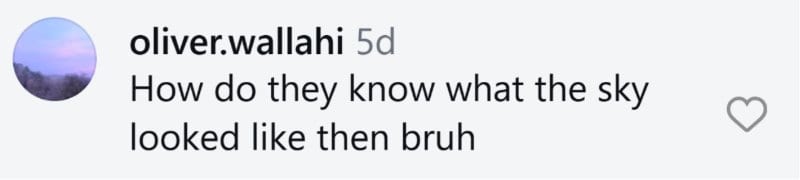
Netizens had plenty to say about this. Some users openly mocked the entire premise of testing artistic genius through scientific modeling, questioning whether scientists were overanalyzing what was simply creative expression. Others pointed back to historical letters and asylum documents to argue that the team was ignoring existing biographical facts. User @lenyardo asked, "How do they know and why do they even care?" Meanwhile, user @dekat12 simply wondered, "What if he was just using imagination?"
More on Scoop Upworthy
 Share on Facebook