Heatwaves have an 'X-ray' effect and are revealing 18th-century gardens around Britain
Lisa Dowd calls them 'a time capsule that's been opened by this scorching summer'

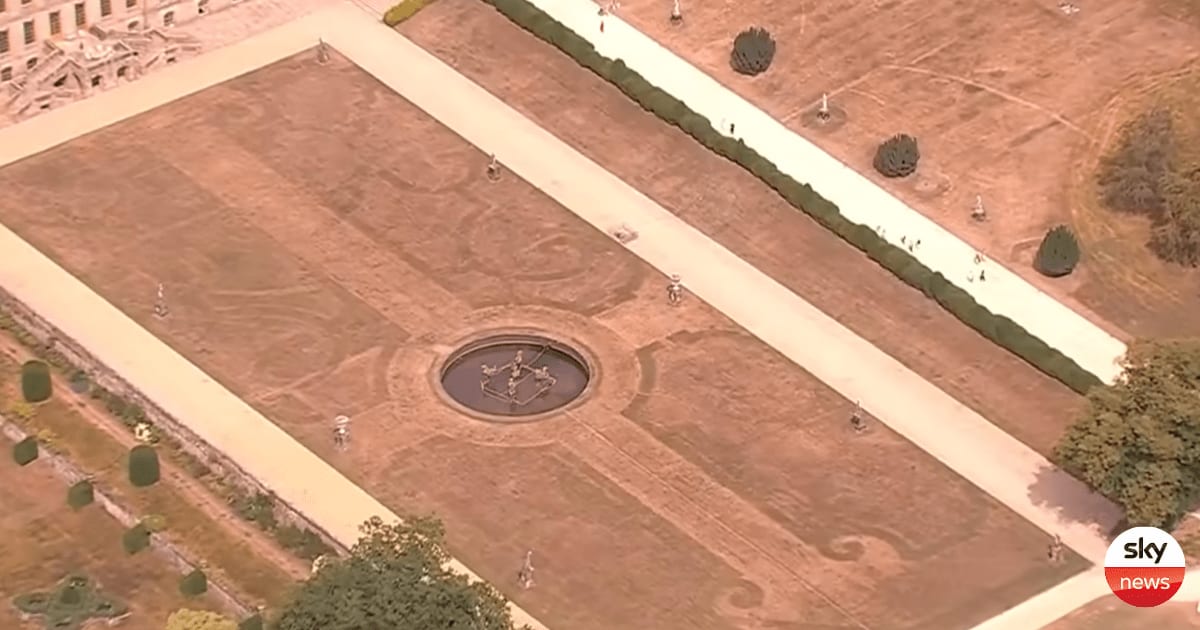
While people in the UK are complaining about the heatwaves, Lisa Dowd of Sky News sees them in a different light. Recently, traces of old gardens and buildings were exposed and coming to light because of the summer heat. Dowd calls them "a time capsule that's been opened by this scorching summer." Several stately homes and gardens across the UK revealed intricate designs as old as the 1500s. The video was shared on August 16, 2026 and it received over 240,000 views, 2,600 likes, and 244 comments.
Home of the richest woman in England
For years, these buildings and gardens remained hidden until recently. A village that was lost during the 1970s has emerged at Rutland Water. The villagers left their homes to make way for the reservoir. Almost six decades later, the foundations of the homes of Nether Hambleton can be seen again. Another piece of history that emerged was at the Elizabethan Mansion built by Bess of Hardwick in the 1500s. Elizabeth Shrewsbury, a.k.a. Bess, was one of the wealthiest women back in the day. Her garden specifically was magnificent! The parched grass revealed the outline of former flowerbeds arranged in the shape of her initials, 'E. S.' They were a "homage" to her.
X-ray of the ground
A similar hidden garden layout, known as the Great Parterre, emerged beneath the scorched South Lawn at Chatsworth House. While the house and garden were first built by Bess of Hardwick and Sir William Cavendish in the 1500s, this swirling 17th-century design came much later. It was created for the 1st Duke of Devonshire around 1699 before being covered over and replaced with a new design about 30 years later. Dowd said, "The heat has had, I suppose you'd call it, a kind of X-ray effect on the ground, with more hidden history being revealed elsewhere too." However, this is not the first time the garden has been exposed.
During the hot and dry spells in 2018 and 2022, the same markings appeared on the parched grass. A spokesperson explained how it happens to the news outlet, "The grass that was laid to replace the flowerbeds and paths has shorter roots, so it burns more quickly when temperatures are high and dry, creating a contrast and temporarily revealing the swirling patterns of the first Duke's original garden underneath."
World War remnants
Another place where people could see "forgotten gardens" is at Blenheim Palace in Oxfordshire. Relics from the two World Wars were discovered as well. Practice trenches from World War I have emerged in Conwy, Wales. They were usually hidden from sight, but the heat has uncovered everything. Similarly, outlines of huts that were built during World War II have emerged in Dinefwr Park in Carmarthenshire. The huts were used as a hospital and were later turned into a prisoner of war camp.
Thank you, hot weather
Dowd was not the only one impressed by traces of history reemerging in the summer heat. Andy Mills, the head gardener at the Unesco World Heritage site, spoke to the BBC, in reference to Blenheim Palace, and said, "The footprint of it has appeared out on the lawn, and it is absolutely fantastic - it's a huge structure, it's just massive. We know it's there, we know it's under the ground, we know the archaeology is there, and it's just one of those happy coincidences of this very, very hot weather that these things appear."
'Crispy grass reveals many secrets'


Netizens were impressed by all the gardens and designs that are exposed by the heatwave. @Dustshoe wrote, "As was said by some little-known-today English novelist, the past is a foreign country; they do things differently there." @artboxfashion4042 added, "Crispy grass reveals many secrets."
More on Scoop Upworthy
'Time traveling' man shares hilarious 'selfies' celebrating historical events and people
This historic 3-story home can be yours for $1. There’s just one catch: you have to 'move' it
75-year-old letter from a coal mine owner leads to the discovery of a priceless mineral
 Share on Facebook