This Janet Jackson song made laptops crash so often that it became a cybersecurity case
The song didn't infect computers. It simply hit the wrong frequency.


When someone queues up a track on your laptop, you expect a few minutes of good music. The thought of a song crashing your laptop never crosses your mind. Yet, that is precisely what happened when people tried to play Janet Jackson's 1989 hit 'Rhythm Nation' on certain Windows XP laptops. The bizarre flaw was eventually documented as a hardware vulnerability and even received a CVE designation years later, as reported by PC World on 29 April 2025.
A bizarre bug report
When an unnamed computer manufacturer reached out to Microsoft about a baffling hardware failure, product support teams assumed it was a standard software glitch. However, that wasn't the case. Instead, they were dealing with a mystery that defied basic troubleshooting logic. Microsoft engineer Raymond Chen recalled how a colleague on the Windows XP support team first investigated the anomaly, where playing the music video for Jackson's 'Rhythm Nation' consistently caused certain laptops to freeze up and crash unexpectedly.

Music that shattered systems
Nonetheless, the investigation took an even weirder turn when engineers tested the track in a room full of computers. They discovered that playing the video on one didn't just kill that specific machine. On the contrary, it instantly knocked out nearby laptops made by competing brands as well. "Playing the music video on one laptop caused a laptop sitting nearby to crash, even though that other laptop wasn’t playing the video," Chen said. The finding suggested the issue wasn't software at all but something physical.
Science of resonance
Engineers eventually traced the destructive glitch back to the physics of sound and acoustic vibrations. As it turned out, the 5400 RPM hard drives inside those Windows XP models possessed a specific natural resonant frequency. Every object has a natural resonant frequency—the frequency at which it vibrates most efficiently when exposed to external vibration. But because 'Rhythm Nation' contained audio frequencies that matched the drives' resonant frequency, at high enough volume, it caused the disks to vibrate too much, resulting in a crash. It was quite similar to a singer's voice shattering a wine glass.

Silencing the sound
To solve Jackson's song crashing hard drives, the laptop manufacturer developed a clever workaround built directly into the machine's sound pipelines. They engineered a custom audio filter designed to detect and silence that exact resonant pitch during playback. This ensured that future users could play the track without crashing either their own laptop or nearby machines. As for Jackson's track, it cemented its legacy in digital history. Decades after Windows XP was phased out, cybersecurity researchers officially archived the acoustic flaw, assigning it a designation as CVE-2022-38392.

HDDs are dropping
Fortunately, the issue has little relevance today because most modern laptops no longer rely on mechanical hard drives. The demand for high-performance portable devices such as smartphones and laptops is fueling the growth of Solid State Drives (SSDs). According to a survey published on Grand View Research, SSDs account for almost 46% of the storage market today. Meanwhile, HDDs only hold a 26.6% market share, something that is only going to decrease further in the future given their slower speeds and other vulnerabilities.
This is a one-of-one issue

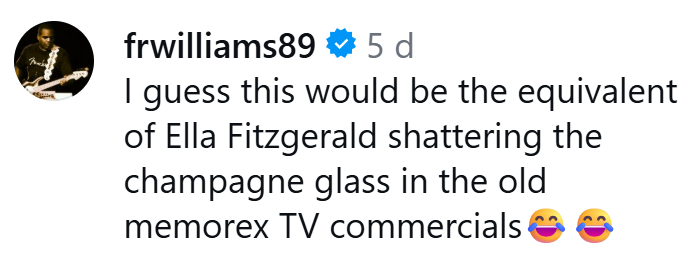
Nonetheless, people were amazed and baffled at the same time upon hearing this news. They took to the comments of a post regarding this issue on 20 July 2026 by Jon Rettinger (@jonrettinger) to express their feelings. @khariclemens wrote, "Now I know exactly what kind of music to send to my haters." Meanwhile, @oniwura recalled, "Reminds me of Wizkid's debut album. If you try ripping the music from the CD, it will spoil the DVD Drive on an HP DV5 Laptop Computer."
More on Scoop Upworthy
In 1996, a photographer driving to see his GF accidentally captured the world's most viewed image
'Ask Jeeves': America's internet helpline shuts down after 30 years
Sound therapists claim this 8-minute song reduces stress by 65%
 Share on Facebook