Model’s six-second trick makes audience kinder towards her and exposes a harsh truth about humanity
The popular question for the celebrity supermodel was, 'What knowledge could she possibly share?'


American supermodel Cameron Russell is known for her beauty, but her wisdom is even more impressive. The woman showed up to give a TED talk in a mini dress and was immediately met with confused stares and judgmental looks. The clip shared on YouTube captures the woman revealing how much “tension” there seemed to be around her first appearance. As she shared glimpses of her shoots and runway looks, the popular question on everyone’s mind was, “What knowledge could she possibly share?” But Russell turned that mindset around in a matter of seconds. Her trick not only made the audience view her kindly but also exposed a harsh truth about humans and how we perceive body image.
As Russell showed her various outfits onscreen, the model gave a short background about her career while admitting that her current mini dress didn’t feel like the right fit. “Luckily, I brought an outfit change,” she remarked. She started with a wrap-around skirt while saying, “I'd also note that I'm quite privileged to be able to transform what you think of me in a very brief 10 seconds.” Leaving the audience to ponder, she continued to put on a sweater and traded the stilettos for simple ballerinas. Suddenly, she looked different. She shared a picture of herself from a runway in frills and shine and makeup, and as the viewers gazed at her onstage, it felt like they were two different people.

“Image is powerful, but also, image is superficial,” Russell confidently declared. She then revealed that she already changed people’s mindsets about her just with an outfit change. “There's very little that we can do to transform how we look,” explained. Russell added that though our appearance might be “superficial and immutable,” it does leave an impact. When she first walked across the stage with her dress and heels, the first impression people had was of her as an underwear model, with seductive poses, bikinis, and whatnot. Before they knew it, an outfit change led to a view of a confident woman delivering a TED talk. Russell noted that though she’s a model, she is a confident and honest woman first.
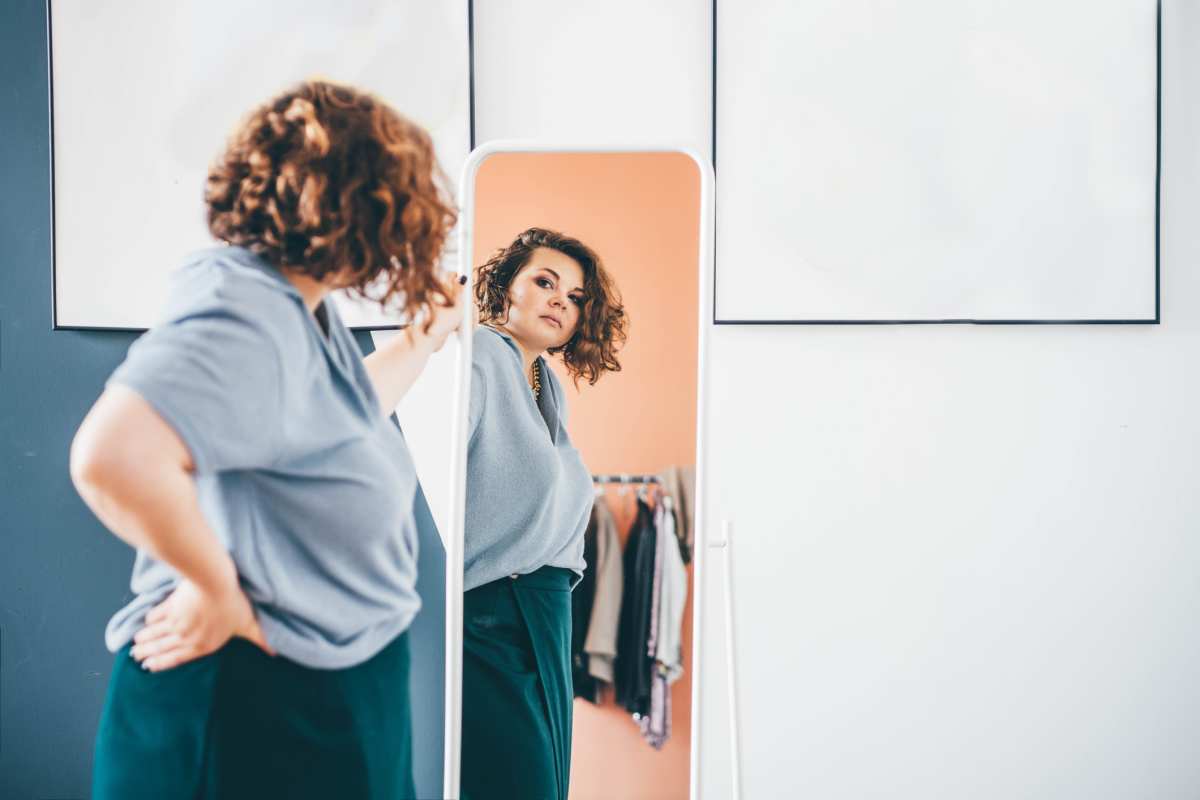
Starting as early as 16 years old, Russell shared how a group of stylists and professionals “constructed” her image to make her the cover page model that she was. She shared her authentic pictures and the ones from the shoot and pointed out the stark differences. The sleek hair, toned body, and makeup were not a part of her; it was just an image. And that’s the image the world has been holding up as successful, beautiful, charming. Sharing the lesser-known facts, the supermodel revealed, “In 2007, a very inspired NYU Ph.D. student counted all the models on the runway.” The results were shocking. Less than 4% were “non-white.”
Society has been constantly triggering the idea that color, shape, and size matter to an unrealistic level. Sharing more data, Russell noted that out of the teenagers frisked in New York City, 86% of them were Black and Latino. Are they suspicious, or are their skills questionable only because of their appearance? And the teens in the U.S. are struggling more than ever because this harsh reality has been wrapped into a normal for them. 53% of teens don’t like their bodies; this number increases to 76% by the time they’re 17 and older because they have grown up believing a slim or hour-glass figure is everything. According to data from Statista, teens and even adults are struggling because of a perceived body image. 46% of youth aged 18 to 24 reported negative effects on well-being due to body image.
Though the percentage is lower as we age, even those 65 and above are struggling. Another study on 30 women between 18 and 65 showed that even they struggle with their appearance because the standard is set by unrealistic media portrayals and cultural norms. It was learned that “thinness and body lines” are markers of beauty. Many stereotypes even push women to believe that being “thin” means you’re not just beautiful but also “healthy.” Though the beauty industry heavily relies on this, we don’t have to. Russell noted the need to first accept that our perception is not realistic. “If there's a takeaway to this talk, I hope it's that we all feel more comfortable acknowledging the power of image in our perceived successes and our perceived failures.”
More on Scoop Upworthy
Woman sees male colleagues discussing her looks on video call — her bold response set them straight
Little girl refuses to wear her bonnet until she sees herself on TV: 'She looks like me'
 Share on Facebook