America's favorite snack is messing with your attention span, new research finds
Scientists also discovered that eating a healthy diet does not cancel out the negative effects


Eating processed foods may be the easier option than preparing a full, healthy meal, but it has long-term side effects. Published on April 24, a study conducted by Monash University in Australia has found a direct link between consuming processed foods and the risk of getting dementia. Analyzing the "the diets and cognitive health" of 2,100 middle-aged (or older) Australians, researchers found that a global 'favorite snack' is rapidly attacking our attention span.
A bag of chips
As per the study, eating processed foods not only increases the risk of dementia, but it also increases the risk for cardiovascular disease, type 2 diabetes, and obesity. The study noted that a 10% increase in the consumption of ultra-processed foods (UPFs), which roughly equates to one bag of chips, causes a drop in attention span in middle-aged and older adults. A few other examples of UPFs include frozen meals, lunch meats, sodas, cookies, crackers, jerky, hot dogs, and more. UPFs often have ingredients like hydrogenated oils, sweeteners, chemical-based preservatives, artificial colors, and flavors.
Monash.edu reports, "The participants of the study consumed roughly 41 per cent of their daily energy from UPFs, closely mirroring the national Australian average of 42 per cent."
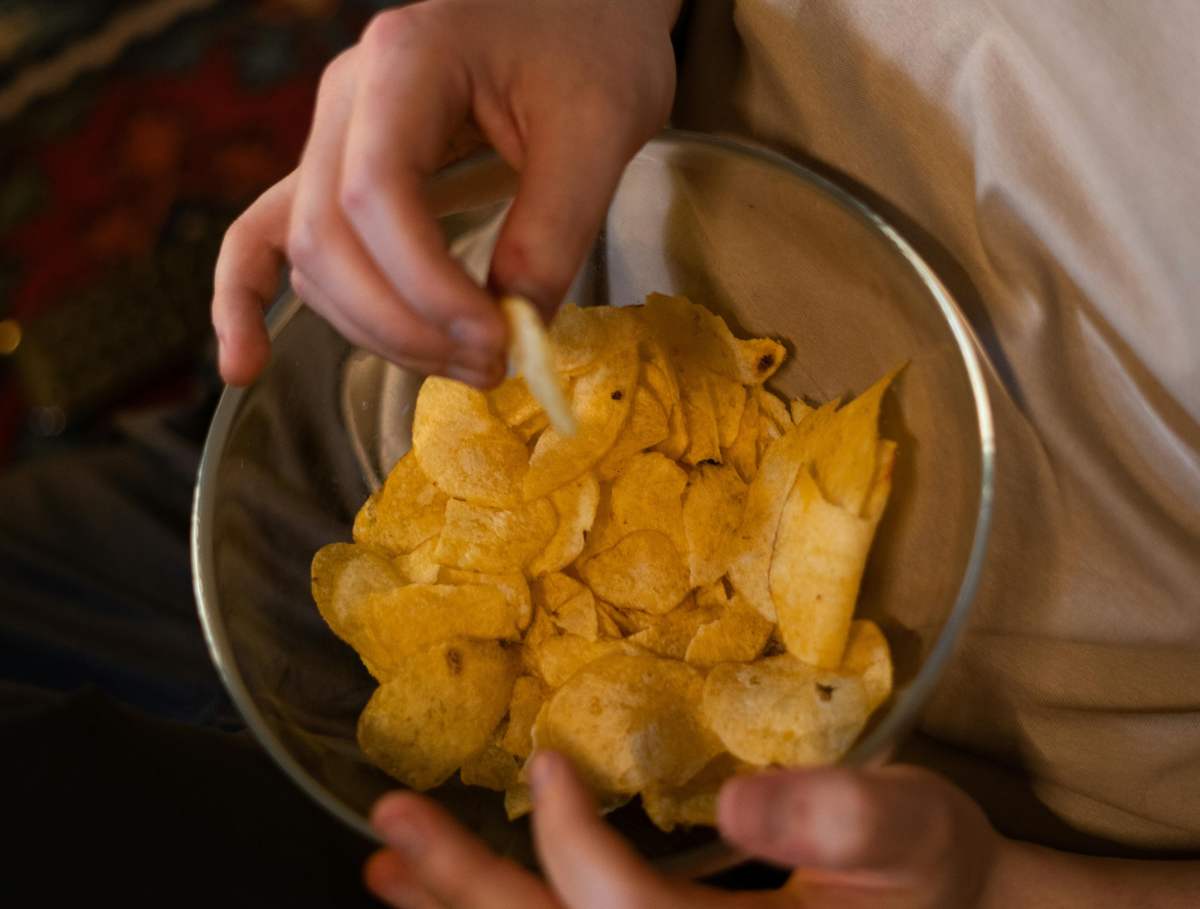
Healthy food does not cancel out junk food effects
During the period of the study, the 2,100 people were also put on a healthy Mediterranean diet, and scientists discovered that eating a healthy diet does not cancel out the negative effects if the individual continues UPF consumption. The benefits of a healthy diet are not enough to undo the effects of processed foods. Dr. Van Tulleken, a public health expert, said that UPFs have overtaken tobacco as one of the leading causes of early death today. He added, "There is a decade of evidence now that is extremely clear that it is ultra-processed food that is responsible, not just for pandemic weight gain and obesity, but also for a long list of other health problems."
Snack consumption in the U.S.
Research published in JAMA Neurology found that higher intake of ultra-processed foods was associated with a 28% faster rate of overall cognitive decline and a 25% faster decline in executive function. Another study conducted by Monash University was done on middle-aged and older adults and found that more than 75% of the food supply in the U.S. is ultra-processed. If consumption of UPFs starts from a young age, younger generations could face greater risks. Replacing UPFs with whole foods or natural foods is a great start.
Dr. Barbara Cardoso, the lead author of the study, said, "For every 10 per cent increase in ultra-processed food a person consumed, we saw a distinct and measurable drop in a person’s ability to focus. In clinical terms, this translated to consistently lower scores on standardized cognitive tests measuring visual attention and processing speed."
More on Scoop Upworthy
Doctor switched to an 80% ultra-processed diet for 30 days and the results left him stunned
Food writer shares simple 'third grader rule' that can make healthy eating much easier for anyone
Here are the surprising results a dietitian got after eating ultra-processed food for a whole month
 Share on Facebook