Scientists want to scrap leap seconds. Here’s what it means for your clock
This change to continuous UTC is scheduled to take effect on May 20, 2027

How do we measure time? By counting 60 seconds in a minute or by tracking Earth's rotation? While both seem closely connected, they don't always match. That's because Earth doesn't rotate at a constant speed. Some days it spins slightly faster, while on others it slows down. For decades, scientists have tried to keep our clocks in sync with Earth's rotation by adjusting them with leap seconds. However, these unpredictable changes have made timekeeping increasingly complicated. Now, scientists have decided to stop making these adjustments and allow the clocks to run without interference. Now, they will wait until a larger adjustment becomes necessary, according to a 2026 update from the International Bureau of Weights and Measures (BIPM).

UTC and UT1
The world’s standard timescale operates on Coordinated Universal Time (UTC). It is the time that people see on their phones, computers, boats, or other devices, and it runs behind navigation systems like these trackers. It is calculated via a weighted average of the time based on the operation of atomic clocks, per Scientific American. For years, scientists, diplomats, and timekeepers have been making vigorous efforts to synchronize this time with the time that results from the angular rotation of the Earth (UT1). However, one unexpected problem has complicated their efforts.
Earth’s spin isn’t perfect
Earth is an independent entity, so its rotation doesn’t always follow the timing of atomic clocks. Given the melting of polar ice, the inconsistent rising and falling of ocean tides, the shifting jet streams, and the restless tango of natural forces in the planet’s core, it continues to influence the speed and wobbliness of its rotation. Consequently, our clocks may no longer sync with Earth’s rotation, and UTC may differ from UT1.

Against the moody planet
This flippant variability in Earth’s rotation leads to different rotational speeds at different times. For instance, shortly after UTC was first established in 1960, scientists noticed that the Earth’s rotation was slowing down. It was not keeping pace with the atomic clocks. At the time when an asteroid wiped out the dinosaur population, a day lasted about 23 and a half hours. Since 1972, scientists have added 27 leap seconds to ensure that UTC remains aligned with astronomical time. In the past decade, however, the moody Earth has been getting speedier in its rotation.
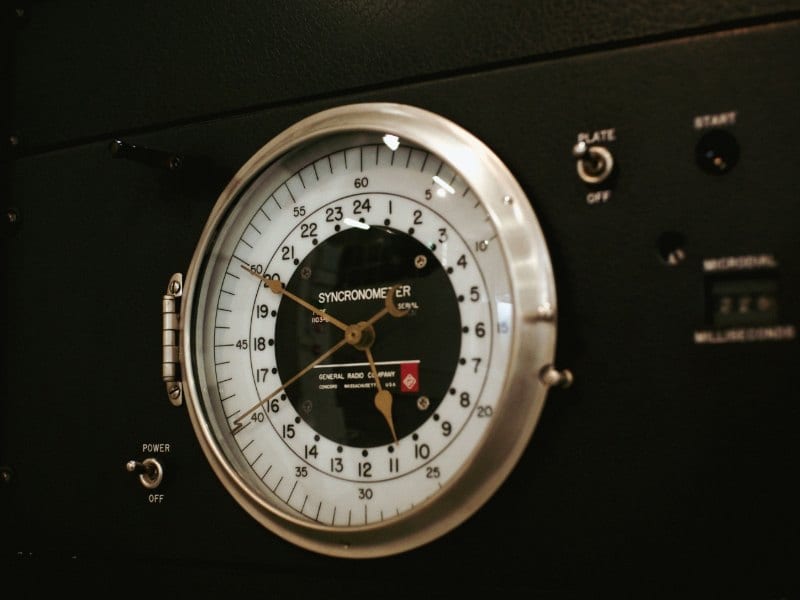
Pressure mounting up
Since leap seconds complicate matters for financial markets, data centers, and other industries that rely on precise timing down to milliseconds, organizations have been under increasing pressure to scrap their addition, per Al Jazeera. “Every leap second is a major source of pain for people who manage hardware infrastructures,” engineers at Meta said in July 2022. Taking the cue, scientists decided to subtract the leap second instead of adding it each year.
In March 2025, at its 28th meeting, BIPM and the General Conference on Weights and Measures (CGPM), along with delegates from 69 countries, estimated that the probability of a negative leap second will increase rapidly in the near future, reaching a 30% probability by 2035. However, this negative leap second wouldn’t come without any risks.

'Mini Y2k'
Engineers say a negative leap second would be like a “mini Y2K” event. It would suddenly send the entire world one second back in time, which could unleash chaos in the digital infrastructure. The IoT (Internet of Things) technologies, the smart grids, virtual services, multi-sensor systems, satellite navigation, telecommunications, and all of trade would suffer. Since software programs are not designed to go back in time, they might crash, according to a 2024 study published by Nature. With positive leap seconds, in 2012, Reddit and LinkedIn crashed. Qantas flights were hit with delays. Servers froze. Systems went offline. With negative leap seconds, it could be worse.
Keeping in mind these challenges, agencies decided to continue UTC running for decades while letting the Earth’s rotation go on until the difference reaches 3,600 seconds, or one leap hour, which will then be balanced by the scientists. “After 30 years of debate, the leap second is making way for the leap hour,” said Dr. Setnam Shemar, principal scientist in the time and frequency department at the UK’s National Physical Laboratory (NPL), as per The Guardian. “This will reduce the risks to the systems and national infrastructure that depend on accurate time while still preserving the fundamental link between our global time system and the rotation of the Earth.”
History of leap seconds
Leap seconds were first introduced in 1955 by Louis Essen and Jack Perry at the NPL, based on the world’s first practical, high-precision caesium atomic clock. By helping scientists align UTC with UT1, the device revolutionized timekeeping. Ever since then, the formal definition of one second has been 9,192,631,770 vibrations of the caesium atom. Now UTC and UT1 may have to run their separate courses until the right time for synchronization arrives. This change to continuous UTC is scheduled to take effect on May 20, 2027. Scientists estimate that by 2100, clocks will be ahead of the Earth by 54 seconds.
More on Scoop Upworthy
Scientists just hacked the brain using lasers. Now they can turn off parts of it
 Share on Facebook