Scientists found a way to turn plastic bottles into protein-rich cookies. They just need someone to taste them
What if your next cookie had a surprising past?


Billions of tonnes of waste, including everything from a Pepsi bottle to a paperclip, pile up every day in landfills and continuously belch out breath-choking, air-polluting carbon fumes, which threaten not only the present but also the future of humans. So, some scientists from Southern Illinois University capitalized on this plastic waste and leveraged the power of its ingredients to create something that would benefit humans instead of hurting them. They used the carbon in discarded plastic and agricultural waste to make protein-rich cookie prototypes. Now, everyone has their eyes locked on the first person to taste these first-of-its-kind cookies. The researchers first described the µBites concept in a 2024 paper in Trends in Biotechnology. This week, they presented an updated version of the project at the American Chemical Society’s Fall 2026 meeting between August 23 and 27, 2026.
A common link between 'plastic' and 'human food'
Scientists like Lahiru Jayakody were intrigued by the idea that there is a common link between plastic and the food humans eat: carbon. Everything from cheese to chickpeas and chocolate contains traces of carbon. They hooked this idea into the two most immediate challenges of the scientific world: lowering plastic pollution and creating sustainable foods for astronauts on long-distance missions. In partnership with NASA’s Deep Space Food Challenge, Jayakody and his team of scientists leveraged the power of microbes in plastic to solve both these problems and whip up a delicious new brand of protein-rich cookies. “Microbes are very clever. So, we are using their traits to solve the problems we created,” Jayakody told ACS.

Cookies, anyone?
In what they have named “µBites” or “microbites,” these cookies seem like a terrific possibility for utilizing carbon waste, especially in extreme environments like deserts, the Arctic, the Antarctic, the Moon, and probably even Mars in the future. To imagine eating cookies made of plastic might sound to be coming from some very dark dystopian world, but it’s not plastic in the literal sense, just agricultural waste, broken down by programmed yeast.
Treat from trash
"Converting (biodegradable) food-grade plastic into food is feasible," Jayakody explained to Science Alert. "These units could be deployed in submarines or disaster relief vehicles to produce on-demand, on-site food.” Like every other recipe, this one also involved a few steps. Around 33, according to Bakery & Snacks.

What's the recipe?
In the first step, scientists conducted a process called “oxidative hydrothermal dissolution.” Along with the agricultural waste like discarded leaves, they collected a plastic called "polyethylene terephthalate" (PET), the one used in soda bottles, and applied intense heat and pressure to break it down into individual ingredients using oxygen and water. The engineered yeasts converted those carbon-rich molecules into food ingredients, including proteins, fats, and other nutrients. Researchers then added fiber, starch, and sweeteners before feeding the mixture into a 3D printer.
For instance, one strain of yeast was tasked with producing an organic compound called “vanillin,” which added vanilla flavor to the processed waste. Another strain produced “beta-carotene,” the same compound that gives carrots their characteristic bright orange-red color. Finally, scientists added fiber, starch, and sweeteners to the dough and loaded it into a 3D food printer. One by one, the printer confections piping hot, disc-shaped cookies. The cookies were then transferred to a microwave, where they were hardened for eating purposes.
Pain into power
This is not the first time scientists have exploited the ingredients of carbon to transform it into something constructive. Over the past few decades, they have successfully utilized plastic in everything from fuels to medicines and even diamonds. But this is a first-of-its-kind study where the very substance that threatens food security is being used to enhance food security.
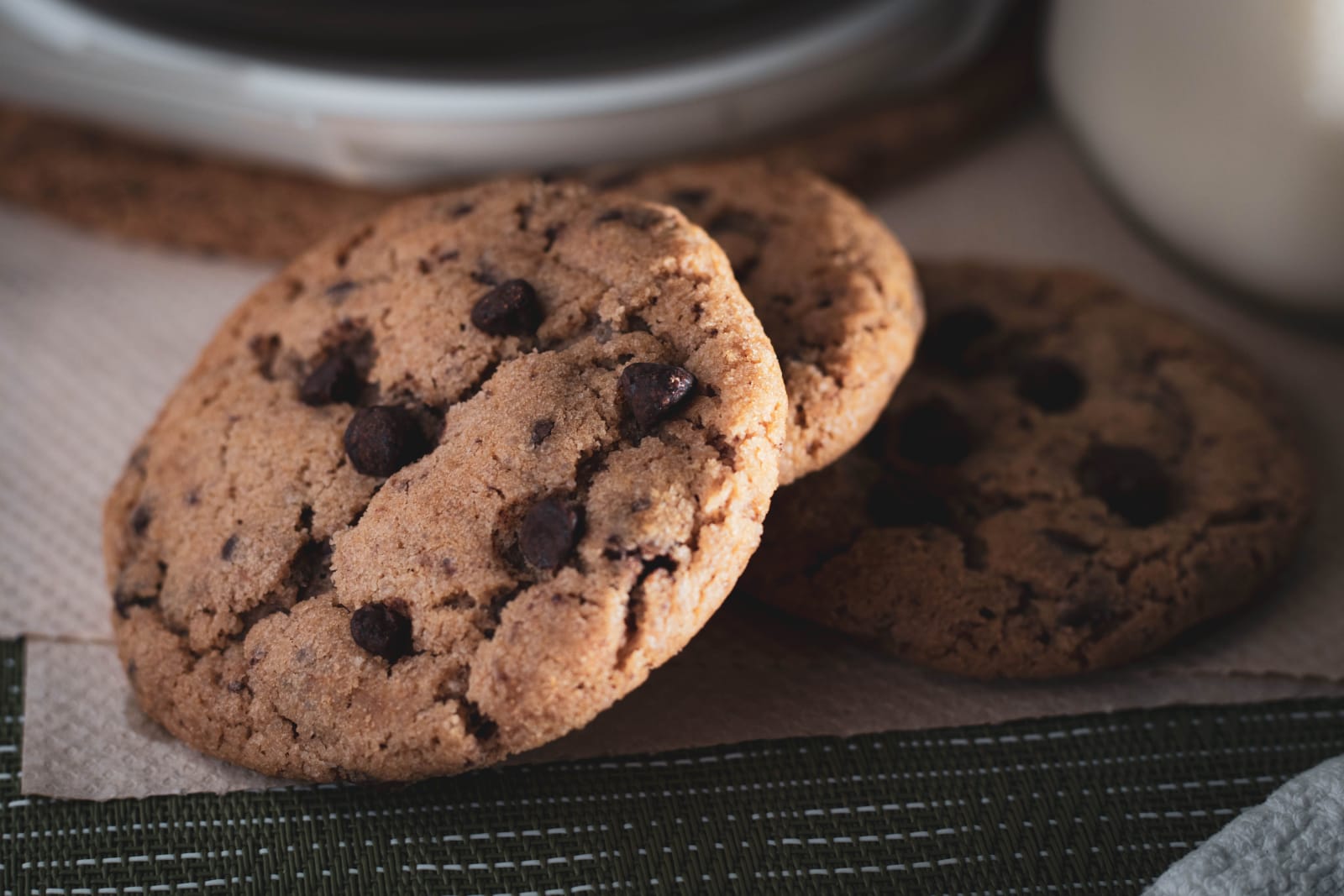
In its current form, the system converts more than 50% of the carbon in the waste materials into food products. The researchers like Jayakody hope future versions could recirculate the remaining carbon and approach nearly 100% conversion. He believes that this is an excellent way to achieve the “zero-waste concept” as it can release approximately 10% of the carbon into gas. “Global food demand is expected to rise 35–56% by the year 2050, and about 30% of the world population will be at risk of hunger in the future. The way to address that, I believe, is by using microbes,” he added.
Straight out of Hunger Games
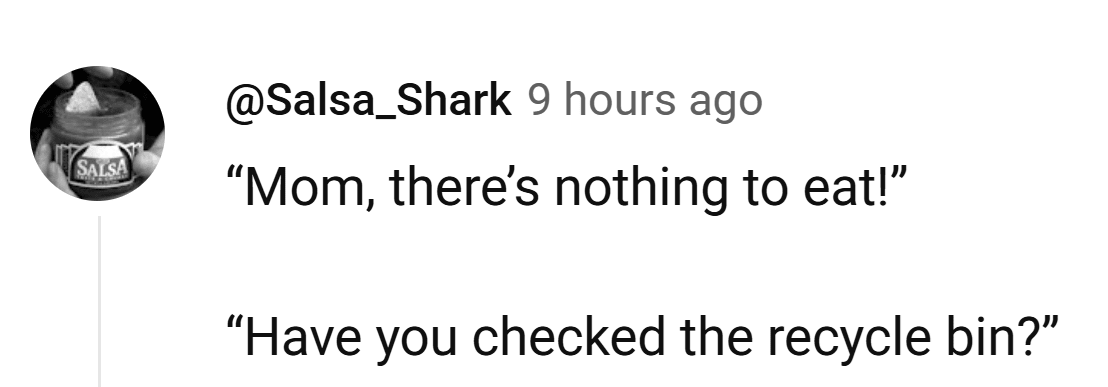

Meanwhile, viewers are cooking up hilarious scenarios on the latest research. @hollyridgley734 commented, “Cookies made out of plastic bottles — did I hear that right? I am giving up cookies.” @stevejaffe9543 remarked, “True junk food.” @ananunes9739 said, “I thought this was a plot detail from a far-away futuristic apocalyptic anime.”
Tasty? Not sure yet.
As for the taste, no humans are allowed to eat the cookies before safety tests are completed. But scientists say the cookies smell nice, based on the smell test, and have a pleasant texture. Looking ahead, scientists envision creating milk or meat alternatives the same way they created these cookies. However, the mainstream production of µBites cookies is highly unlikely given that they are $60 per kilogram, per Bakery & Snacks.
More on Scoop Upworthy
A Kenyan woman's startup recycles plastic into bricks that are five times stronger than concrete
Nigerians are building earthquake-proof homes from plastic bottles — and it's game-changing
Finland replaced rubber with mud and dirt for kindergartens. Their blood tests surprised scientists
 Share on Facebook


