Four teens were held by police after school AI mistook Doritos for a weapon — now they’re suing over what happened next
One of the police officers thanked the teens for not running away.

After football practice at Kenwood High School in Baltimore County, four Black teenagers sat on picnic tables, waiting for their parents to pick them up. One of them, named Taki Allen, was munching on a bag of Cool Ranch Doritos that his coach had given him. At around 6:30 pm, six police cruisers arrived with flashing lights. According to the lawsuit, Omnilert’s gun-detection system flagged the image involving Allen and his Doritos bag as a firearm with 90% confidence, and the alert was then approved by a human review team. More than a year after the October 20, 2025 incident, the four students have filed a lawsuit against AI company Omnilert, Baltimore County Police, school officials, and individual officers. Their case has provoked discussions on using AI systems for schools’ surveillance, as also detailed in a November 19, 2026 report by NBC News.
The alert had already been canceled
The police officers were initially prompted by an alert from the Omnilert AI system, which monitors the school’s surveillance feeds for possible firearms and sends flagged images for human review. A Maryland inspector general investigation later concluded that the system had not identified the blue chip bag alone as the threat; it said Allen’s hand movement, position, and angle contributed to the alert. “This should have never been escalated to the police. It simply should not have happened, and we filed this lawsuit to prevent this from ever happening again,” Leah Frazier, an attorney representing the teens, said in a statement.
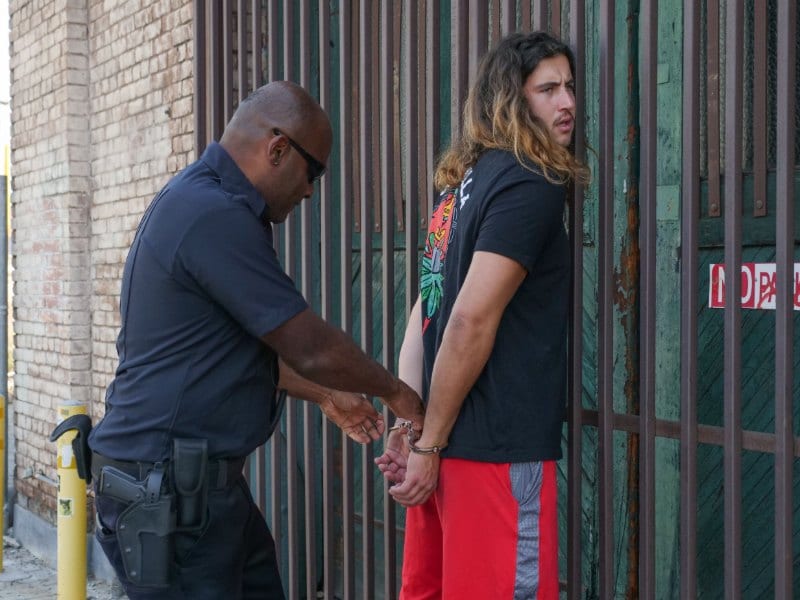
According to the lawsuit, school and police officials reviewed the image within minutes and canceled the alert after determining there was no weapon. But more than 10 minutes later, the principal allegedly opened the original alert and sent a screenshot to the school resource officer, who forwarded it to police. Six cruisers arrived shortly afterward, per The Maryland Express.
'It was a bag of chips'
In the lawsuit filed in the Circuit Court for Baltimore County, Frazier alleged that the students’ civil rights were violated during the detention and search. It also alleged that while the incident was “terrifying” for the teens, the school principal took it as a joke and sent a text to the administrators, writing, “It was a bag of chips” with four crying-laughing emojis. The lawsuit includes claims of unreasonable search and seizure, false imprisonment and negligence. The students told The Guardian that the incident left them “fearing for their lives.”
Thanks for not running away
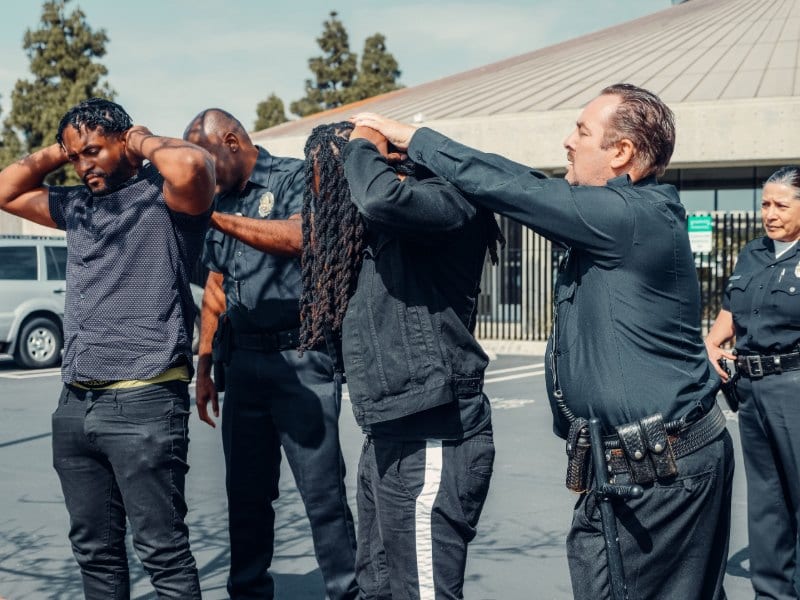
One of the police officers thanked the teens for not running away, recalling the encounters Black people face with law enforcement. “The police told my son this could have been a real problem,” Freida Winfield, the parent of one of the teens, said in a statement. “No child in Baltimore County should face this kind of danger while waiting outside his own school for a ride home from his mother.” One of these teens, Allen, is still a student in Kenwood while others are in college. He said he no longer feels safe waiting for his friends or family to come for his ride home. Oftentimes, he pays for rides to avoid waiting or hanging out with his friends after school hours.
At least 14 wrongful arrests
It is not unusual for AI detection systems to produce errors in the results. According to a report by the ACLU, published on April 14, 2026, at least 14 people in the U.S. were publicly known to have been wrongfully arrested after police relied on incorrect facial-recognition results. The organization said several of those cases involved officers failing to verify basic information that contradicted the automated match.
'It could have been worse'
“These students were failed not only by a technology that is prone to false alerts but also by the very adults meant to keep them safe when we send them to school,” said Damon Hewitt, the president and executive director of the Lawyers’ Committee for Civil Rights Under Law, which is representing the students, in a statement. “Instead of this protection, they were met with guns and traumatized. And it could have been even worse.”
More on Scoop Upworthy
 Share on Facebook