Rome students kept reporting a ruin under their school gym for six years. Nobody listened until now
Claudia Marino, a teacher at the school, was the first to take the student protestors seriously

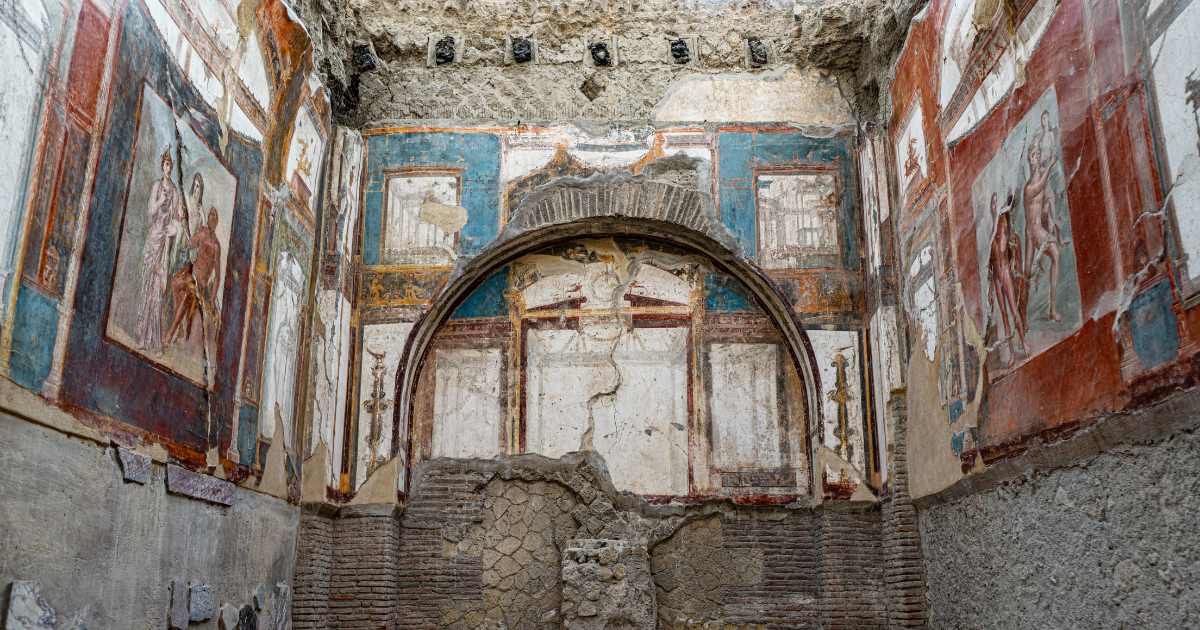
Six years ago, students at Rome's C. Cavour State Scientific High School (Liceo Scientifico Cavour) repeatedly stumbled on a historical ruin beneath their school, but no one listened, until this year. Claudia Marino, a history and Latin teacher at the school, was the first to take the student activists seriously and reported the findings to the Special Superintendency of Rome. The site was explored this year, and on May 28, Marino and Filippo Coarelli, an archaeologist from the University of Perugia, revealed that the underground building was actually a mid-Imperial Roman mansion dating to the 2nd century CE, as per Live Science. At the moment, the house is called the Domus Liceo Cavour (the House of the Cavour High School).
Who owned the ancient Roman mansion?
The high school was located just steps from the legendary Colosseum, and it was unsurprising that the remains of a luxurious Roman villa were found nearby. The area was once the neighborhood where important historical figures such as Pompey, Cicero, and Octavian (Augustus) lived. The building was located right under the high school gym. With the help of Coarelli, they traced the owner of the mansion to Fabius Gallus, a Roman senator. They also believed that a man named Umbria Albina, belonging to the Umbrius family, who were likely from the Samnium region, near Pompeii, resided in the domus, as per Gizmodo.
What was in the ancient Roman mansion?
The Cantieri Narranti, a heritage project, confirmed that the building was "well-preserved," but a lot of work had to be done before it is ready to be shown to the public. A statement from the Cantieri Narranti reads, "The visible rooms, now buried almost entirely, still retain figurative paintings and stucco decorations up to the vaults. The spectacular preservation of the paintings in these rooms requires them to be emptied to reveal the entire decorative apparatus and allow for its examination."
This includes the frescoes and figures on the ceilings and arched doorways of the mansion. They even found a mosaic with large, irregularly shaped tiles, a design preferred by high-class Romans during their time. More recently, there was graffiti allegedly made by tourists and other explorers during the 20th century.
The origin and importance of frescoes
Frescoes were an integral part of Roman architecture. It was often used to denote the social status of the residences, the cultural preferences of the homeowners, as well as the aesthetic value of the house. The art of fresco painting began with Etruscan and Hellenistic traditions, as per Gallerix. The earliest examples of frescoes date back to the 3rd century BC. Frescoes often tell a story depending on the theme. These include mythological stories, architectural motifs and landscapes, everyday life, and more.
At the moment, only a part of the mansion has been explored, since a larger part of it is under the school. The Cantieri Narranti declared in a statement that they will be "protecting the monument and making it accessible in collaboration with the faculty and students of the Liceo Cavour."
More on Scoop Upworthy
Ancient Roman temple discovered in incredible conditions after almost a century at construction site
Archaeologists discover 43,000 pottery fragments revealing the daily routine of ancient Egyptians
15-year-old boy discovers ancient Mayan city while working on a school project
 Share on Facebook


