Contractor rigged a restaurant's exhaust system to frame a competitor. One recorded phone call cost him 400 clients
'Dude, I'm sorry, it wasn't supposed to be you.'

A rival contractor secretly sabotaged a restaurant’s exhaust fan to force the owners into paying an overdue bill. The scheme was designed to trigger an expensive emergency breakdown, yet a single recorded phone call ended up costing the saboteur 400 clients. When an innocent technician got caught in the crossfire and faced a massive repair claim, he uncovered a web of deception that went far deeper than a simple unpaid invoice. The dramatic story was shared on November 10, 2026, by u/GHOST1ENTHEDARK.
Another contractor tried to "frame me" for his gain. It cost him over hundreds of thousands in work
by u/GHOST1NTHEDARK in pettyrevenge
A $16,000 breakdown
The author runs a small grease exhaust cleaning company, handling sensitive restaurant hood systems. After taking on a routine overflow job from a large local provider, the author serviced a self-contained system that requires careful hand-cleaning. Everything went smoothly until the following day. The client frantically called, reporting that the exhaust fan would not turn on. This threatened to shut down the open-market café due to smoke. Inspecting the machinery, the author found a shorted-out unique motor estimated at $8,000 to replace, plus an equal amount in labor ($16,000 total). More suspiciously, the safety door switch designed to prevent the fan from running while open had been intentionally bypassed, causing the surge.

A dirty business game
The situation escalated when the restaurant's aggressive insurance investigator blamed the author. He quoted a local expert, ironically named Kyle, who claimed the repair would cost $20,000. Realizing Kyle was a familiar local competitor, the author placed a direct call to clear the air. During that conversation, Kyle dropped a staggering admission: "Dude, I'm sorry, it wasn't supposed to be you." Kyle explained that he had intentionally tweaked the fan weeks prior because the restaurant owed him money. He expected them to call him in an emergency so he could hold their repair hostage until he was paid.
Instant karma
Determined to clear his name, the author recorded a subsequent follow-up phone call with Kyle. On the recording, Kyle casually confessed, "I had bypassed their door shutoff for the fan, knowing the next time the door would be open, it would cause a surge to the fan that would blow the motor. I'm sorry again, dude. I thought a large local company was going to do the service when I passed the lead on to them; they have the finances that this wouldn't be a big issue." Armed with this audio proof and emails, the author submitted the evidence to both insurance providers.
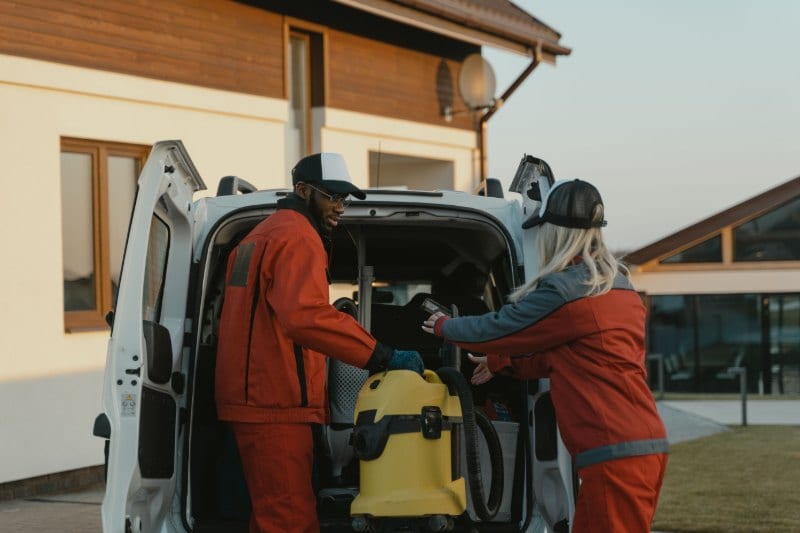
The investigation completely exonerated the author. It exposed Kyle’s falsified electrical certifications and uncovered security footage of Kyle tampering with the motor housing. The fallout severely damaged Kyle’s business. The large local service provider dropped Kyle completely, passing all their repair work to the author. Furthermore, word spread to major national corporate accounts. This landed the author lucrative contracts covering roughly 250 restaurant locations across the state every three months. A year later, a chance encounter with one of Kyle’s former employees revealed that Kyle's business had collapsed from a 16-person crew down to just 3 workers amid lawsuits, failed safety inspections, and widespread code violations.
Foul play in business
While direct tracking of physical sabotage between local competitors is notoriously difficult to measure, research reveals how pervasive unethical rivalry and property tampering have become for small and medium-sized businesses. A Reboot Digital survey of 1,672 business owners found that 18.3% said they would consider sabotaging a competitor’s online business if they believed they could get away with it. Among those respondents, 18% said one motivation would be to make a rival lose clients. Only 0.3% of everyone surveyed said they had actually damaged a competitor’s online reputation.
'Damn it, Kyle!'


Readers expressed absolute shock at the sheer audacity of the sabotage scheme while sharing their own gritty experiences with commercial kitchen maintenance. u/weirdal1968 writes, "Surprised Kyle hadn't thrown in the towel. Multiple lawsuits sounds like a good excuse to find another career." Meanwhile, u/InigoMontoya1985 notes, "This wasn't really even revenge, just doing the right thing that made the guy doing the wrong thing get his."
More on Scoop Upworthy
'Heated Rivalry' is breaking the internet — relationship expert Esther Perel explains the appeal
 Share on Facebook