Madeline vowed to never snowboard again after becoming a plumber — one question had her chasing Olympic gold
Once convinced she would 'never touch a snowboard again,' the 31-year-old is now heading to her first Winter Olympics nearly 10 years later.


A snowboarder who turned pro at 14 was expected to become the next Olympic star before she walked away from the sport at 21. However, fate had other plans for her. Madeline "Maddy" Schaffrick was once convinced she would "never touch a snowboard again." Now at 31, the Steamboat Springs, Colorado native is heading to her first Winter Olympics after nearly a decade away from competition, reported The Athletic.
Her Olympic dream began when she was just four years old, when she declared to her grandmother that she would compete one day. By seven, she had locked herself in her bedroom and refused to come out until her parents allowed her to ditch skis for a snowboard. Her father, Dan Schaffrick, told The Athletic, "She just loved leaving the ground." By nine, she was competing nationally, and by 14, she had turned professional.
However, in 2010, a severe knee injury put a halt to her promising career. She tore her ACL, MCL, and meniscus, along with partially tearing her PCL and LCL. "She's had more surgeries on that knee than I care to think about," her father said. Her performance never fully recovered, and her mental health spiraled. "I dealt with a lot of depression, anxiety, suicidal thoughts, severe mental health decline," she said. Twice, she missed qualifying for the U.S. Olympic team by just two spots, in both 2010 and 2014. By 2015, six years after turning pro, she retired at 20.
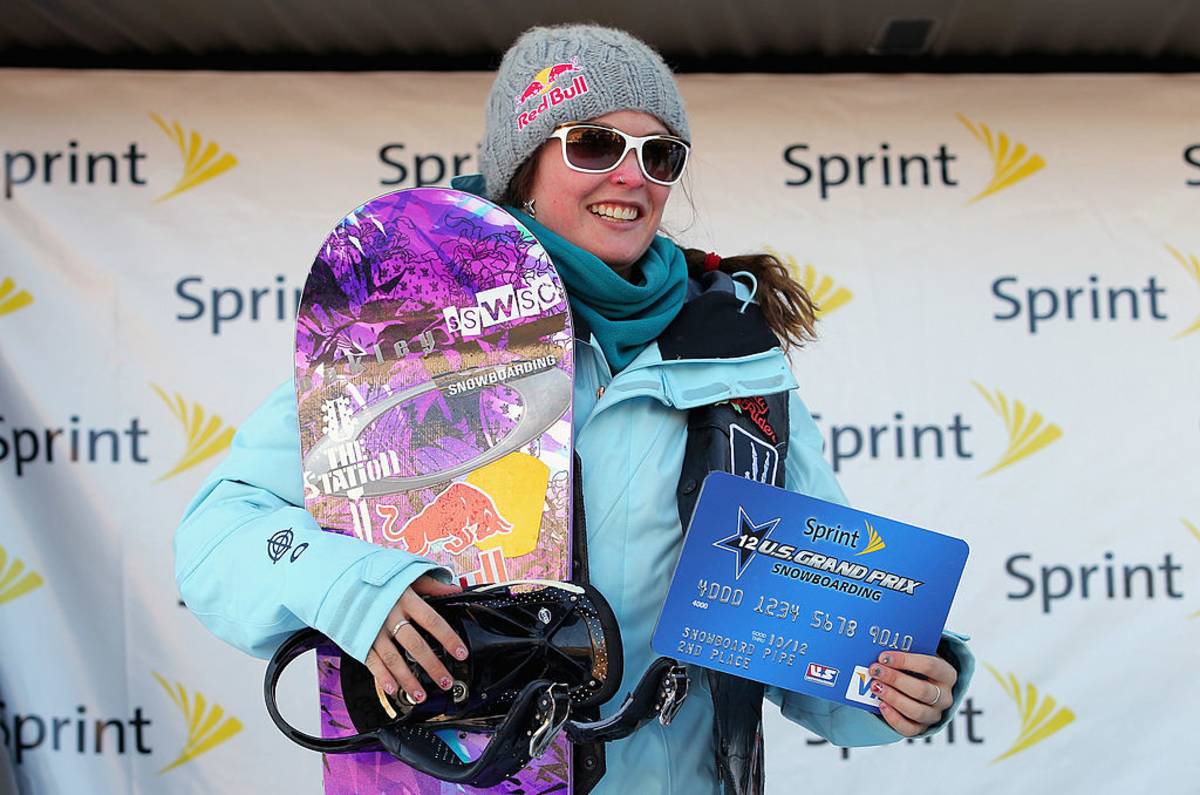
She returned to Steamboat Springs with no college degree and no job prospects and got offered a plumbing apprenticeship. Reflecting on that time in an interview with 5280 Magazine, Schaffrick said, "I feel like that one year of plumbing was harder on my body than seven years of professional snowboarding." Though she eventually realized plumbing was not her future, she said she gained deep respect for trade work. As per USA Today, she later volunteered to coach seven-to-nine-year-olds in exchange for a free season pass. That reconnection gradually softened the bitterness she once carried. She moved from coaching beginners to assisting more advanced athletes and, in 2022, joined the U.S. Snowboarding team as an assistant coach.

In 2024, while at a training camp in Saas-Fee, Switzerland, she walked with Alex Cohen, the team's senior sports psychologist. She had been thinking about returning to competition for more than a year. Finally, she asked him, "Do you think I could do this again?" Before answering, Cohen asked her one question: "What's your why?" That question reframed her comeback. "I just decided, I don't wanna live my life for anybody but me," she said. "F— living with regret. I'm doing this, even if it all blows up in my face."
Sports psychology research supports the importance of that change. A 2025 peer-reviewed article in BMC Psychology found that motivational factors, including autonomous, intrinsic motivation, are strongly associated with lower burnout syndrome in elite skiers, underscoring the psychological link between internal drives and long-term athletic engagement. Higher intrinsic motivational pathways were linked with reduced burnout symptoms in those athletes.
In December 2024, Schaffrick competed in her first World Cup event in nine years at Secret Garden, China. Her goal was simply to land her run, and she did, finishing third, earning her first career World Cup podium. "Instead of checking out, I chose to trust myself," she said. Soon after, she posted a second-place finish at a World Cup Olympic qualifier in Aspen, securing one of four U.S. women's halfpipe spots for the Milan-Cortina Games. "Proud isn't even enough of a word," her father said. When asked what she wants from her first Olympic appearance at 31, she said, "I want to go there and land a run that I am proud of, that I know I'm capable of, and that I've put in all the hard work for."
More on Scoop Upworthy
His parents died when he was a year old. A gay man adopted him & today he's at the Olympics
Before she passed, he promised his wife he would win gold at the Olympics. Then he did.
 Share on Facebook


