Lost letter from 1787 reveals even George Washington had 'money problems'
The letter was totally unknown to scholars before the Raab Collection discovered it


After years away during the Revolutionary War, George Washington wanted to retire to Mount Vernon. However, in 1787, he was invited to the Constitutional Convention in Philadelphia to help shape the new nation. He hesitated, not just because he wanted a private life, but also due to financial strain. Just a few months before the convention, he penned a letter that captures his money struggles. The letter was brought to attention in February 2023 by the Raab collection.
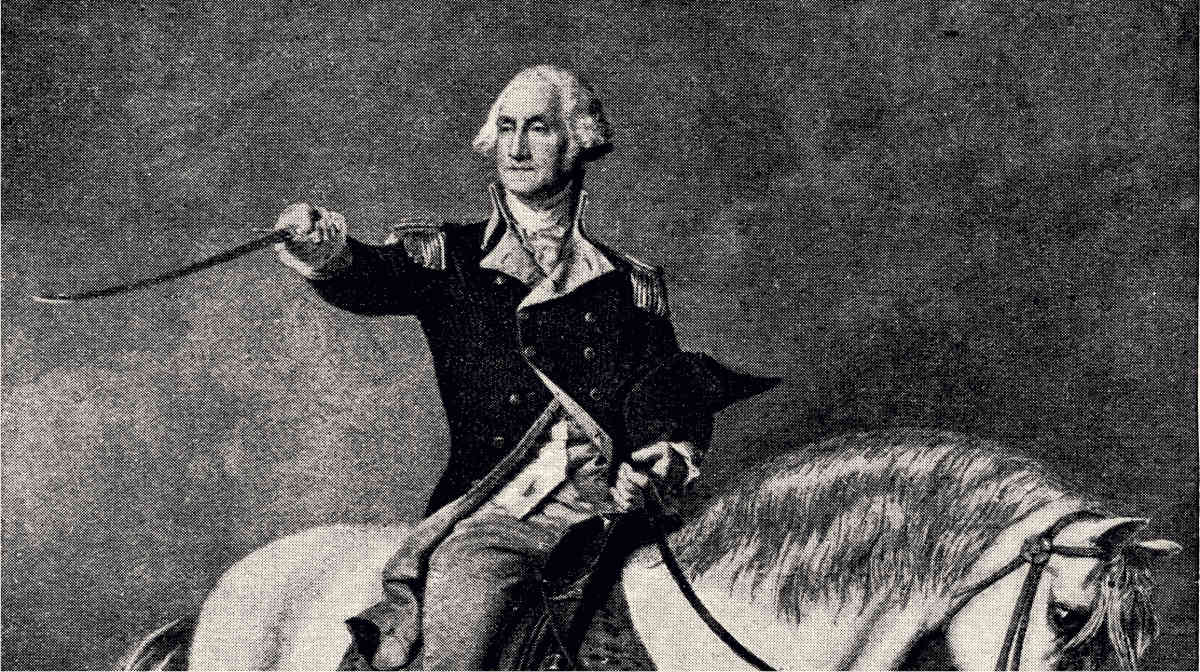
Washington insisted on 'cash' payment
The letter was addressed to Israel Shreve, a New Jersey man who had served under Washington as a colonel in the Continental Army a decade earlier at Valley Forge. Dated March 20, 1787, the letter expressed Washington’s desire to sell a 1,644-acre patch of land, called Washington’s Bottom, tucked along the Youghiogheny River in western Pennsylvania. While Shreve had offered him other forms of credit, Washington insisted on having cash.
“The land you mention is for sale, & I wish it was convenient for me to accommodate you with it for military certificates; but to raise money is the only inducement I have to sell it,” Washington wrote, “Consequently, certificates if they cannot be converted into cash, will not answer my purpose.”
Becoming President did not relieve the 'deficit'
He specifically mentioned the cost per acre as “40/Pennsylvania money per acre,’’ also adding that one-fourth of the money was to be paid down and the other three-fourths could be paid in three annual payments, with interest.
The to-be-presiding officer owned as much as 70,000 acres of land, which, today, is an area spanning seven states. Thousands of slaves worked for him to maintain this landscape. Initially, Shreve bought only a 600-acre piece of the land. But in June 1794, five years after Washington was inaugurated as the first President, Shreve approached Washington again to buy the land. Washington sold all 1,644 acres of the Washington Bottom for £4,000 Pennsylvania currency ($5,400). On July 31, 1795, the sale was completed, and Shreve paid in cash.
He lost 50% of his money in the war
One of the reasons why Washington was short on cash is that his personal finances took a major hit during the war. According to History.com, Washington lost about 50% of his net worth during the Revolutionary War. Moreover, research from Colonial Williamsburg Foundation shows that Washington frequently fell into debt and had to borrow money due to spending and delayed payments for his crops. The situation wasn’t unique to him either — the young nation itself was buried under more than $50 million in debt after the war.
The letter was totally unknown to scholars before the Raab Collection discovered it. “This powerful letter, coming as it does on the doorstep of one of Washington’s great moments, gives us a glimpse into the financial stresses and concerns of Washington, a man we think of in mythic terms but really had many of our own, very human issues,” Nathan Raab, principal at The Raab Collection, said, per CNN. At the time of discovery, the letter was expected to fetch over $50,000 at auctions.
More on Scoop Upworthy
SNL hits it out of the park with hilarious sketch on George Washington and his dream for America
Author Terry Pratchett used worn out 'boots' analogy to explain why it's expensive to be poor
Billionaire recalls kind landlord sheltering his poor mom. So now, he's giving back to him tenfold
 Share on Facebook


