Professor uses 'music' to check if your heart is working properly. And it's surprisingly genius
Chew stated that music can help detect if a person is hypertensive or not through their blood pressure


Music can reduce stress and improve quality of life, and King's College London professor and pianist Elaine Chew supports the claim that music can be used as a diagnostic and a theranostic tool. On April 2, Professor Chew's study was shared by New Scientist (@newscientist) on Instagram, where she explained that a higher heart rate equals lower heart variability, meaning it can be a sign of current or future health issues, and vice versa.
Professor Chew, who works in the Digital Music Theranostics Lab to study the effect of music on the human heart, also stated that music can help detect if a person is hypertensive or not through their blood pressure. To test that, they combine the features of the music the person is listening to, along with the features of the individual's physiological reactions while listening.
This process is how music becomes both a diagnostic and theranostic tool. "During music, the diagnosis is much more accurate because the music is challenging the system," she explains. Since the majority of the population listens to music every day, Professor Chew said, "If we are able to integrate this into devices, this could be a way for a large number of people to get an early warning that they should seek treatment for hypertension."

Professor Chew was using a device to test two women's reactions to music. On the outside was a respiration sensor, and an ECG sensor was attached to the skin of the two women. The device would monitor the electrical activity of their hearts. Then researchers tried to compare the women's heart rates, the ECG results, and their breathing with "what's happening in the music." One woman said that she was excited when she heard the song 'Golden Brown' playing. Professor Chew pointed out that the line indicating her heart rate was slowly going down while her favorite song was playing. This proved that music does indeed have a way of indicating how a person is feeling.

Music not only helps as a diagnostic tool, but also has several health benefits. Studies reveal that listening to music allows people to exercise longer while undergoing heart tests, improves blood flow by helping the arteries relax, quickens the heart rate and blood pressure to return to normal after an exercise, and aids in reducing anxiety after a heart attack. It also helps patients recovering from heart surgery by reducing their pain and anxiety.
In a survey conducted by the University of Michigan in 2023, adults between the ages of 50 and 80 were asked about their personal experiences with music. The findings revealed that almost all of the older adults (98%) said they received health benefits from music. 75% said that they received stress relief and relaxation, 73% reported feeling joyous, 65% experienced an improvement in mental health, attitude, and mood, while 61% said it helped them recall certain memories or live events.
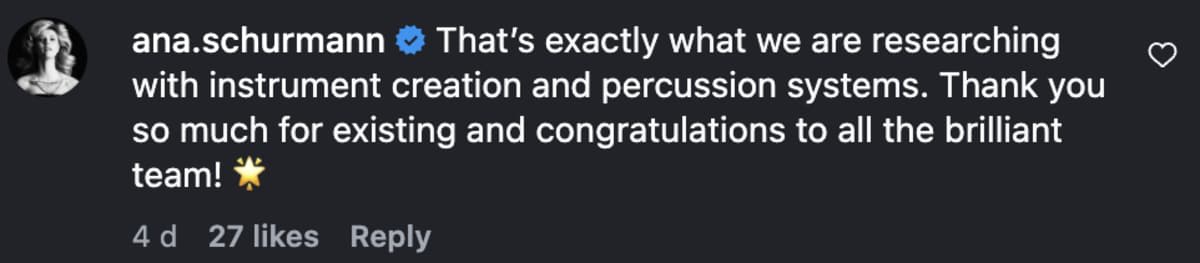

The idea that music can be used as a diagnostic and therapeutic tool impressed many netizens. People wanted to learn and know more about Professor Chew's study. @annarmahtani wrote, "Such phenomenal research! I can’t wait to read more about it." @ehyoadrienne shared their personal experience with music. They wrote, "This is very interesting. I have POTS and feel it negatively affects me when singing intense operatic passages. I have hoped to have this studied in such an environment." @vivif3r commented, "I intentionally play Pat Metheny/Lyle Mays music to calm down and 'get into a zone.'"
You can follow New Scientist (@newscientist) on Instagram for more science-related content.
More on Scoop Upworthy
Music therapist creates 'heartbeat recordings' to spread joy among seniors: 'I was very touched'
Elderly couple of 3 decades expresses their love through music after speaking becomes difficult
A Song For You founder writes songs to cheer and comfort people living out their final moments
 Share on Facebook