All 12 astronauts who explored the Moon's surface suffered from 'lunar hay fever.' Here's why
It was the first human encounter with the biological hazards of the lunar surface


As NASA's finest finalise their blueprints for the Artemis IV mission scheduled for 2028, you might think their biggest concern might be the vacuum of space or even the freezing shadows of the lunar south pole. However, it's none of those; instead, according to the European Space Agency, they are bracing for a microscopic enemy that has defeated the vacuum cleaners since the Apollo era. When Harrison Shmitt stepped back into the Apollo 17 lunar module in 1972, he unintentionally brought a layer of fine, grey dust that was clinging to his spacesuit, which made his throat sore and his eyes water.
Although to most of the people, that might not seem like a massive deal, it was. That's because within minutes of removing his helmet, the astronaut began suffering from "lunar hay fever," experiencing a sneezing fit and significant nasal congestion. This was more than just a minor irritation; it was the first human encounter with the biological hazards of the lunar surface. Since then, all 12 people who have stepped on the moon have suffered the "lunar hay fever" and reported the gunpowder-like smell.

So, now, as NASA prepares for its latest mission to the moon, an ambitious ESA research programme with experts from around the globe is addressing issues related to the lunar dust. "We don’t know how bad this dust is. It all comes down to an effort to estimate the degree of risk involved," says Kim Prisk, a pulmonary physiologist from the University of California and one of the 12 scientists taking part in ESA’s research.
Radiation has long been the biggest concern for human health outside the planet, but lunar dust, which has silicate, a material commonly found on planetary bodies with volcanic activity, has emerged as the new frontrunner. Miners on Earth suffer from inflamed and scarred lungs from inhaling silicate. However, on the Moon, this goes further up a notch with the dust being so abrasive that it can eat away layers of spacesuit boots and destroy vacuum seals, as was the case with Apollo sample containers.

Fine like powder, but sharp like glass, these particles can hang around for months inside your lungs. The longer they stay, the greater the chance of toxic effects. Although until now, it's hard to tell the potential damage from inhaling the dust, given that symptoms in some cases last up to weeks, it's safe to say that it won't be good. In fact, research shows that "a common outcome of this exposure is silicosis, a disease that develops from long-term exposure to crystalline silica."
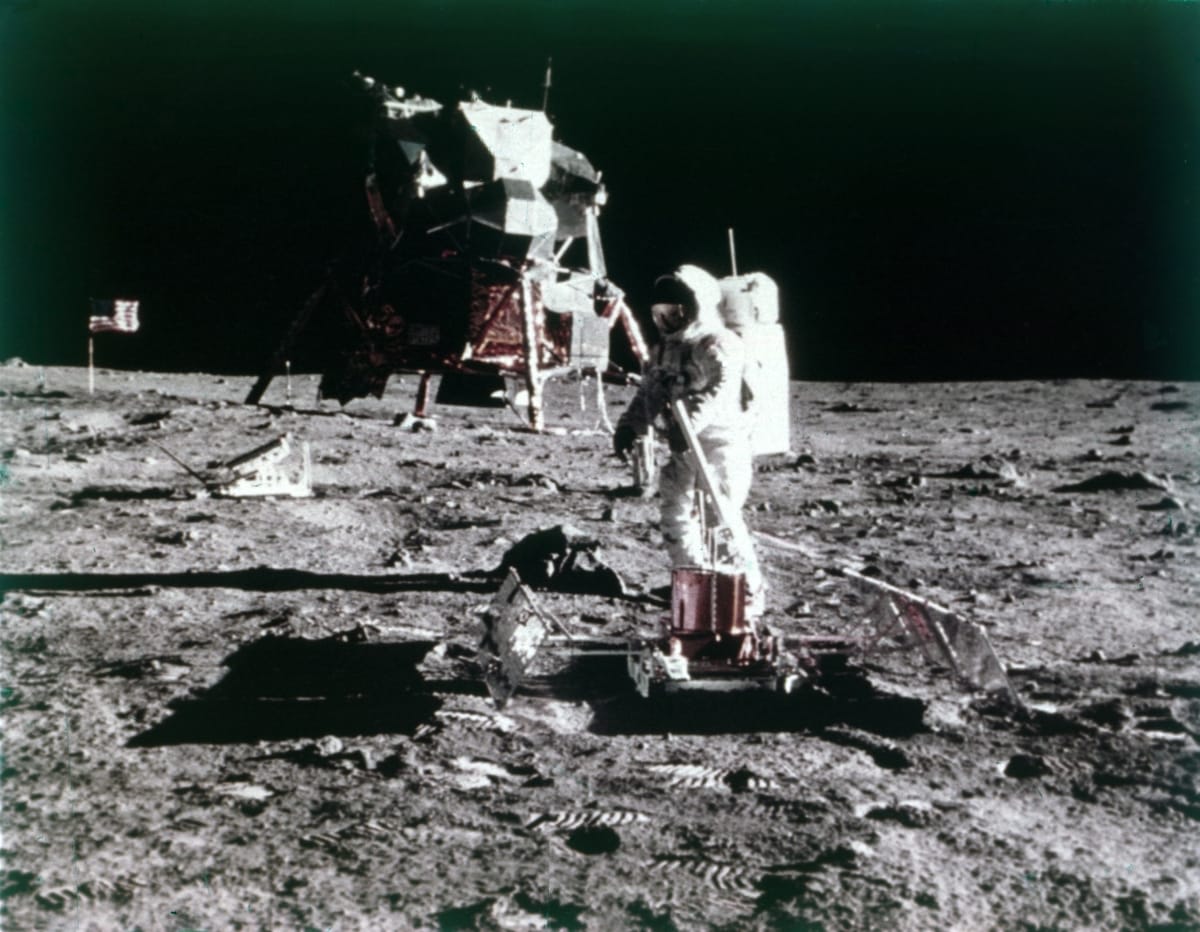
As per the study, "Silicosis is a potentially fatal disease, caused by silica dust particles embedded in the alveolar sacs, resulting in shortness of breath with lung irritation and progressive fibrosis." Overall, long-term exposure to lunar dust could destroy lung and brain cells. As the ESA continues to work on this challenge and ensures a sustainable return from our nearest neighbour in the Solar system, people across the world are worried about the astronauts.
However, as science advisor Aidan Cowley, the lunar soil does have an advantage. He says. "You can heat it to produce bricks that can offer shelter for astronauts. Oxygen can be extracted from the soil to sustain human missions on the Moon."
More on Scoop Upworthy
Astronaut's letter about landing on the moon in 1969 is still inspiring the world
Astronaut who observed Earth from space for 178 days says he realized humanity is 'living a lie'
Ex-NASA admin reveals why we waited 50 years to revisit the Moon
 Share on Facebook