Soot-back paper shows first 'recording' of human voice in 1860. No one heard it until 148 years later
Most people believe Thomas Edison is the father of recorded sound, but that might not be true

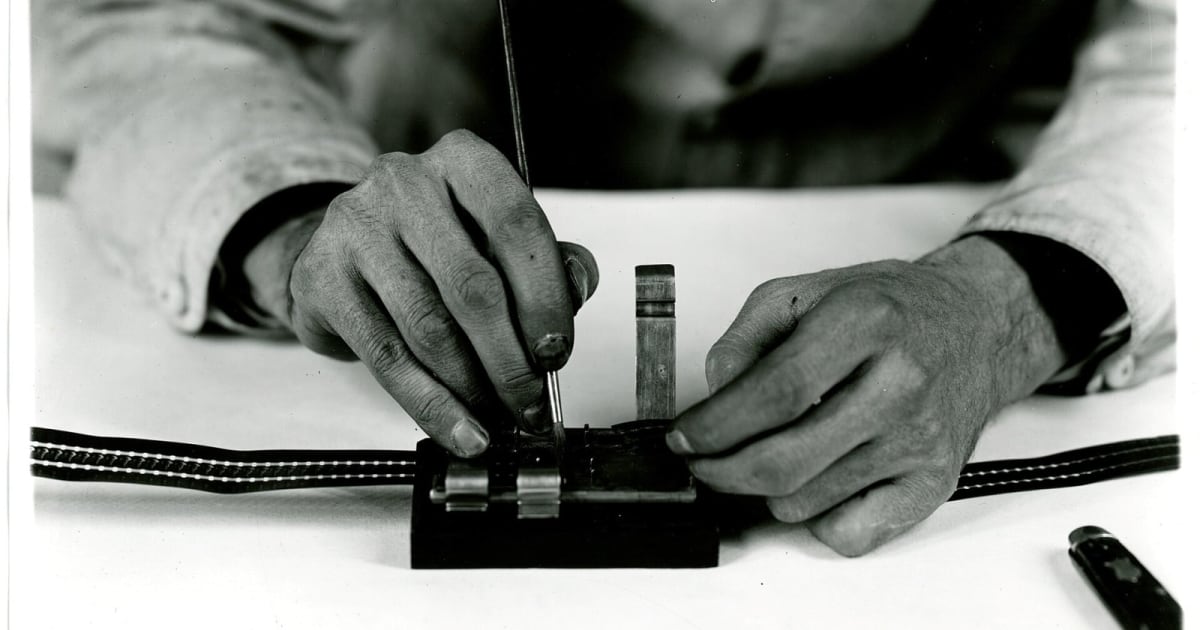
Most people know Thomas Edison as the undisputed father of recorded sound, and rightly so, because he invented the phonograph. However, he wasn't the first person to ever capture sound. Rather, the inventor who did so was Édouard-Léon Scott de Martinville. The Parisian built the phonautograph, an instrument that traced vocal vibrations onto soot-blackened paper, back in 1860, decades before Edison did. This was quite similar to modern audio waveforms. However, Scott's aim was only to create a camera for the ear rather than a playback device. This left his recording on paper for over a century and a half until historians restored it, as reported by BBC Global (@BBC_Global) on July 8, 2026, garnering over 1.5 million views.
A visionary breakthrough
The story began in 1860 in France, where Scott constructed a groundbreaking apparatus known as the phonautograph. This device was designed to visualize acoustics rather than play them back. It used sound waves to physically direct a stylus across soot-darkened paper to make waves. Being a professional typesetter who also knew shorthand writing, Scott thought he had invented the ultimate text-to-speech machine. However, even though he had succeeded in preserving sound on paper, his achievement remained rather silent because it lacked any playback mechanism.

Unlocking the silent paper
17 years following Scott's breakthrough, Edison invented the phonograph, a machine capable of not only recording but also playing back sound. This pushed Scott's discovery into obscurity. Not much attention was paid to his recordings until, in 2008, a group of scientists found his 1860 record. Particle physicist Carl Haber of Lawrence Berkeley National Laboratory was the man behind this revelation.
He, alongside Earl Cornell, was developing an optical message for playing back early sound recordings on delicate media. It was then that they decided to reconstruct this recording by Scott. They did so by shining a laser beam on the paper and letting it trace the sound recording on the paper. Initially, the scientists played the sound and heard a child singing "Au clair de la lune." But that wasn't the case. Upon further investigation, Patrick Feaster, one of the people working on this, found out, "We hadn't done it quite right."

Didn't quite get it right
After restoring more such recordings, the team realized they had been playing this recording faster than it was supposed to be played. "The way people used to count vibrations of a tuning fork was different from today," Feaster said. It was only after this that they slowed it down, only to hear the voice of a man singing rather than a child. Through this, they were able to play back the earliest sound recording ever, which one can listen to on FirstSounds. "It has been a really great way to use physics and technology to impact other areas of society," Haber noted.
More treasures await
Nonetheless, while the team is happy to have been able to restore this recording, they believe that there are still many more masterpieces waiting to be discovered. Feaster and the rest of the team are looking forward to it. What makes these recordings so special is the fact that, based on the technologies that Scott and Edison used, millions of people listen to music, voice notes, and other stuff every day. According to a Pew Research survey, 75% of Americans aged 12 or older listen to audio at least once a month. Additionally, 31% of adults actively listen to podcasts. This shows the sheer impact of Scott's and Edison's hard work centuries ago.
It's beyond crazy


That being said, people were impressed by Scott's work. @ericmackrodt9441 noted, "So haunting. The idea that he recorded that and never imagined someone would ever be able to listen to it. It's crazy." Meanwhile, @coastofkonkan commented, "All the way from recording audio on a metal sheet to now streaming it on the internet throughout the world. What an astonishing feat of humanity."
More on Scoop Upworthy
Sound therapists claim this 8-minute song reduces stress by 65%
What did English originally sound like? A Linguist found out, and even the British are baffled
Scientists dug the deepest hole humans ever made but what they heard from below left them rattled
 Share on Facebook