UK government set to reward people for walking 30 minutes a day
The new 'marathon a month' initiative will swap daily steps for rewards


A few years ago, if someone had told you they were pacing around their living room at midnight because the government would reward them for it, you would have probably laughed it off. It sounds like a utopian joke or a gimmick from a fitness app. However, this is the actual premise of England's National Health Service (NHS)'s newest initiative, set to launch in 2027. According to a BBC report on July 3, 2026, the NHS aims to encourage people to make healthier choices by rewarding them with real prizes.
Facing a public health crisis
The idea stemmed from the rising rates of sedentary lifestyles and the subsequent strain on the national healthcare infrastructure. This prompted public health officials to rethink traditional medical advice. Realizing that standard warnings were no longer enough to motivate a tech-tethered public, the government began shifting toward incentivized behavioral changes to get people moving. That is how they came up with the "marathon a month" challenge, asking people to walk for 30 minutes a day.

Setting the target and preparing the tech
Those who follow the routine every day will end up covering at least 26 miles a month, roughly the distance of a marathon. Developers and health officials plan to collaborate to align the program with fitness tracking ecosystems. People will be able to register their walks and monitor them on their phones and smartwatches. The NHS has stated that people who complete this challenge will then be eligible for rewards. "I'd do it. Small chunks would be easy to fit in. I don't have a gym membership or any of that, but I could go for a walk. That's free," one resident, Lauren Andrew, told the BBC.
The reward is yet to be decided
While guaranteed that people will get some sort of incentive, the NHS is yet to land on what that exactly would be. One of the options is seemingly providing vouchers. Sir Keith Mills, founder of the original Air Miles and Nectar customer loyalty schemes, could help with identifying what incentive the NHS should give to the people. Regardless, they will not be paying for these rewards out of their pockets, as the NHS hopes to secure sponsorships from public and private sector organizations.

Launching the scheme
Although the full details of the initiative are yet to be released, the entire project is officially scheduled to go live for the public in early 2027. Partnering up with former Olympic medalist Sir Brendan Foster, the founder of the Great North Run, the NHS is targeting an initial wave of about 100,000 active participants, a milestone that would effectively break records as the largest collective marathon event in human history. "I'm known for running, but the ambition here is far simpler. We just want people to walk. Simple," Sir Foster says.

This could help combat a huge issue
Even though this might seem like a simple initiative, which it actually is, it could help the UK government save billions. That is because almost one in six deaths in the country is associated with inactivity, according to GOV.UK. What's worth noting is that these deaths end up costing them a staggering 7.4 billion pounds ($9.9 billion) annually, including about 0.9 billion pounds ($1.2 billion) to the NHS alone. Despite that, according to another report, nearly 39% of adults in the UK fail to meet the government's minimum physical activity requirement.
'I will take the bribe'
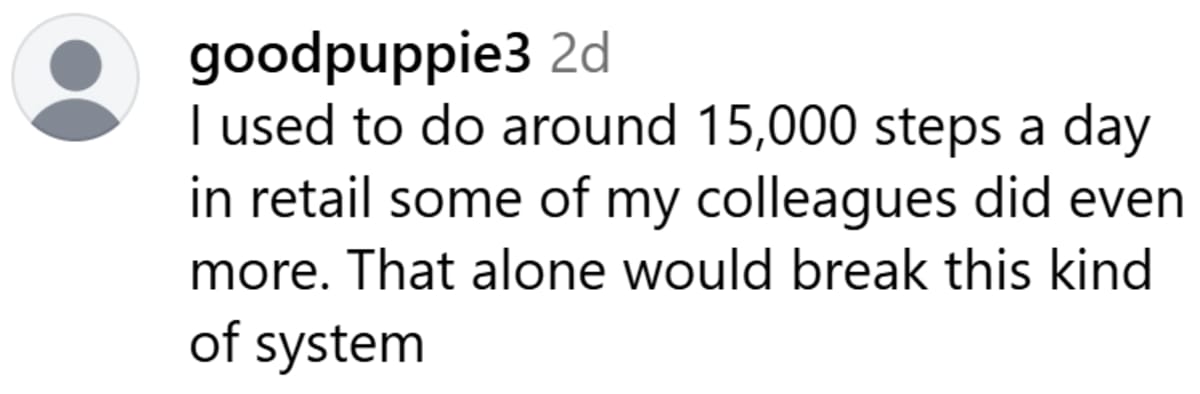

That said, people are still not quite impressed with this upcoming initiative, as they took to social media under a post by the Metro UK (@metro.co.uk) to express their feelings. @__just_alice__ wrote, "They're going to love my very boring walks. To work. From work. To work. From work. But I will take the bribe because I need some incentive to get there." Meanwhile, @jessisntthere questioned, "Why do people need to get a reward for walking 30 mins? This country is a joke."
More on Scoop Upworthy
Small German town actually pays people to go green. It's already slashed 12,800 tons of CO₂
Costa Rica's stunning and gradual reforestation since 1987 gives hope to the world
Nigerians are building game-changing earthquake-proof homes from plastic bottles
 Share on Facebook


