These 11 deaf men couldn’t feel motion sickness — so NASA used them to solve a major space problem
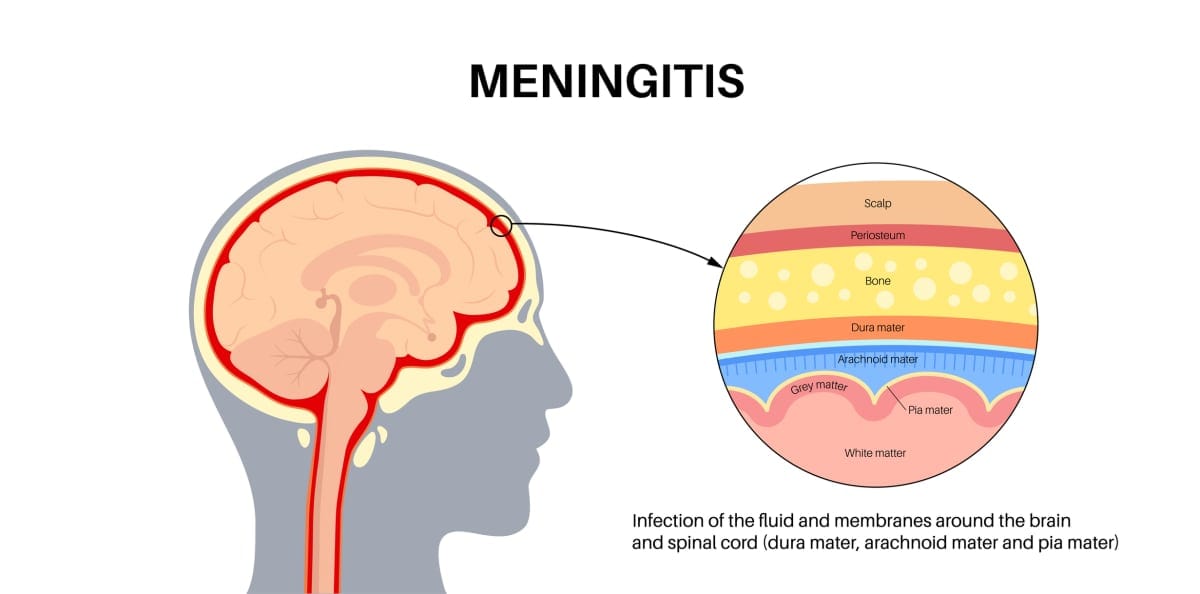
A condition called 'spinal meningitis' had damaged the vestibular systems of their inner ear, which made them immune to motion sickness


As the world focuses on the Artemis II mission and the astronauts who made the journey, there’s a lesser-known story behind space travel that rarely gets talked about. Long before missions like this became possible, NASA was trying to solve a major problem in spaceflight — motion sickness — and the answer came from an unexpected group of 11 deaf men who couldn’t feel it at all. On April 13, actor and deaf activist Nyle DiMarco (@nyledimarco) brought to attention the role of the “Gallaudet 11,” explaining how these men helped NASA test and understand motion sickness in space by volunteering for experiments decades ago.
It was the late 1950s, particularly between 1958 and 1968, before NASA began sending humans to space. They needed some data that they could use to solve the problem of motion sickness in space. Together with the US Naval School of Aviation Medicine, researchers visited Gallaudet University and recruited 11 men, aged 25 to 48, who had been rendered deaf since childhood. A condition called “spinal meningitis” had damaged the vestibular systems of their inner ear, which made them immune to motion sickness.
Their non-reactions to weightlessness and motion sickness were precisely the thing NASA needed to carry out its experiments. “We were different in a way they needed,” NASA described in a press release. The goal was to simulate foreign gravitational environments in space and obtain data on the sensations and changes in perception these men experienced. “These experiments help to improve understanding of how the body’s sensory systems work when the usual gravitational cues from the inner ear aren’t available,” NASA clarified.
The men were made to spend 12 straight days inside a 20-foot slow rotation room that remained in constant motion of ten revolutions per minute. Another test involved a series of zero-gravity flights in the notorious “Vomit Comet” aircraft, aimed at understanding the relation between body orientation and changing gravity. A third test took them to the choppy waters of Nova Scotia, where massive waves tossed them up and down. Doctors and researchers were so affected by sea sickness that the mission had to be cancelled. Meanwhile, the deaf men were busy playing cards. One of the participants, Barron Gulak, later remarked, “In retrospect, yes, it was scary…but at the same time we were young and adventurous.”
Motion sickness has long been a major challenge in space travel. Studies show that 60% to 80% of astronauts experience space motion sickness when they first enter microgravity. The condition can be severe enough to cause sensorimotor and cognitive impairment, meaning astronauts may struggle with coordination and mission tasks during this period. Research also shows that the root cause is a conflict between visual signals and the inner ear (vestibular system), which becomes unreliable in zero gravity. That’s exactly why Gallaudet 11 deemed helpful in understanding how the human body reacts when normal balance cues are missing.
David Myers, a participant, shared in an interview with NASA later, “No Gallaudet Eleven, no Mercury, no Apollo, no Artemis 2." Fast forward to the present day, and the contributions of these unsung heroes are highlighted in a museum exhibit titled “Deaf Difference + Space Survival.” Thanks to Artemis 2, their sterling role came to highlight after all these years.
More on Scoop Upworthy
After 230 days in space, NASA astronauts could not even sit down when they returned to Earth
Astronaut Christina Koch to be the first woman to orbit the moon as part of Artemis II crew in 2024
Meet Valerie Thomas, the NASA scientist who invented 3D movies
 Share on Facebook


