Mother camel rejected her newborn calf — until shepherds performed ancient Mongolian ritual that moved her to tears and changed everything
The newborn calf would not be able to make it if it did not have access to its mother's milk.


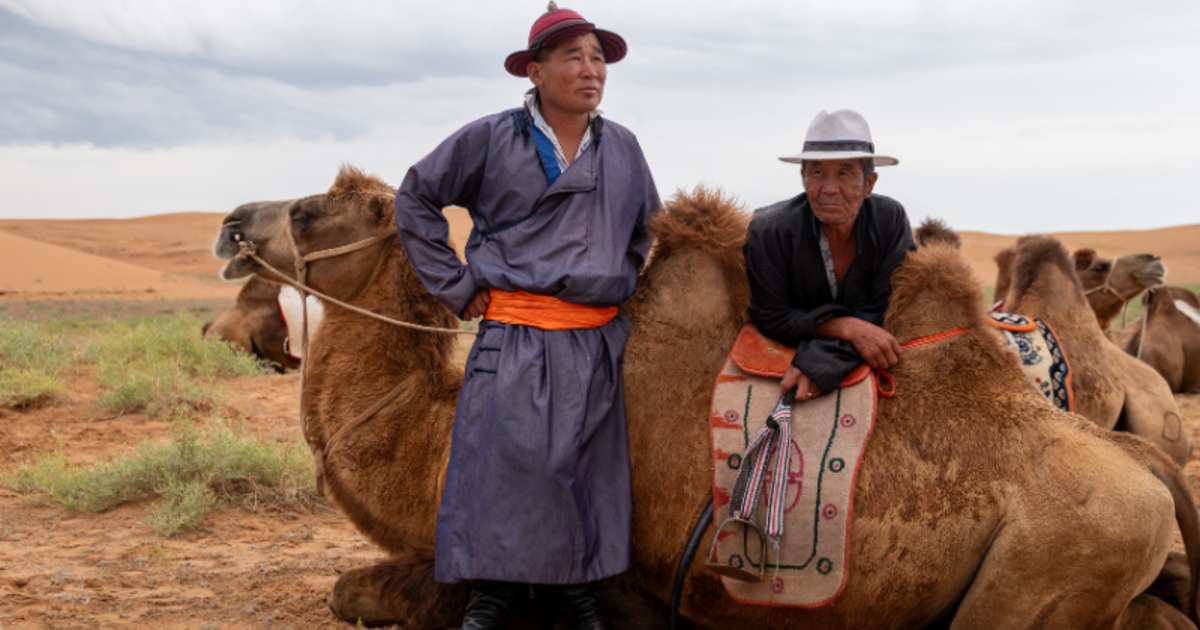
The Story of the Weeping Camel began as a graduation project that would turn into a documentary film screened all over the world. It follows the story of a family of nomadic shepherds assisting their herd of camels during birth in the middle of the Gobi Desert in South Mongolia. One of the camels was going through an intensely difficult labor and delivered a rare white calf after two days. The mother camel refused to look at her baby and refused to allow it to nurse. It was evident the newborn calf would not survive without access to its mother's milk. The shepherds knew they had to intervene. They called a traditional violinist to perform a Mongolian coaxing ritual called 'Hoos,' and it worked.
In 2003, a German film crew followed a nomadic family in Mongolia's Gobi Desert. The film, The Story of the Weeping Camel, was nominated for an Oscar.
— Dr. Lemma (@DoctorLemma) March 31, 2026
A mother camel had rejected her newborn after a brutal two-day labour. Without her milk, the calf would die.
The family knew… pic.twitter.com/DvbbSqnDv2
The ritual began with the violinist playing a haunting tune, and a woman began chanting as she stroked the camel in a calming manner. The defiant camel slowly softened and her eyes began to well up as she continued the Mongolian chant. She finally looked at her young calf and allowed it to feed, even nudging her baby softly on the head. The documentary team watching the shepherds perform their 'magic' watched the calf drink to its hearts content.
The documentary film was written and directed by Byambasuren Davaa and Luigi Falorni. It was nominated for an Oscar and won the International Film Critics Award at the San Francisco International Film Festival in 2004, and the White Camel Award at the Sahara International Film Festival in 2006. The film was supposed to be a graduation project from the Hochschule für Fernsehen & Film in Munich, before it was converted into a full-fledged documentary. Mongolian and Italian directors joined the project, including Dutch film director Jiska Rickels, who is known for her documentary, 'Untertage.' In 2015, the Mongolian 'Hoos' ritual was added to UNESCO's list of Intangible Cultural Heritage in Need of Urgent Safeguarding.
In the same year, UNESCO added 27 elements from 34 countries to the Intangible Cultural Heritage in Need of Urgent Safeguarding list. Some of these include the summer solstice fire festivals in the Pyrenees of Andorra in Spain, the copper craftsmanship of Lahij from Azerbaijan, the Marimba music of Colombia, the tradition of kimchi-making from the Republic of Korea, the Wititi dance of the Colca Valley in Peru, and more. On another note, a study revealed that camel calves barely survive 8 weeks if the mother rejects them or passes away. The calf is expected to drink milk that is at least 8-10% equivalent to its body weight.


An X post of the Mongolian coaxing ritual from the documentary has reached 2.3 million views, 20k saves, 12k reshares, and 500 comments. People were in awe at how the camel was responding to the chanting, and for many, this was the first time they found out about 'Hoos.' @hawkings41502 commented, "Goes to show how much we don't know about nature. Goes to show what we in a so-called 'developed world' have missed out. This has become an eye-opener to me." @bansville wrote, "Absolutely beautiful, a mother camel reunited with her calf through centuries-old ritual. Nature, tradition, and humanity all in one moment. No wonder UNESCO recognized it!"
More on Scoop Upworthy
Orangutan's adorable interaction with a baby is melting everyone's hearts: 'She's amazing'
Woman nursed a baby squirrel back to health and he comes to play with her everyday
Rabbit and cat mom duo raise their babies together in unlikely bond that's melting our hearts
 Share on Facebook


