10-year-old developed anxiety after using beauty filters to 'fit the trend.' Now Zuckerberg's Meta has to shell out millions in apology
While Zuckerberg acknowledged negative effects of long social media use, he refused to calling call it an 'addiction'


On March 25, a Los Angeles jury held Meta and Google responsible for affecting a woman's mental health. The plaintiff, now 20, identified in court by her initials, K.G.M., was reportedly an obsessive social media user as a small child. Early encounters with dark content exposed her to emotional distress and led her to the courtroom, asking for justice. Kaley, who hails from California, said she first started using YouTube at 6 years of age and Instagram at 11. Interestingly, the judgment went in her favor, as the court awarded her $6 million in compensation for mental suffering. The jury also held Meta more responsible than Google, meaning the former has to now bear 70% of the expenses, according to NBC News.
K.G.M., the plaintiff who sued Meta and Google in the courtroom, confessed to being glued to social media as a child. In her statement, she reported spending nearly 16 hours online every single day. The 20-year-old even said that she constantly felt the need to use social media, and that significantly contributed to her anxiety, depression, and most importantly, body dysmorphia. "It really affected my self-worth," K.G.M. added.
The six-week trial that began in a Los Angeles court in February witnessed testimony from tech executives, including Mark Zuckerberg, the CEO of Meta. The high-profile case wasn't just about one person suing the tech giants. In fact, it was only the first trial in a larger wave of lawsuits filed by over 1,600 people, including more than 350 families and over 250 school districts. The historic judgment supported Mark Lanier, the complainant's attorney, and concluded that social media apps (such as Instagram and YouTube) are purposely built to make users more addicted.

Aljazeera reports, "According to company data, she [K.G.M.] spent about one minute per day on average watching YouTube Shorts since its inception." She testified on the stand that the social media apps had made her withdrawn, and forced her to lose touch with friends and family. "[During school] she would run off to the bathroom at school to check the number of 'likes' her posts had received," NPR found.
Although Zuckerberg, who arrived at the court to defend his company himself, said long social media exposure is problematic, he refused to call it an "addiction." He also argued that users under 13 weren't allowed to use his social media platforms and that his company actively looks out for removing underage accounts. "Teen mental health is profoundly complex, and it can not be linked to a single app. We will continue to defend ourselves vigorously, as every case is different, and we remain confident in our record of protecting teens online," Ashley Nikkole Davis, a spokesperson of Meta, told reporters.
Meta has perhaps hit a jackpot of bad luck, as the verdict came a day after the company was ordered to pay $375 million in a separate trial in New Mexico. The court held the company accountable for its failure to protect young users against child predators on Instagram and Facebook. The jury also called out Meta for disregarding the state's consumer protection laws, NPR reported on March 25. Notably, besides Instagram and YouTube, K.G.M. had also accused Snapchat and TikTok in her lawsuit, but they reached settlements before the court trial.
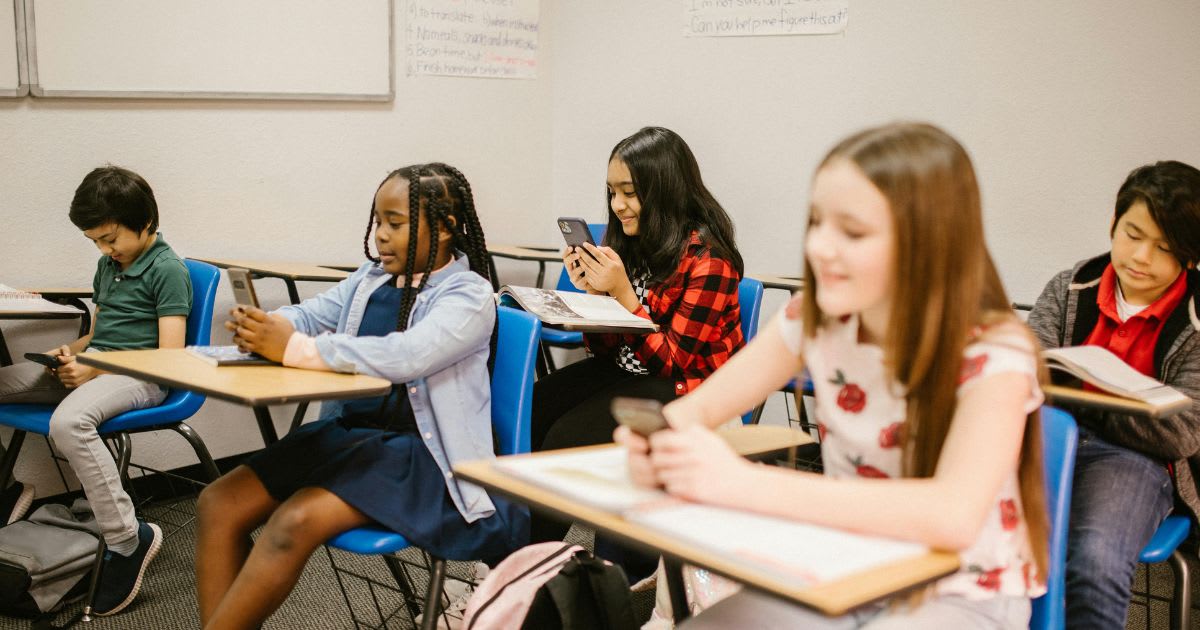
An American survey (by the Pew Research Center) also tried to look at social media addiction among teens, and the findings were downright scary. Close to half (45%) of teen respondents said they spend "too much time" on social media. While most young people (48%) reported experiencing negative emotions because of long hours of social media exposure, the survey found that teen girls are more vulnerable to being affected than boys (25% vs. 14%).


Meanwhile, netizens have a mixed opinion about the court's decision. While some called out social media for affecting mental health, particularly that of children, others criticized parents/guardians for allowing internet access at home. For instance, @wlsn77 commented, "There should be a lawsuit against social media for spreading hate and misinformation. The damage it has done to communities and people's lives is incomprehensible. "
@danialonderstal3564 wrote, "I am not saying that it's not the fault of the social media platforms, but parents have to be held accountable as well. No one's the good guy here." Similarly, @born-in-the-wrong-gender suggested, "We need to bring in a law that restricts children under the age of 18 from having a phone, tablet, laptop, or computer that can access the internet — it would not only protect children from online harm but also get rid of the age verification laws."
More on Scoop Upworthy
Teacher shares chilling classroom description revealing why they are exhausted all the time
Smartphone ban in schools is boosting socialization and minimizing distraction, research reveals
Teacher laments schools enabling 'iPad kids': 'We know kids can't handle this'
 Share on Facebook


