Free water was illegal in this Arizona city until one man broke the law
75% of the neighbors have followed Lancaster's method of collecting rainwater to improve natural vegetation

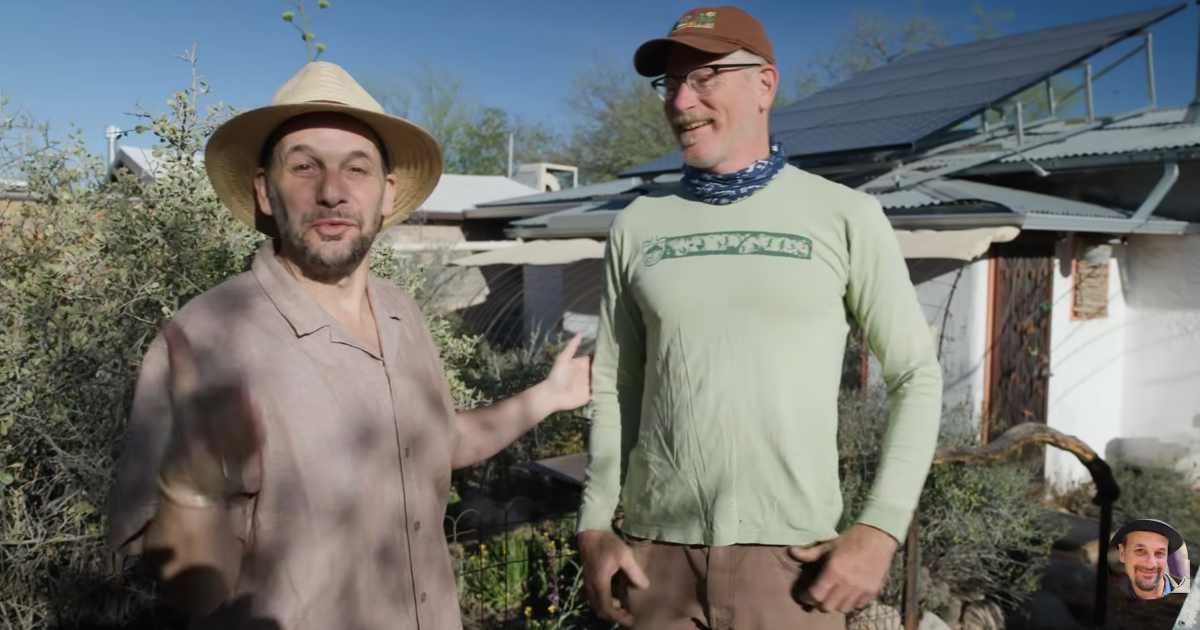
After his very first permaculture class in 1996, Andrew Millison (@amillison), now a permaculture teacher, was inspired to become a practitioner and gardener by his teacher, Brad Lancaster. 30 years later, Millison visited his Lancaster in Tucson, Arizona, to witness the transformation his teacher had created by doing something that was once illegal. Lancaster was considered to be a 'water harvesting legend' in the neighborhood. He managed to turn a 'sun-baked urban desert' neighborhood into a thriving town with free water, covered in native plants and trees. On July 1, 2026, he posted a video taking viewers through the entire operation.
From illegal to mandatory
30 years ago, the asphalt-covered streets were designed to drain the land dry to a point where almost nothing grew. Lancaster and his neighbors decided to go 'rogue' and cut holes in the curbs to allow water to flow. By cutting out the asphalt that drained water, they turned it into a basin that retained water. The collected rainwater was used to irrigate the street trees, which in turn shaded and provided food for the people. Lancaster clarified that everything that was on the streets was public property and could be used by anyone. What was once illegal became mandatory when people saw the results. Lancaster outed himself to the city to help other neighborhoods with his discovery.
Native trees and plants for food
Lancaster revealed that over three decades, they managed to collect 5,000 gallons of water annually, in a place that gets only 11 inches of rain. They used the water to grow native edibles such as velvet mesquite, condolia, wolfberry, goji berry, hackberry, and more. They no longer had to depend on a grocery store. Residents could go outside their house and just pluck something to eat. Additionally, since nature has been restored, more than four dozen native birds came back to the neighborhood.
Storm to Shade
Initially, only a small group of people dared to adopt Lancaster's methods. But now, 75% of the neighbors on the block have followed suit. Millison explained that Lancaster's prototype gave hope to other desert cities they could do the same in the future. Ever since the water harvesting basin was made mandatory, the city offered a $2,000 rebate to homeowners who installed them on their street. They even created a department to overlook basin construction called the 'Storm to Shade.' To prove that Lancaster was making a difference, Millison used an infrared thermometer to measure a spot of asphalt that had been baked under the sun and a shade covered by the trees. It showed a 30-degree Fahrenheit (127-degree and 96-degree) difference between the two spots.
Everyone is involved in Lancaster's project
Three decades later, the youth too, were influenced by Lancaster's project to create more basins, plant more trees, and capture more rainwater. So far, they collected more than a million and a quarter gallons of storm water, planted more than 1,800 native food-bearing trees and thousands of multi-use understory plants. Lancaster's main goal was to bridge the canopy from one side of the street to the opposite side of the road.
You can follow Andrew Millison (@amillison) on YouTube for more permaculture content.
More on Scoop Upworthy
Australia to dedicate 30% of its land to protect wildlife: 'Need for action has never been greater'
Wildlife conservation group secures lands in rainforest to stop commercial hunting of bears
Here is what Mt Rushmore might have looked like if the project had not run out of funds
 Share on Facebook


