Man sees his cat’s features on human faces after brain surgery and it works both ways
It causes facial distortions known as prosopometamorphopsia, or PMO, a disorder sometimes nicknamed 'demon face syndrome.'

Waking up to a pet is usually comforting, but after brain surgery, a 28-year-old man began seeing his cat’s features appear on human faces. Even stranger, the effect could work in reverse: if he looked at a human face first, that person’s features could later appear on his cat. A report published by Dartmouth follows a life-saving operation in the northeastern United States. Karl began experiencing a two-way visual distortion involving his feline companion, as detailed in Dartmouth’s report published on November 12, 2026.
Cat got your face?
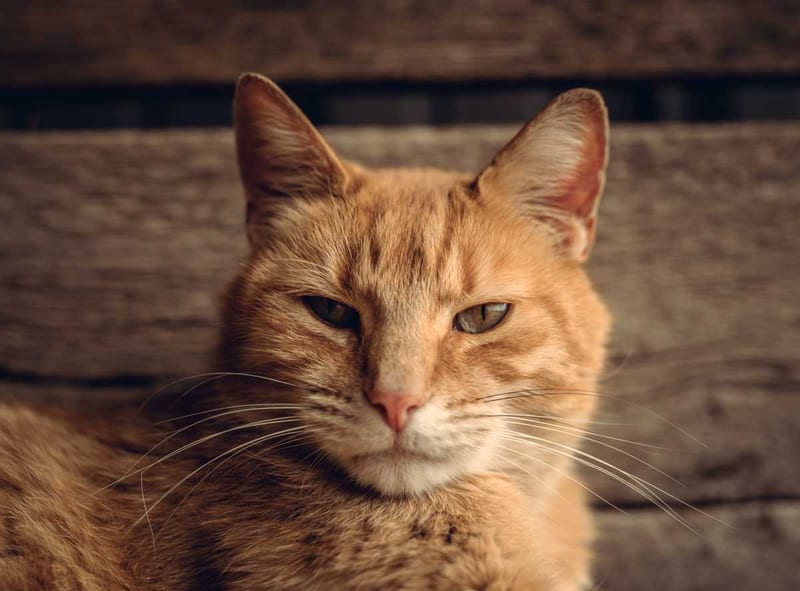
Karl, with his gray tabby cat, named Luna, lives in the northeastern United States. When Luna is the first face Karl sees in the morning, her features can later appear on the human faces he encounters that day, including her almond-shaped eye sockets, enlarged pupils, and fur stripes, projected onto the faces of people he sees in real life or on screens. Researchers determined that Karl has a form of palinopsia, in which previously seen images persist or reappear. In his case, it causes facial distortions known as prosopometamorphopsia, or PMO, a disorder sometimes nicknamed "demon face syndrome" by outlets like the New York Post because of how drastically it warps human faces.
The face swap
The true twist, however, lies in how this condition reverses itself and why it started in the first place. If Karl happens to look at a human face before seeing Luna in the morning, that person’s eye shape and pupils will later show up on other people and even on Luna’s face. This unusual symptom began two years ago after surgeons removed part of Karl's right temporal lobe, a brain region vital for processing faces. This was done to treat an arteriovenous malformation, which is a dangerous tangle of blood vessels that risked causing a brain bleed.
Brad Duchaine, a professor and chair of psychological and brain sciences and principal investigator of the Social Perception Lab at Dartmouth, documented Karl’s experience in the journal Cortex. “This case of Karl seeing his cat’s features in human faces and vice versa demonstrates that individual features can be pulled from memory and influence our ongoing perception,” Duchaine explained. He also noted a 1986 Cortex study about a woman who saw a poodle's entire face on fellow bus passengers, though Karl's brain uniquely transfers individual facial components rather than whole faces.
A very rare visual glitch
Karl’s condition is extremely rare, as fewer than 100 cases of prosopometamorphopsia have been documented in medical literature over the past century, according to WebMD. In a study of 81 known cases, researchers found that epilepsy was linked to 10% of cases and stroke was involved in 9%. Furthermore, the underlying trigger for Karl’s surgery is also uncommon in the United States. Brain arteriovenous malformations affect roughly 18 out of every 100,000 Americans, with only about 1 in 100,000 people officially diagnosed each year, according to the Brain Aneurysm Foundation.
Putting the distortion into pictures
To help capture what Karl was actually seeing, Duchaine created a line drawing and fed it into a large language model to generate photo realistic visuals, refining the images back and forth with Karl for the report. “AI provides researchers like us with the ability to generate more accurate visualizations of what people are experiencing when they’re having distorted visual perceptions,” Duchaine said. He then added, “If you know what the person is experiencing, you can much better research what they’re dealing with and try to figure out ways to control it. And now the patient can also take part in that process of creating those visualizations.” He also emphasized that “The use of AI is also helpful for patients who want to convey not just to their healthcare professionals, but to their friends and family, what faces look like to them.”
Moving forward, the research team, which included Antônio Mello, Guarini, a PhD student in the Department of Psychological and Brain Sciences, and Brigham and Women’s Hospital neuropsychologist Jennifer Nosker, plans to continue working with Karl.
More on Scoop Upworthy
 Share on Facebook