Man's fake flash flood revives 300-million-year-old eggs. They immediately turn on each other
Over the next several weeks, a dramatic survival race unfolded among the 3 species.

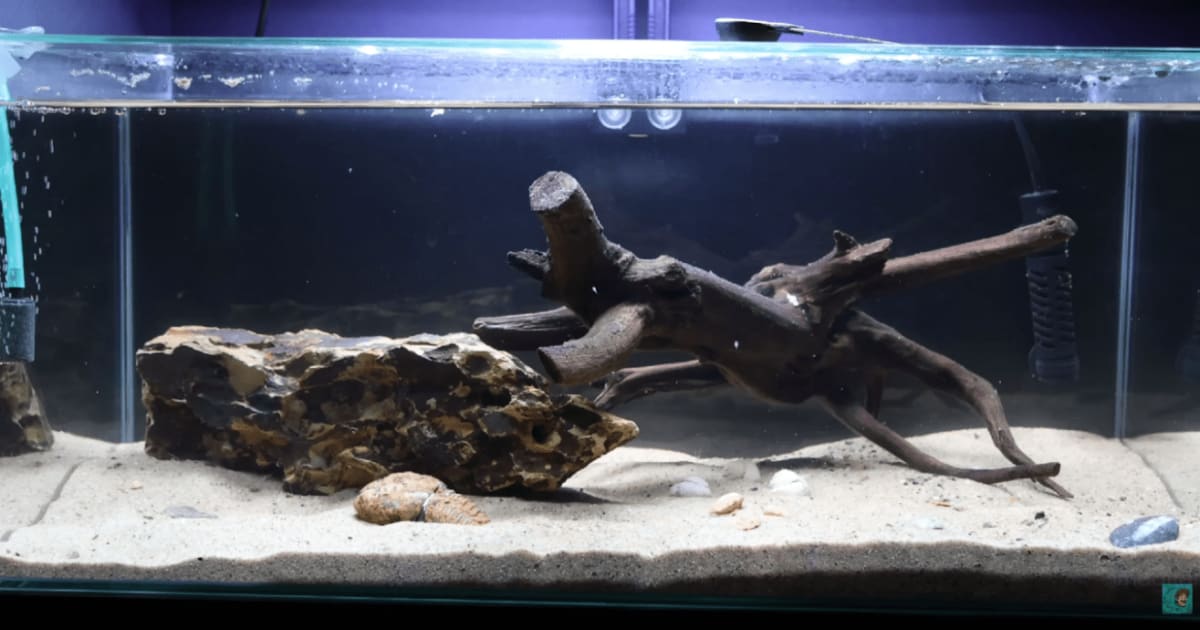
Imagine a glass tank filled with dry, seemingly lifeless sand that hides thousands of dormant eggs belonging to creatures with ancient lineages waiting for a single signal. YouTube creator @Gabes Tanks recently captivated the internet by filming a 115-day time-lapse documenting the complete life cycle of ancient creatures, including Triops, fairy shrimp, and clam shrimp that hatch, hunt, and reproduce inside a simulated desert flood. Posted on August 6, 2026, the video blew up almost overnight, racking up over 1.2 million views, 27,000 likes, and over 1,100 comments in just one month.
Survival of the fittest in a simulated desert rainstorm
The creator started with an empty tank, laying down sand, dragon stone, driftwood, and fossils before triggering a "desert storm" with an overhead sprinkler system. The deluge triggered the dormant eggs buried in the sand to begin hatching, bringing the dry bed to life within hours. Rapidly growing fairy shrimp and clam shrimp were soon joined by Triops, which the creator called the tank's ‘apex predators’ and which have an ancient evolutionary history stretching back hundreds of millions of years. Over the next several weeks, a dramatic survival race unfolded: Triops hunted smaller tankmates, molted continuously to grow, and battled severe population crashes and shrinking water levels. At the center of the drama was "Queen," a massive Triop that dominated the tank, laid thousands of eggs, and eventually succumbed to her short natural lifespan.

When everything dies, the eggs remain
The grand reveal of the project lies in the paradoxical nature of these organisms: even when every living creature in the tank dies out, the ecosystem isn't dead at all. By day 85, all active life had vanished, and by day 115, the water had completely evaporated back into dry sand. However, buried beneath that dried bed was a newly laid generation of thousands of eggs, dormant and waiting for the next flood. As the creator put it, "These animals aren't built to last. They're built to hand the whole thing off before their own clock runs out, then disappear completely and let the sand do the waiting."
How the eggs survive when the water disappears
Scientists have long studied how Triops survive in temporary pools that can completely dry up. Their eggs can enter a dormant state known as diapause and remain buried in dry sediment for decades. Research has also found that drying can actually help trigger future hatching once the eggs are submerged again. This lets generations survive even when the adults live for only a short time, and their pools disappear.
'This was unexpectedly beautiful'


Viewers flooded the comment section with a mix of emotional awe, dark humor, and pure nostalgia. Many praised the creator for turning what could have been a basic science experiment into a captivating, character-driven story, while others cracked jokes about political predators or mourned the short lives of the creatures. As YouTube user @globalchaos1984 put it, "This was unexpectedly beautiful, thank u," while @justanotherdaddd added, "I've never been emotional about these little beings but you somehow did it."
More on Scoop Upworthy
Scientists find cat parasite that fuels risky behavior in humans. Almost 60% of us have it
 Share on Facebook