This 'AI chatbot' is actually just one man named Tucker replying to every message
'Picture this: ChatGPT, but on the other end it’s just me giving bad advice. Manually'


People have gotten so used to AI in their daily lives that many can no longer live without it, and there's a good reason for that. After all, it consistently gives some of the most accurate answers. That being said, there's a new LLM on the market. Created by San Francisco-based Tucker Bryant (@iamtucks), the platform named 'ChatTJB' is like no other. It is powered by 'AI.' Not any AI, though; here the letters don't stand for Artificial Intelligence, but something else. Bryant revealed this surprising detail on Instagram on August 1, 2026, attracting over 729,000 views.
AI taking over the Bay Area
The roots of Bryant's LLM emerged from Silicon Valley, which has recently been overwhelmed by an influx of tech billboards promoting various startup algorithms. Noticing how easily people surrender their critical thinking to the sleek aesthetic of these platforms, Bryant, who is a social media creator, decided to challenge this growing trend. He observed that users often accept automated responses without question simply because they appear polished and authoritative.
The birth of ChatTJB
To satirize the hype, Bryant launched ChatTJB.org and rented a billboard advertising it as a top chat interface "powered by AI". However, hidden behind a tree was a disclaimer clarifying that "AI" actually meant "Average Individual". "I just built the worst LLM of all time, and it’s about to revolutionize everything," he said. "Picture this: ChatGPT, but on the other end it’s just me giving bad advice. Manually." He built this platform to be intentionally slow, cryptic, and more often than not, incorrect as well.

Responding with a haiku
The logic behind Bryant's platform is simple: he wants people to experience inconvenience so they can start using their critical thinking again. He wants people to question automated answers again, similar to what they used to do while browsing the internet. That is why when one user asked ChatTJB for tax advice, the interface behind which Bryant replied simply responded with a haiku about crows instead of actually assisting.
'Struggling to answer questions fast enough'
Despite it being a sarcastic dig, the project has quickly exploded in popularity. This has left Bryant burnt out with the sheer volume of inquiries; after all, he's single-handedly running the entire platform. He revealed that recently he has found himself handwriting roughly 1,000 manual responses a day. These queries vary all the from dinner ideas to home decor to even personal dilemmas. As his fingers grew sore from typing, he admitted he was "struggling to answer questions fast enough".

Human connection matters
Despite that, Bryant is happy that his experiment has transformed into a "surprisingly meaningful" experience. Furthermore, Bryant reminded everyone that while automated tools are powerful sometimes, "all you really need is to talk with an average individual". Ultimately, his entire initiative highlighted that human absurdity and genuine connection offer something artificial intelligence simply cannot replicate.
AI usage and its impact
The use of artificial intelligence continues to grow stronger than ever. According to a 2026 Pew Research Center survey, 49% of U.S. adults now use AI chatbots compared to 33% in 2024. The report also showed that 42% of Americans use chatbots to search for information, while 38% of employed adults use them for work-related tasks. Another 25% use them for entertainment, 24% for creating or editing images and videos, and 20% for medical advice. More personal uses are emerging as well: 10% use AI chatbots for emotional support or advice, while 4% use them for companionship.
'People seem to be asking such simple questions'
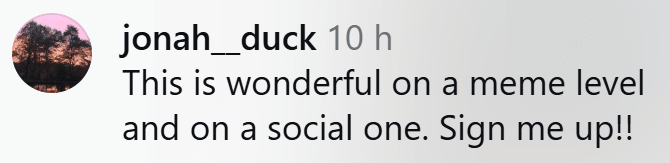
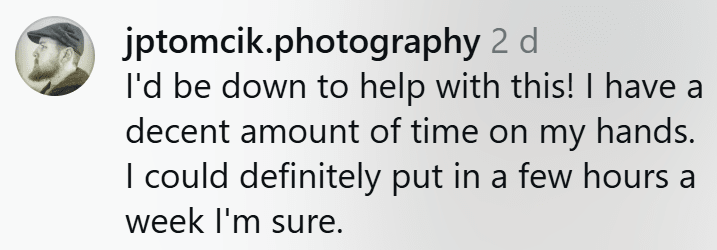
Regardless, the majority of the people are impressed by Bryant's initiative, as he tries to make an impact with his project. @bypiaceres commented, "Wow, this is so fun and kind of a beautiful gesture of community > isolation?? Bravo dude." Speaking on similar lines, @loveonhealth noted, "I love this. People seem to be asking such simple questions, and that's not what we should be wasting so much water and electricity on. Thanks for this."
More on Scoop Upworthy
Cambridge professor explains why you should always say 'please' and 'thank you' to your AI chatbot
'Ask Jeeves': America's internet helpline shuts down after 30 years
 Share on Facebook