Scientists just made an 'artificial sun' burn for 102 seconds. It was 7 times hotter than the real one
By trapping star-level heat on Earth, Korean researchers just unlocked the ultimate source of energy

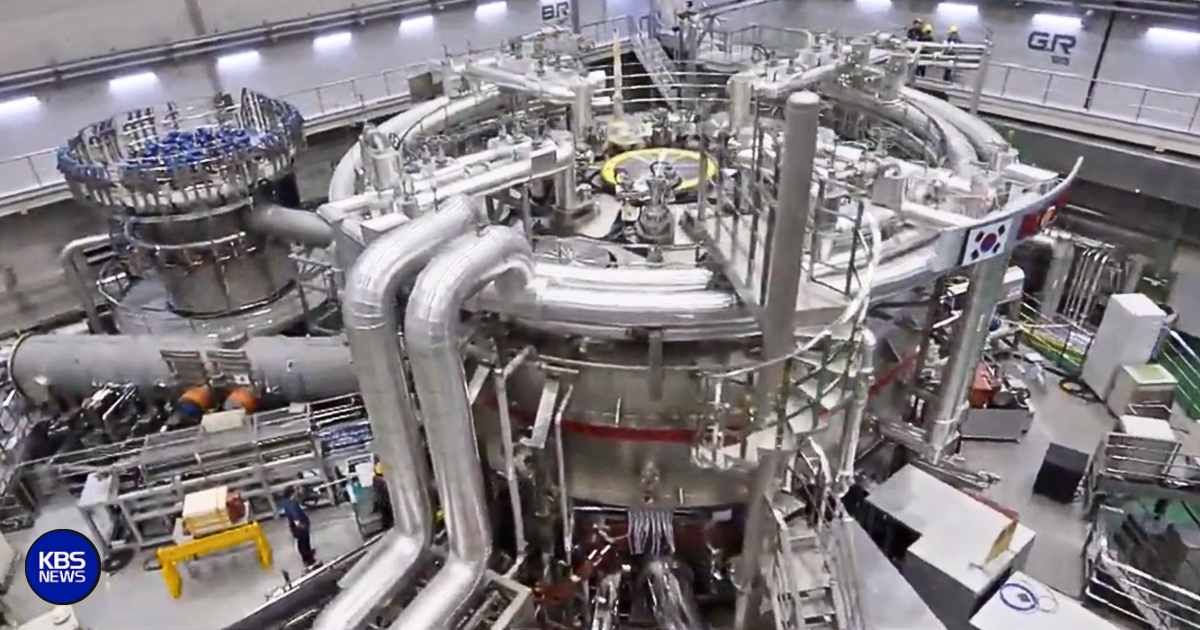
With grids buckling under record heat waves and electricity bills skyrocketing globally, today's energy crisis is a stark reminder that our current power sources are failing us. More importantly, it's telling the world that we need a clean and limitless alternative. For decades, fusion energy has been touted as a clean alternative to fossil fuels, but harnessing it has remained a challenge. However, in 2024, the Korean Institute of Fusion Energy (KFE) announced that its Korea Superconducting Tokamak Advanced Research (KSTAR) device, often dubbed an artificial sun, had achieved a major breakthrough.
KSTAR broke its own record
This breakthrough came during their test runs from December 2023 to February 2024, when scientists managed to keep KSTAR in high-confinement mode (H-mode) for a record 102 seconds. H-mode is the stable operating state needed to sustain the high-temperature, high-density plasma required for fusion reactions.
During the same campaign, the team also maintained ion temperatures above 100 million degrees Celsius — roughly seven times hotter than the sun's core — for 48 seconds, surpassing KSTAR's previous record of 30 seconds set in 2021. By doing so, KFE's fusion research made a massive leap toward fusion energy being used commercially.
Little tweaks made all the difference
The latest record "will be of great help to secure the predicted performance in ITER operation in time and to advance the commercialization of fusion energy," KFE director Si-Woo Yoon told CNN. Additionally, the scientists further revealed that they were able to achieve this feat, thanks to the little tweaks they made throughout the process. However, perhaps the most significant of them all was switching carbon for tungsten in the diverters, which helped them extract head and impurities produced by the fusion reaction.
KFE isn't done just yet
Nonetheless, even though this is a historic feat regarding fusion energy being used as a clean energy source in the future, it will take decades to reach that point. That's exactly why, despite the success, Yoon and his team are now working on taking this to the next step. Their next goal is to sustain a temperature of 100 million degrees Celsius for about 300 seconds by the end of 2026. According to him, this will serve as a "critical" point to be able to further scale up the fusion operations.
Momentum is building
Given these massive wins in recent times, more money is being pumped into nuclear fusion, as it's perhaps the only source that has no drawbacks. In fact, tech giants like Microsoft and Google, alongside major oil companies, are getting attracted to this technology. According to the World Economic Forum, the private investment in this field has seen a steep rise from just $2 billion in 2021 to a staggering $10.6 billion in 2025. At the same time, the fusion companies have also almost doubled from just 23 in 2021 to 53 in 2025.
More breakthroughs are happening all over
Meanwhile, other "Tokamak", which are donut-shaped fusion reactors, similar to KSTAR, around the world have also been making breakthroughs. Just recently, Chinese scientists were also able to confine plasma for about 403 seconds. At the same time, using the Joint European Torus in the UK, another group of scientists set a world record by producing 69 megajoules of energy for five seconds, which is enough to power about 12,000 homes for the same amount of time. Still, it seems we'll have to wait a bit longer to see this technology being used to its full potential.
More on Scoop Upworthy
Professors invent toilet that turns poop into power and digital currency
Indian engineers create tech inspired by 'Star Wars' to solve the problem of water scarcity
New video reveals the science behind lightning rods and how they protect livelihoods
 Share on Facebook


