Women in the 1950s used frogs for pregnancy tests — and there wasn't a single false positive
During Elkan’s time, he conducted 295 tests and used 2,112 African clawed frogs for them.


There were traditional, bizarre, and unexpected ways of doing things a few decades ago, and the same is true for pregnancy tests. Women didn’t have the privilege of using kits and tests to find results. According to Smithsonian Magazine, women had to rely on a “Hogben Test,” one that heavily focused on using frogs to determine pregnancy in the 1950s. A urine sample of a woman would be injected into an African clawed frog (Xenopus laevis) in a lab, and the next morning, if the frog released eggs (i.e., if they ovulated), it meant the woman was pregnant. As baffling as it seems, the results were actually accurate. And there’s interesting science behind it all.
The test checks a patient's chorionic gonadotropin, a pregnancy hormone in the human body that makes the female frog ovulate and produce eggs. Dr. Edward R. Elkan, who had conducted hundreds of tests like these in the 1930s, wrote about it in the British Medical Journal. He called it the “Xenopus” test. It was originally conducted by an experimenter, Lancelot Hogben, from whom the name, “Hogben test,” came about, according to the Atlantic. The test was deemed beneficial for two major reasons. The first was that it was much more subtle and easier to administer compared to previous methods, which used rabbits and mice as testers.
“Toads were reusable and could be conveniently kept in aquaria,” and so the test was more convenient and could be administered on a larger scale than before. The other reason was its commendable accuracy. During Elkan’s time, he conducted 295 tests and used 2,112 African clawed frogs for them. He mentioned that not one positive pregnancy was false. “There were a few negative results which, when repeated after a fortnight, became positive, but I do not think that these can be regarded as failures,” he remarked. Until the early 1970s, people imported these frogs all over to conduct pregnancy tests, after which they were replaced by the first kit. However, as Elkan noted, “it resembled a small chemistry set and so was not user-friendly.”
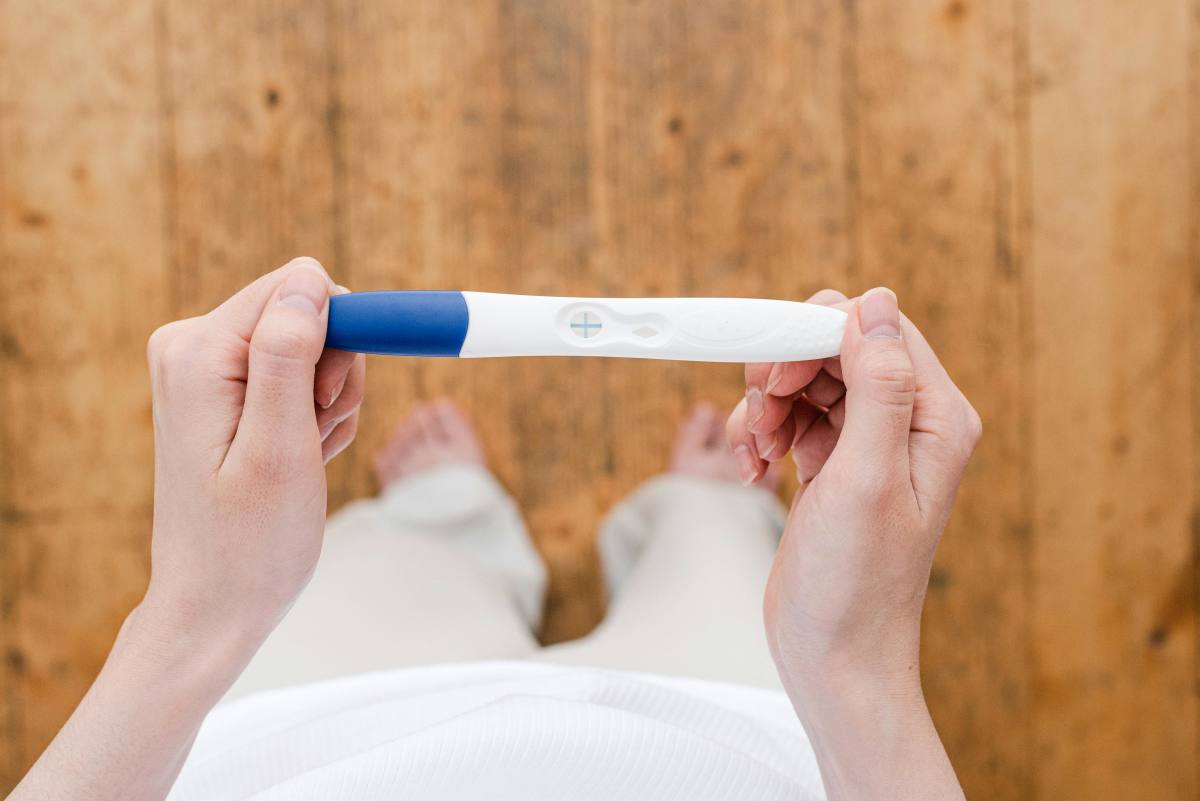
After a few years, in 1988, the “one-step tick” test was finally made available to women. There was one limitation to this test. The frogs were later discovered to be carriers of the deadly amphibian chytrid fungus and are likely to have introduced the fungus to the world after being discarded into the world. Yet, many argue it is still a better option, especially considering previous methods. The University of Michigan noted how testing methods were more and more vague and bizarre in the 18th century. For instance, Egyptians urinated on wheat and barley to test. If it sprouted, it meant they were pregnant.

A few other examples were the insertion of onions and looking deep into the woman’s eyes to determine pregnancy. In the 1880s, "Chadwick’s sign” was a tester, and no, it has nothing to do with the Black Panther franchise. It referred to observing a “bluish discoloration of the cervix, vagina, and labia,” which was supposed to happen due to increased blood flow in the post-weeks of conception. Needless to say, these methods were not just inconvenient; they were also inaccurate many times. Then came the rabbits and mice and finally the frogs. Considering this history, you’d clearly vouch for the frogs.
More on Scoop Upworthy
Supportive husband leaves heartwarming notes on pregnancy tests for partner battling infertility
Study claims female frogs fake their own death to avoid unwanted male attention: 'Tonic immobility'
 Share on Facebook