High school teacher discovers the first 23-ft-long trackway of a 66.5-million-year-old Tyrannosaurus rex
Years of hard work paid off for Ken Hups, who is now using his massive discovery to teach kids


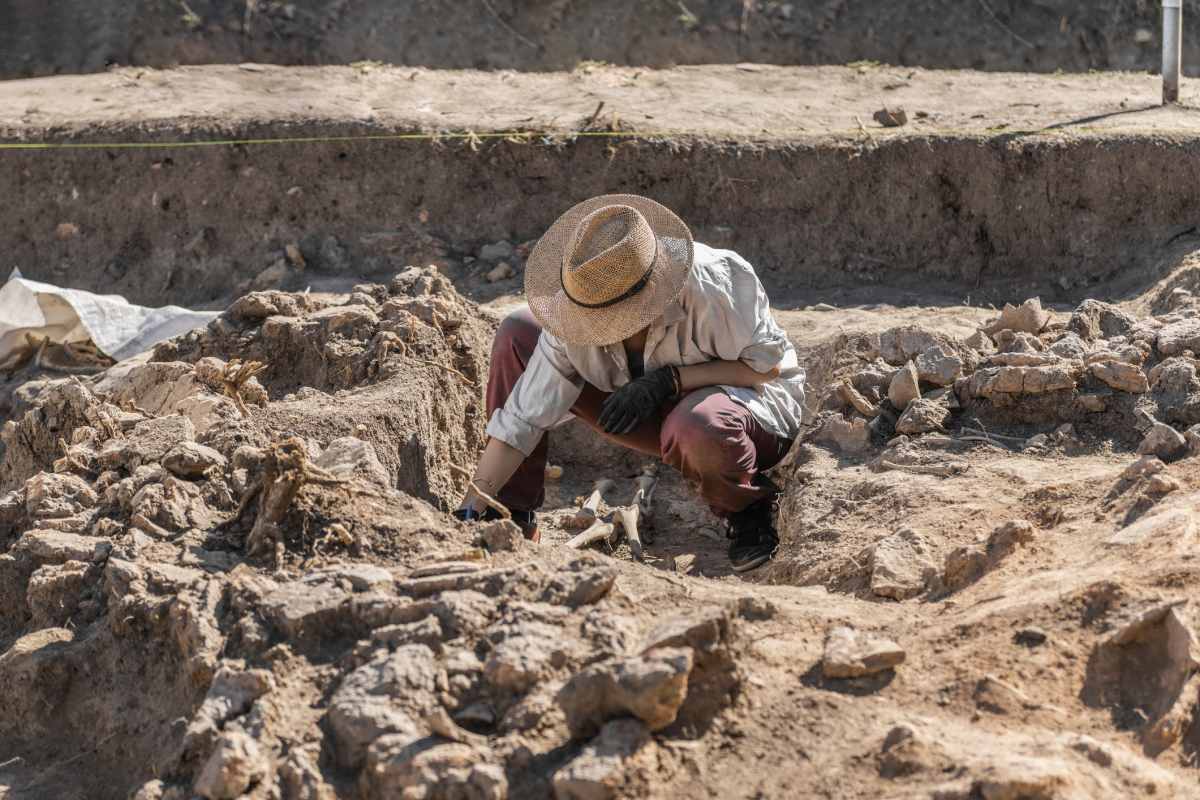
For years, Northglenn High School teacher Ken Hups spent his summers scouring the sun-baked dirt of North Dakota's Hell Creek Formation. Just like paleontologists around the world, he hoped one day he'd find a dinosaur trackway. But that didn't happen until last year, when Hups spotted an unusual indentation in the ground. He immediately peeked behind, silently hoping for the best. What stared back was far more than a fossil; it was part of a 23-foot-long colossal trail, about 66.5 million years old, marking the world's first known trackway left by a Tyrannosaurus rex. The story was shared by 9NEWS (@9news) on September 11, 2026, in a video that has been viewed over 1.2 million times since.
Decades of searching
The journey began about 20 years ago when Hups started spending his free time desolating layers of the Hell Creek Formation. Dig sites across the territory frequently yielded remains of common herbivorous dinosaurs, which he joked were little more than "the cows of the Cretaceous period" because of just how common they were. Nonetheless, despite these discoveries, finding concrete, undisturbed footprints of carnivores long eluded researchers.

Stumbling upon historic tracks
That was until one day, while navigating the rocky terrain, Hups spotted a massive rock formation in the stone that immediately caught his eye. Upon closer inspection, he realized that it was not just a rock. "Please be another track," he whispered to himself as the realization set in. Sure enough, he stumbled upon what was only the third recorded set of footprints from the predator on Earth and marked the world's very first pathway left behind by an adult Tyrannosaurus rex approximately 66.5 million years ago.
Decoding the creature's movement
Extending across a total distance of 23 feet, each impression spanned an enormous three feet across. The spacing between the steps offered researchers from the Denver Museum of Nature & Science and Liverpool John Moores University in England, working alongside Hups, an unprecedented glimpse into the creature's locomotion and pace. "It allows you to go back in time and see what the area was like," Hups explained. The data confirmed that the dinosaur had a stride of roughly 13 feet and a pace of about 3.5 to 4.5 miles per hour.

Inspiring high school students
Back in the classroom, Hups incorporated his discovery directly into his teaching and extracurricular activities. He displayed an exact 3D-printed replica of the impression, allowing young learners to get hands-on experience with the rare relic. As for the excavation of the real trackway, he, alongside other researchers, discovered several impressions, which were sent to Denver. This makes it the sole facility globally to house genuine adult tracks. That being said, the researchers have deliberately left some tracks undisturbed on the earth for upcoming researchers to uncover.
America's favorite dinosaur
What makes this discovery even more spectacular is the sheer popularity of Tyrannosaurus rex. According to a YouGov survey, 30% of Americans love dinosaurs. Of these people, a striking 24% name Tyrannosaurus rex as their favorite. This is followed by Brontosaurus (7%), Triceratops (6%), and Pterodactyl (5%). Additionally, with these trackways coming to Denver, it will also help attract people to museums, more than 55% of which across the United States are seeing fewer visitors than in 2019, as per the American Alliance of Museums.
'Fieldwork is real work'


The people also love this discovery and are hyped about it. @Lettingthedaysgoby commented, "I LOVE that he's a hs teacher and these kids are being given access to it." Meanwhile, @deviousdoggo5534 noted, "Field work is real work. This teacher deserves a standing ovation for exposing those kids to REAL learning."
More on Scoop Upworthy
7-year-old boy digs up new garden and accidentally discovers 140-million-year-old Jurassic fossils
Dad on hike with his kids uncovers rare dinosaur fossil — immediately calls paleontologist friend
12-year-old fooling around on geology trip accidentally discovers 80-million-year-old fossil
 Share on Facebook