Fortnite's owner is quietly buying up American forests for an unsual reason
Tim Sweeney's current net worth is $5.1 billion, and he has been making good use of his celebrity wealth by buying acres of land.


It is uncommon to hear of billionaires selflessly investing in anything that will not contribute to their net worth. Tim Sweeney, the co-founder and CEO of Epic Games (Fortnite), is one of the few. Newsweek reported that Sweeney had been investing in land conservation since 2008. According to Forbes, Tim's current net worth stands at $5.1 billion, and he has been making good use of his wealth.
Fortnite's CEO has been buying acres and acres of land across North Carolina, not to build on them, but to preserve them.
"Sweeney owns more than 50,000 acres across the state, spread over 15 counties," writes Newsweek's Lydia Patrick. He did not make the purchases under his own name, but used a different entity. After buying the land, Tim puts it "under conservation easement," which means it is protected from being built upon, or he waits until the government or a non-profit organization takes over the reins.
However, this is not the only good deed Sweeney has done over the years. He has also donated 7,000 acres of land to the U.S. Fish and Wildlife Service.

He donated 7,500 acres to the Southern Appalachian Highlands Conservancy, making it one of the biggest "private land conservation gifts in North Carolina's history." During an interview with The News & Observer, he said:
"Most of my big conservation land purchasing breakthroughs came when the economy was in poor shape and land was prudently priced. Since 2021, the economy has been stronger, land has become more expensive, and my focus has moved to getting large blocks of contiguous conservation lands I’ve acquired since 2009 into permanent conservation."

George Norris of the North Carolina Parks Division also spoke to The News & Observer. He said, "He has enabled us to purchase things that we would not have had the money for in the short-term, which most sellers demand." Tim has sold a few areas at a discount to private buyers.
"In some places, long-time local families wanted land adjoining theirs for expansion, and I've accommodated that wherever it was compatible with conserving key natural habitat... And in a few places, conservation plans didn’t work out, and I sold stranded tracts of land to local folks," he said.

Conserving land is beneficial for both the landowner and the government. The U.S. Department of Agriculture (USDA) is working with more than 500,000 farmers across the country to conserve the land in all possible ways. It protects nature and its resources and provides financial returns.
According to Headwaters Land Conservancy, it "increases property values near greenbelts, saves tax dollars by encouraging more efficient development, and reduces the need for expensive water filtration facilities." The National Forests and Grasslands that are being managed by the USDA support "an estimated 200,000 full and part-time jobs and contribute almost $13 billion to local communities each year."

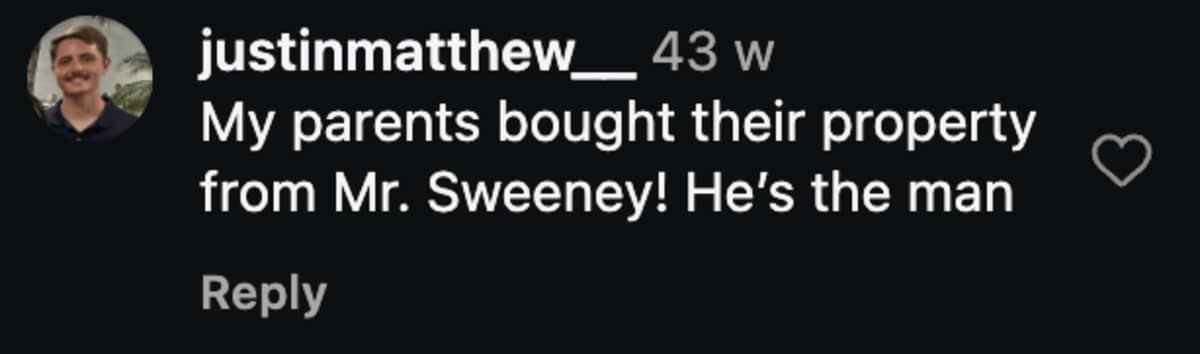
Netizens were applauding Tim Sweeney's efforts in a post shared by The News & Observer (@newsandobserver) about his "approach to buying, preserving land" on May 7, 2025. @polkfamily_ commented, "We need more people like him in this world! What a good guy!" @carolinaclimberscoalition wrote, "Mr. Sweeney has done so much for conservation and recreation in NC. Thank you for sharing the good news!!!"
@holstonriverfishingguides expressed, "A couple weeks ago, we hiked up a stream on my customer's property. His property neighbors one of the contiguous tracks of land owned by Tim. With all of these executive orders and new policies, we were discussing whether these conservation efforts can just be thrown out the window once Tim is gone. What lawyer or organization can fight the developers in the end anyway? They will be dead and gone, too. In other words, what are the actual chances that Tim’s request are honored for decades to come? I’m not convinced that his efforts will permanently conserve this land. We are going to enjoy it while we can, though."
More on Scoop Upworthy
Wildlife conservation group secures lands in rainforest to stop commercial hunting of bears
Australia to dedicate 30% of its land to protect wildlife: 'Need for action has never been greater'
This article originally appeared 2 months ago.
 Share on Facebook


