Girl alerts dad about 'strange marks' on a rock outside. A closer look revealed a massive footprint from 3,000 years ago
Tormod Fjeld and his daughter found a 3,000-year-old rock carving, thanks to a routine stop


When Norwegian native, Tormod Fjeld, hopped into his car with his daughter Ada to a nearby location, they were hoping it would be a regular drive. However, that was until the father-daughter duo decided to make a quick stop at Kolsåstoppen, a hill in Bærum, Eastern Norway. Curious, they took a closer look and realized they may have stumbled upon something extraordinary. They later learned that the carving was in fact a giant footprint believed to date back nearly 3,000 years, according to Science Norway. Since then, the two have become somewhat of an internet sensation, helping archaeologists across the world learn more about our predecessors.
A remarkable discovery
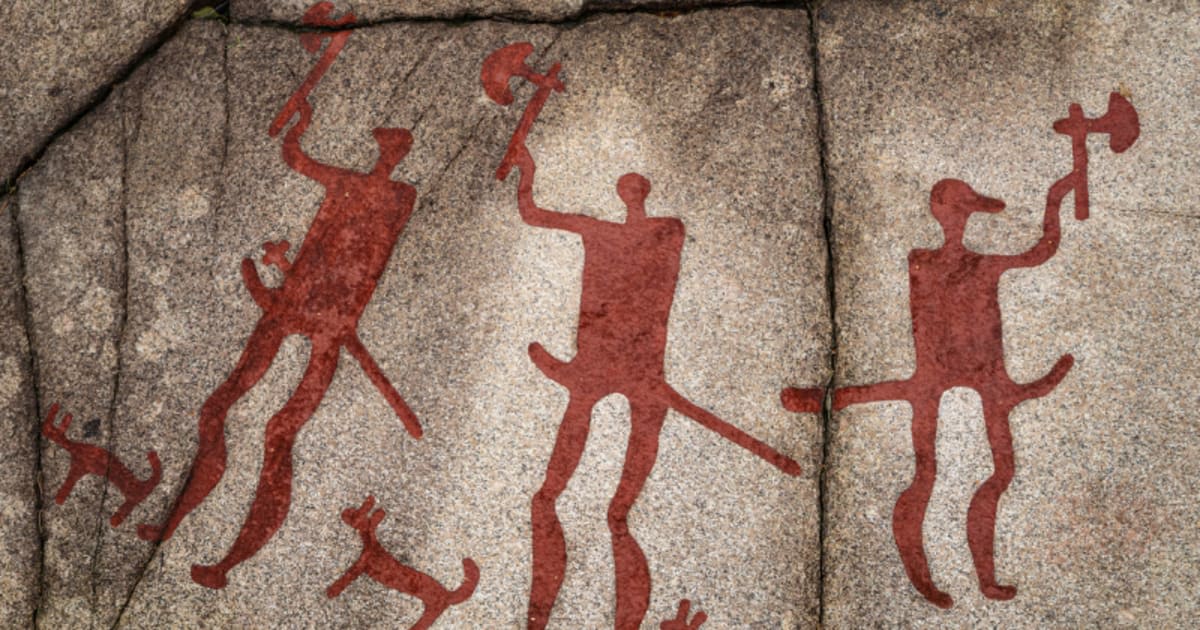
Reported on January 31, 2026, what made the discovery even more fascinating was what the ancient carving actually showed. Fjeld, being a rock hunter himself, later explained that the artwork appeared to depict several people sitting inside a ship, possibly even wearing helmets. Alongside the scene, the duo also noticed a massive footprint and a handprint carved into the rock, details that added even more mystery and significance to the centuries-old find.
For Fjeld, it was yet another proud moment, as he'd been studying and understanding the landscape for decades and had already brought to light several other such historic carvings. "That's what I spend most time on. Interpreting the terrain and trying to figure out the different codes for the placement of the rock carvings," he told Science Norway. Meanwhile, his daughter was also happy to have helped her dad in this mission.

This carving further highlights the Bronze Age communities in Norway, reflecting the importance of maritime routes and rituals within Scandinavia. That's why even local archaeologist Reidun Maria Aasheim also hailed Fjeld for his find. She also noted that archaeologists still have not been able to reach several sites because of limited funding, which is why these contributions are becoming more crucial than ever before.
A race to save hidden history
While Fjeld alone has helped discover more than 70 such sites, Norway needs more people to extend their support to conserve such sites. That's because, according to a study by Cambridge University, nearly 95% of such sites are at risk of disappearing because of weathering and damage. And one way to conserve such sites is by registering them through Norway’s rock art preservation initiatives, including the Norwegian National Rock Art Project, which oversees the management, conservation, documentation, and presentation of such sites.
While already nearly 150,000 sites across the country are registered as protected and natural heritage sites, according to the national cultural heritage database, Askeladden, this is nowhere near their full potential. So, more and more people need to help the country sustain its history and culture. Nonetheless, as long as there are people like Fjeld and his daughter, we can hope that there will be more such discoveries in the future.
More on Scoop Upworthy
75-year-old letter from a coal mine owner leads to the discovery of a priceless mineral
Discovery of 2000-year-old computer from ancient Greece has left everyone confused
 Share on Facebook