Family cleaning out their late father’s attic found 22 artifacts missing since WWII. Then they checked the FBI’s stolen-art database
'It’s an exciting moment when you watch the scroll unfurl in front of you,' said Special Agent Geoffrey Kelly, who was leading the case

For nearly eight centuries, the history of the Ryukyu kingdom sat quietly in a dark attic under the roof of a Massachusetts house. Tucked between old boxes and forgotten heirlooms were 22 priceless artifacts looted during the brutal Battle of Okinawa. It wasn’t until a routine cleanup, when the Massachusetts family climbed into the attic to sort through their late father’s items, that they stumbled upon these Asian artifacts, a discovery that led them straight to the FBI’s stolen database. They submitted the loot to the organization, and an art crime officer helped transfer the centuries-old artifacts to their rightful home in Japan, according to a March 15, 2024, report by FBI – Federal Bureau of Investigation (@fbi), which has gained 18,000 since.
Dating back to three centuries ago
The story dates back to when Okinawa was fighting in the Pacific War. Ryukyu Kingdom, which ruled Okinawa between the 15th and 18th centuries, lost some of its artifacts during the Battle of Okinawa. In 2001, Okinawa authorities registered several missing objects with the FBI’s stolen art database. “Very few items survived from that kingdom,” Travis Seifman, a historian with the Art Research Center at Ritsumeikan University in Kyoto, told the New York Times. “Recouping heritage, recouping cultural treasures, and knowledge of their own history are really big deals for a lot of people in Okinawa.”

The search begins
When the family first found the artifacts, they thought they were valuable, so they began researching their origin. They found that several of the scrolls matched entries in the FBI’s National Stolen Art File, a database used to identify missing artworks and cultural artifacts. The family got in touch with the FBI, prompting an investigation in 2023, with Special Agent Geoffrey Kelly, a member of the bureau’s Art Crime Team in Boston, leading the case.
An exciting moment
Investigators eventually recovered 22 historic artifacts, including six painted scrolls dating from the 18th and 19th centuries, a hand-drawn map of Okinawa from the 19th century, and various pieces of pottery and ceramics. Three of the scrolls appeared to have originally formed a single artwork before being separated.
“It’s an exciting moment when you watch the scroll unfurl in front of you,” said Kelly. “You witness history, and you witness something that hasn’t been seen by many people in a very long time.” The trove also contained an unsigned, typewritten letter suggesting that someone plundered the objects from Okinawa during the final days of World War II. The thief who stole these items smuggled them to the United States and attempted to sell them to a museum but failed.
The bloodiest of battles
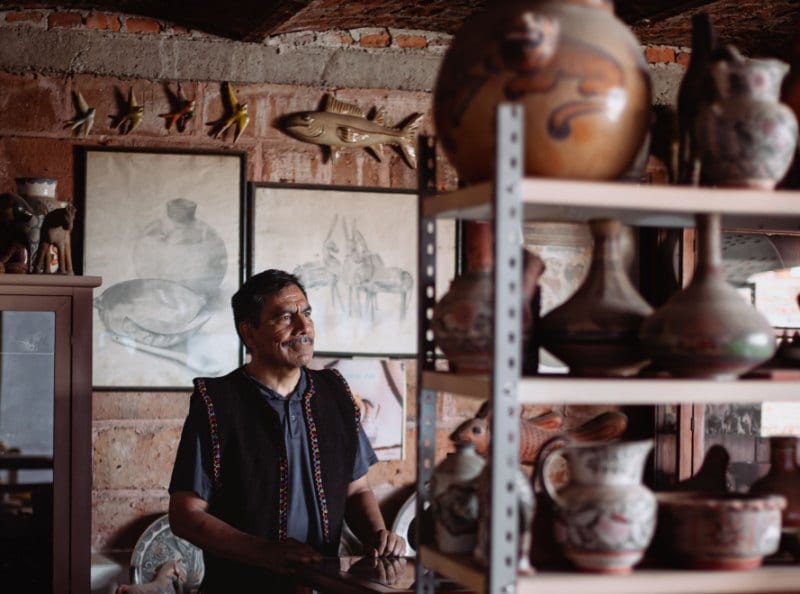
According to The Smithsonian, the Battle of Okinawa was one of the most brutal and bloodiest battles during World War II. Fought in the spring of 1945, the battle killed roughly “12,000 Americans, 110,000 Japanese soldiers and conscripts, and 100,000 Japanese civilians.” As of now, the FBI’s Art Crime Team has recovered more than 20,000 items with an estimated value of over $900 million. But many still remain missing.
After 80 years, the journey home
The recovered artifacts were transferred to the Smithsonian Institution’s National Museum of Asian Art in Washington, D.C. There, the specialists conducted deep analysis and found that they were portraits of Okinawan royalty, featuring vivid reds, golds, and blue accents. Thereupon began the artifacts’ journey home. With the help of the Smithsonian, the FBI coordinated with the U.S. military, the Naval Criminal Investigative Service, and American officials in Japan to arrange the transportation.
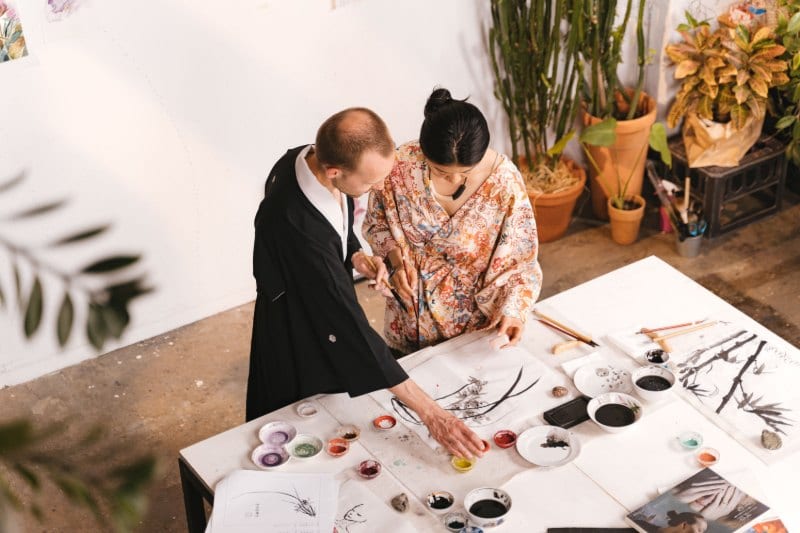
On March 15, 2024, Okinawa Governor Denny Tamaki announced that the artifacts had been returned. A formal repatriation ceremony followed on April 30 at the Okinawa Prefectural Museum and Art Museum in Naha, confirming their return to the people of Okinawa. Meanwhile, the FBI encourages people to report if they find a valuable artifact that is important to the cultural significance of a place. Jodi Cohen, the special agent in charge of FBI Boston, said, “We’d like to thank the family from Massachusetts who did the right thing in reaching out to us and relinquishing these treasures so we could return them to the people of Japan.”
More on Scoop Upworthy
Family stunned to find a box full of old, wrapped Christmas presents in the late grandparents' attic
The woman discovers her grandfather's priceless treasure—a 300-year-old Bible—in the attic
 Share on Facebook