Expert explains why children prefer one parent over another and how it could change with time
Children are more inclined to one parent over another from a young age. Early learning expert says that this is not something to be worried about and is very common.


We are no strangers to the concept of ‘Mama’s boy’ and ‘Daddy’s girl’ while children are growing up. From a young age, children get more accustomed to a parent and get emotionally and physically closer to them. There are trending reels on toddlers running to their mums when asked to choose between their dad or mum. On the other hand, there are videos of children who learn to say the word "dada" way before they can say "mama". An early learning expert, Dan Wuori reveals the reason behind the same.
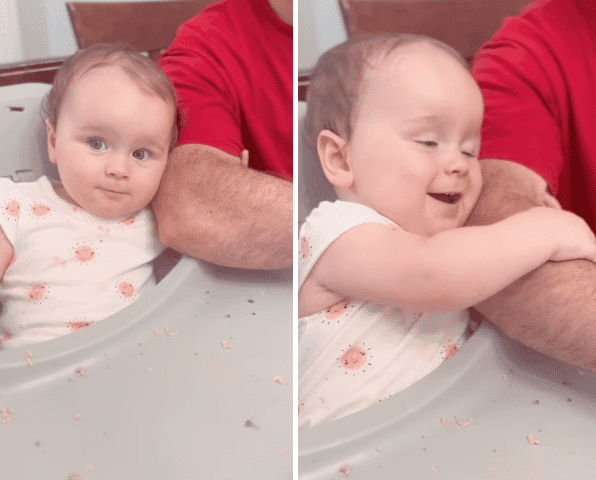
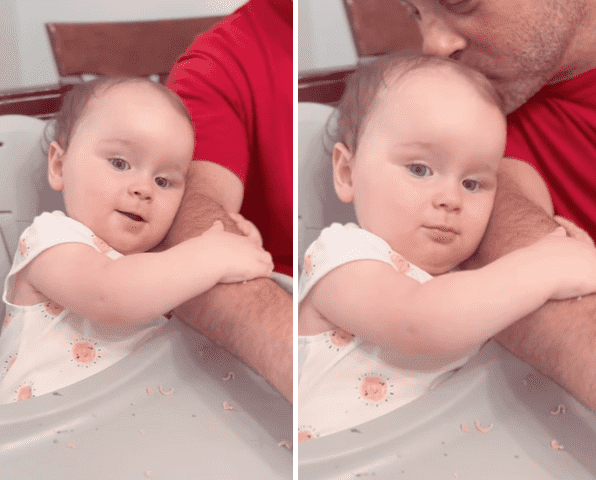
Posting on X (formerly Twitter), Dan Wuori, an expert on early learning shared an adorable video originally posted by @enzoandelena on Instagram of a little girl clinging to the arm of her father and smiling with the caption, "Can you guess if Elena is mommy's girl or daddy's girl?" Using the video as a reference, Wuori asked, “Does your child prefer one parent over another? If so, you’re not alone. And needn’t be too concerned.” Further in his post, Wuori revealed the reason saying, “Because young children remain heavily reliant on adults, toddlers often display a preference for (and may even appear possessive of) the parent who most reliably meets their needs." He also explained how things add to this scenario when another baby comes into the picture.
A relevant study published in the Infant Behavior and Development journal found that the idea that toddlers often prefer one parent over another based on which parent most reliably meets their needs. The attachment security hypothesis suggests that toddlers' preference for a parent is predicted by their attachment security with that parent rather than by who is the primary caregiver. This understanding is also supported by meta-analytical research of over 19,000 participants, which found parental favoritism varies with children's characteristics (like personality and temperament) and situational factors, highlighting that the parent who meets the child's current needs tends to be preferred.
Wuori elaborated, “When a new sibling arrives or a change in work schedule occurs, it’s not uncommon for a child to become more strongly attached to the parent most readily available to them.” If you’re a working parent, you may realize that your child tends to go to the other parent when they need something. That’s what Wuori elaborated on in his post. Wuori also shared that several instances can be the cause for change in situations like these. “This assessment is ever changing so don’t take it personally and don’t be surprised when the pendulum swings in the other direction,” said Wuori indicating that a child can change the idea of his favorite parent.
Does your toddler sometimes seem to prefer one parent over the other?
— Dan Wuori (@DanWuori) October 3, 2023
If so, you’re not alone. And needn’t be too concerned.
Because young children remain heavily reliant on adults, toddlers often display a preference for (and may even appear possessive of) the parent who… pic.twitter.com/MrxDI1mflD
Wuori further emphasized the idea of reliability and meeting the needs of your child to avoid confusion. “Know that when I say the parent who ‘most reliably’ meets their needs, I might just as well be saying the parent who ‘most recently’ met their needs.” He added, “ As children’s memories become less short-term, they will draw less and less upon whose support and caretaking has been most recent.” Wuori’s insightful information dwells on the message that a child is choosing his or her ‘favorite parent’ based on recency and positive reciprocation.
View this post on Instagram
While that is a good point to note, he ends with encouraging parents to not beat themselves up about not being the ‘favorite’ but rather give things time. The video he shared captured the little girl possessively attached to her father like he was her world. It perfectly encapsulates Wuori’s message. Receiving hundreds of thousands of views, fellow parents were simply delighted with the expert's opinion. @edukidsearly said, “This is so true. It took a long time for my son to be confident with his father, but we went through a lot of transitions when he was a baby. Now, he refuses to hold anyone else's hand and follows him around like a duckling.”
This article originally appeared 1 month ago.
 Share on Facebook


