Scientists put oysters in a 50-gallon tank of dirty water. 90 minutes later, it was as clear as a mirror
Unlike humans, oysters aren't picky eaters, so they take in most of the dirt, giving the water a mirror-like look

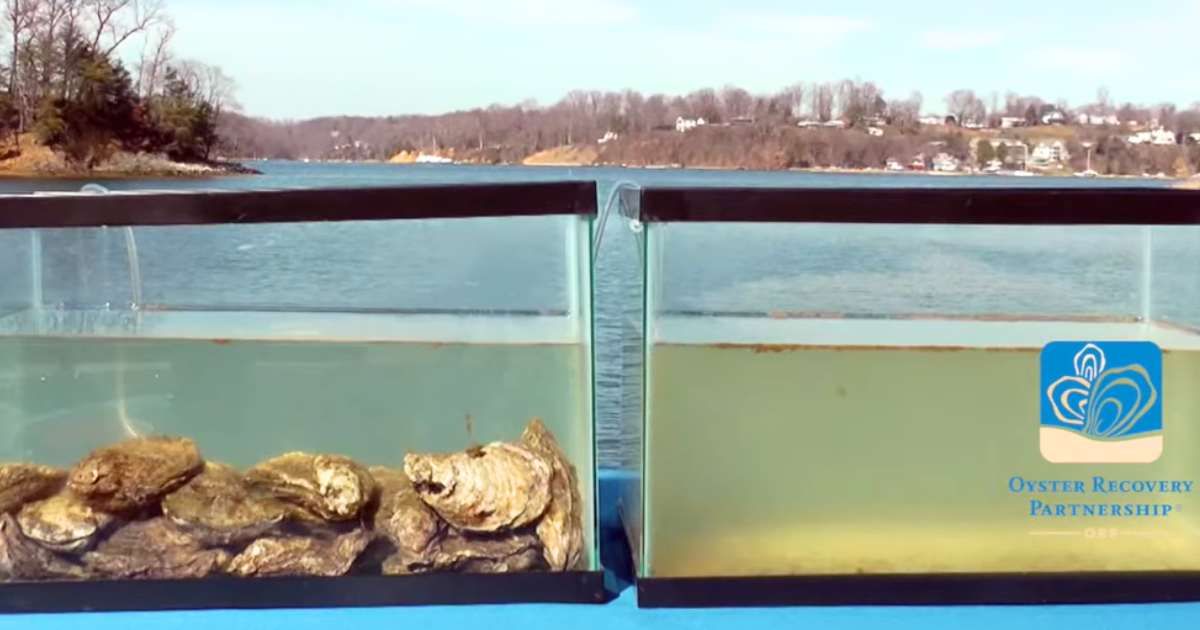
As mankind continues to struggle with poor water quality, oysters apparently can offer a surprising solution as natural water purifiers, according to a report by Oyster Heaven. The tiny bivalve mollusks, considered a famous delicacy in many parts of the world, feed on algae, phytoplankton, nutrients, sediment, and even metal particles present in the water, thus giving the water a mirror-like surface. To prove this, the University of Hong Kong conducted an experiment in 2019, capturing how Hong Kong oysters filtered out the water on one side of the water tank in just about an hour and a half, as reported by the South China Morning Post.
A similar experiment conducted by the Oyster Recovery Partnership (@oysterrecovery) revealed that one healthy adult oyster can filter up to 50 gallons of water per day. Oysters are also called "filter feeders" because of a special technique that they use to fulfill their nutritional needs. On average, these creatures take in approximately 200 liters of water every day to feed on and release the filtered water back into the environment. Inside the oyster's shells lie delicate, layered gills used for breathing and feeding. Now, these gills have hair-like structures called "cilia" that help oysters trap plankton and algae into their mouth.
Apart from food, gunk dirtying the water bodies, such as sediments and metals, also sticks to the mucus inside the gills. While the important food is passed down for digestion and absorption of essential nutrients, anything the oysters can't eat is pushed out as mucus-covered pseudofeces. This means most suspended particles are removed from the water and expelled as feces (after digestion) or pseudofeces, which ultimately settle on the ocean bed.

Too much nitrogen in water is a problem because excessive amounts can trigger algal blooms, which would block sunlight, reduce oxygen, and harm marine life. Thankfully, oysters can filter nitrogen from water, too. In fact, restored oyster reefs can filter about 7x more nitrogen than unrestored sand/mud bottom areas can. At Harris Creek, NOAA Fisheries reported that restored reefs remove nitrogen equal to 20,000 bags of 10-10-10 garden fertilizer.
The study observed that water clarity improved after restoration of oyster reefs. "Simulation model results suggest that up to 20% of chlorophyll a (planktonic algae) can be removed per 300 linear meters of restored reef," the scientists added. This means that if taken into consideration, oysters can be a brilliant solution to the rising issue of water pollution.


Meanwhile, reacting to the experiment, @cruzada07 joked, "That's dope; they just stay there and clean the water without moving. I wish I could clean my room just by sitting on my chair." @hamsters831 wrote, "Maybe oysters shouldn't be eaten then… they serve a very important role in the river, and they probably contain a lot of heavy metals as well." @kmwong1786 pointed out, "People pollute the ocean. Oysters clean pollution, and people eat oysters and their pollution."
More on Scoop Upworthy
Judges tasted tap water from all over the world — one American city came out on top
Woman tries 'emergency drinking water' that was canned in the 1950s in brilliant video
First solar power plant that converts salt water into drinking water installed in Kenya
 Share on Facebook