‘Evening Walks’: Sutirtha Chatterjee’s haunting portrait of belonging and the places we call home
'I’d take my camera on a train and take photographs from train windows,' the photographer said.


Based in Brighton, UK, Sutirtha Chatterjee is a visual artist and educator who spent 10 years as a documentary photographer before moving into fine art, capturing the untold realities of South Asian existence. Flitting between themes of belonging and identity, Chatterjee’s photos convey an eerie silence — an uncomfortable 'gap' — that reveals more than words could. Born in Kolkata, Chatterjee seems painfully aware of his oppressor-caste privilege as he delves into his family background and discusses the social superiority of attending an English-medium school. This ‘access,’ he claims, only widened the gap between him and his subjects, making his photography feel more like he was "parachuting into their lives" and dropping out, rather than documenting their honest journeys. This frustration led him to pursue photography as a fine-art practice in 2021.
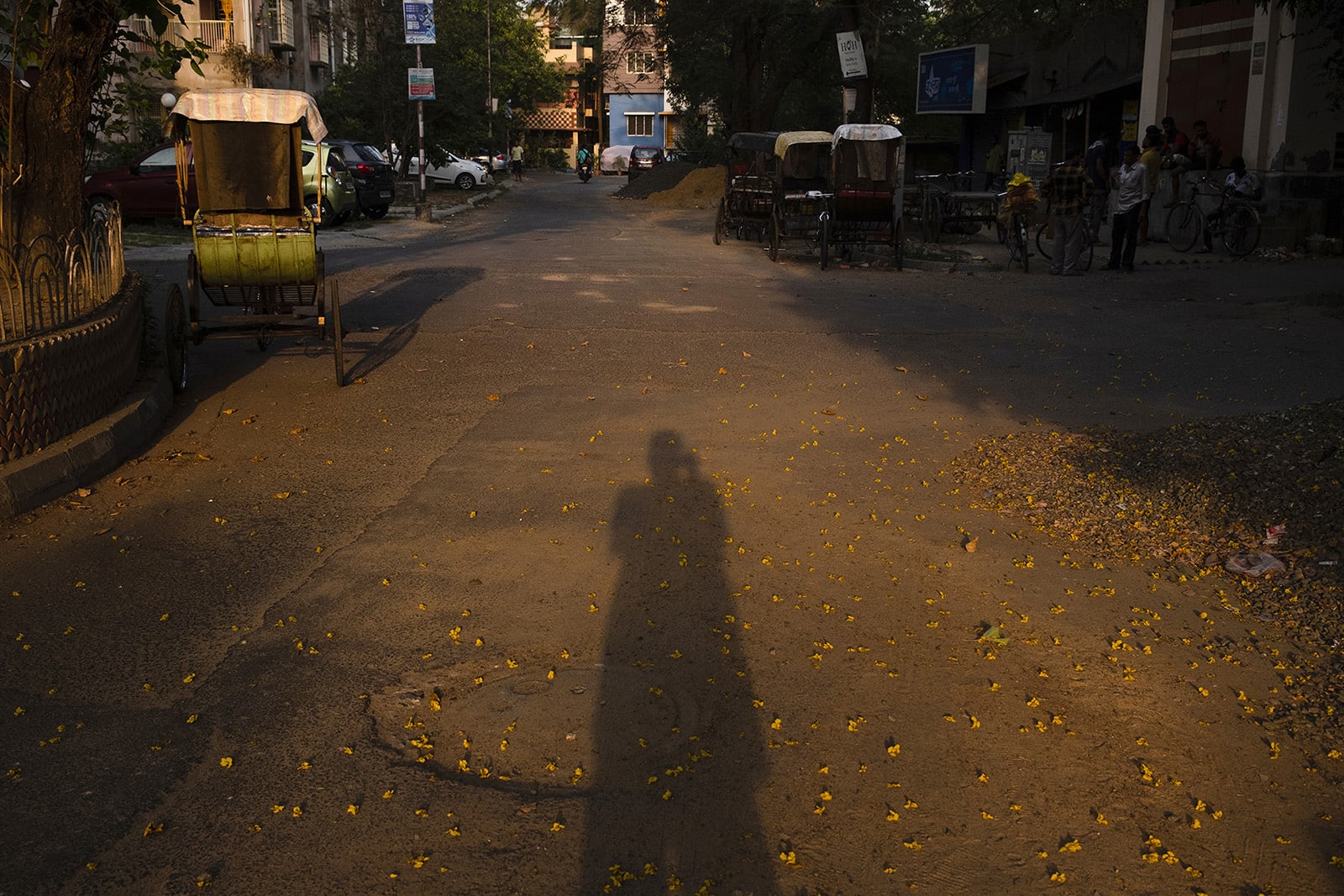
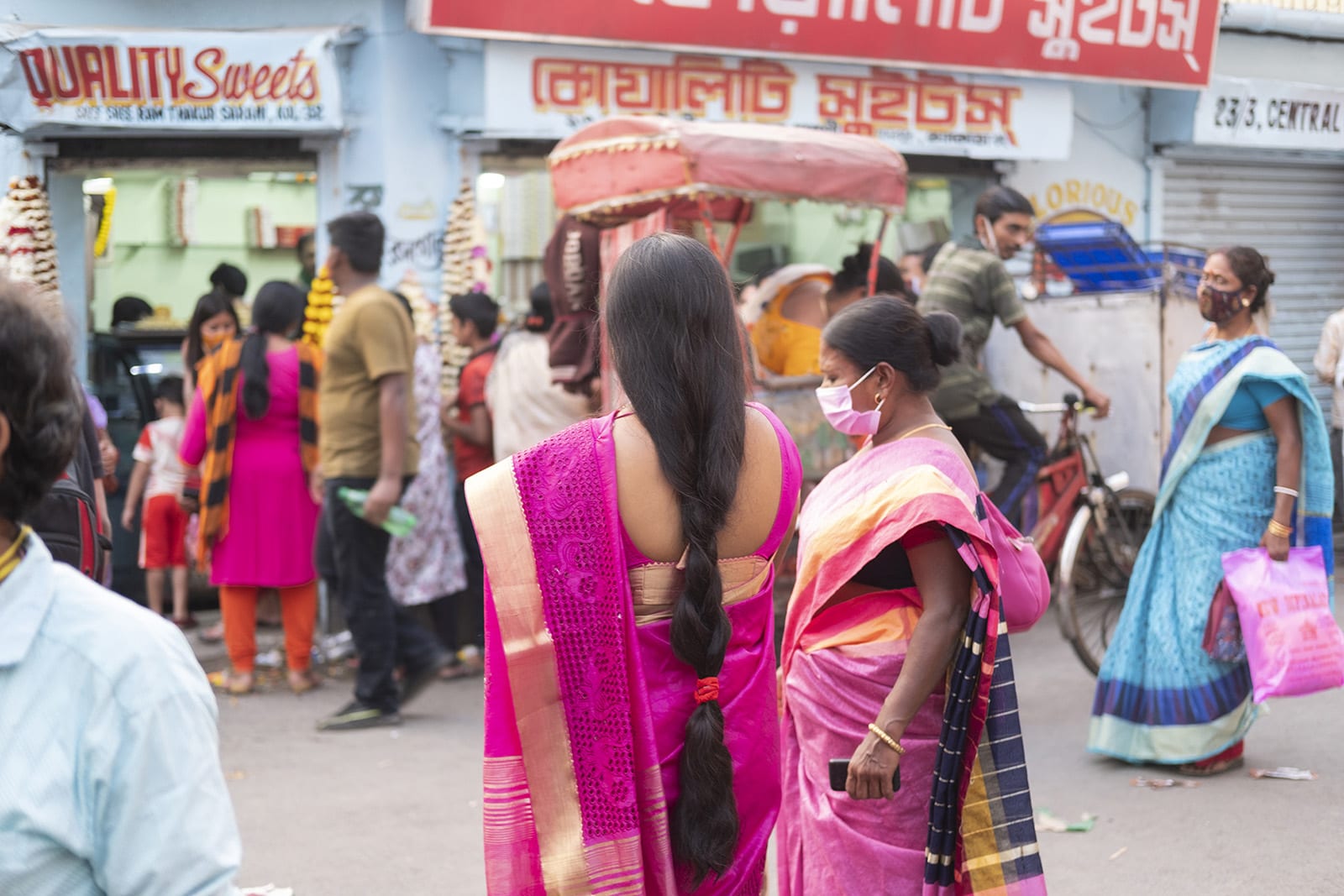
Chatterjee’s quest to understand his place in the world has inspired much of his recent body of work and photobook, 'Evening Walks' (2022-24), developed when he left his conservative family home and moved into a quiet little studio apartment in Jadavpur, where his deliberations on identity, placemaking, and memory found more room to breathe.
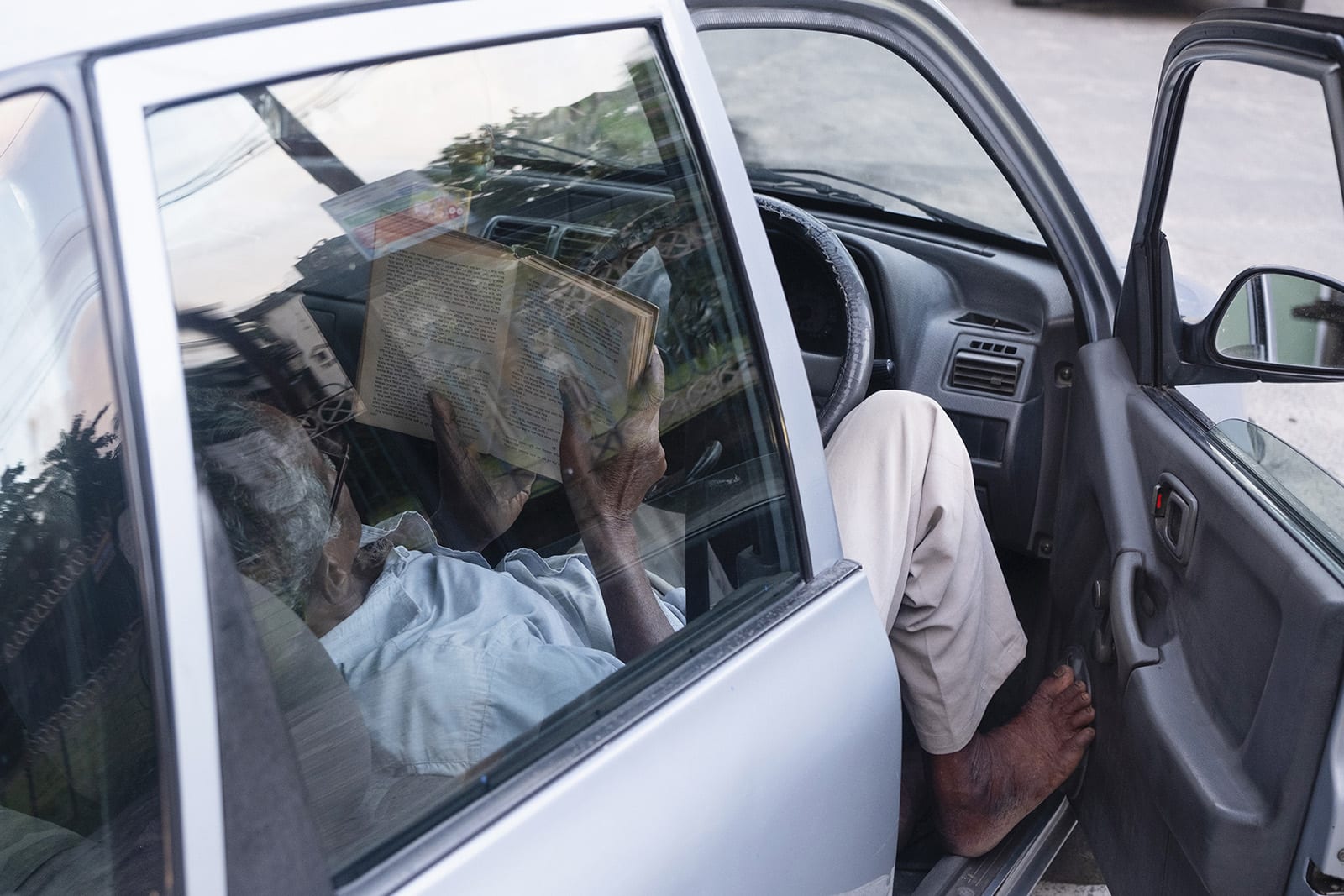
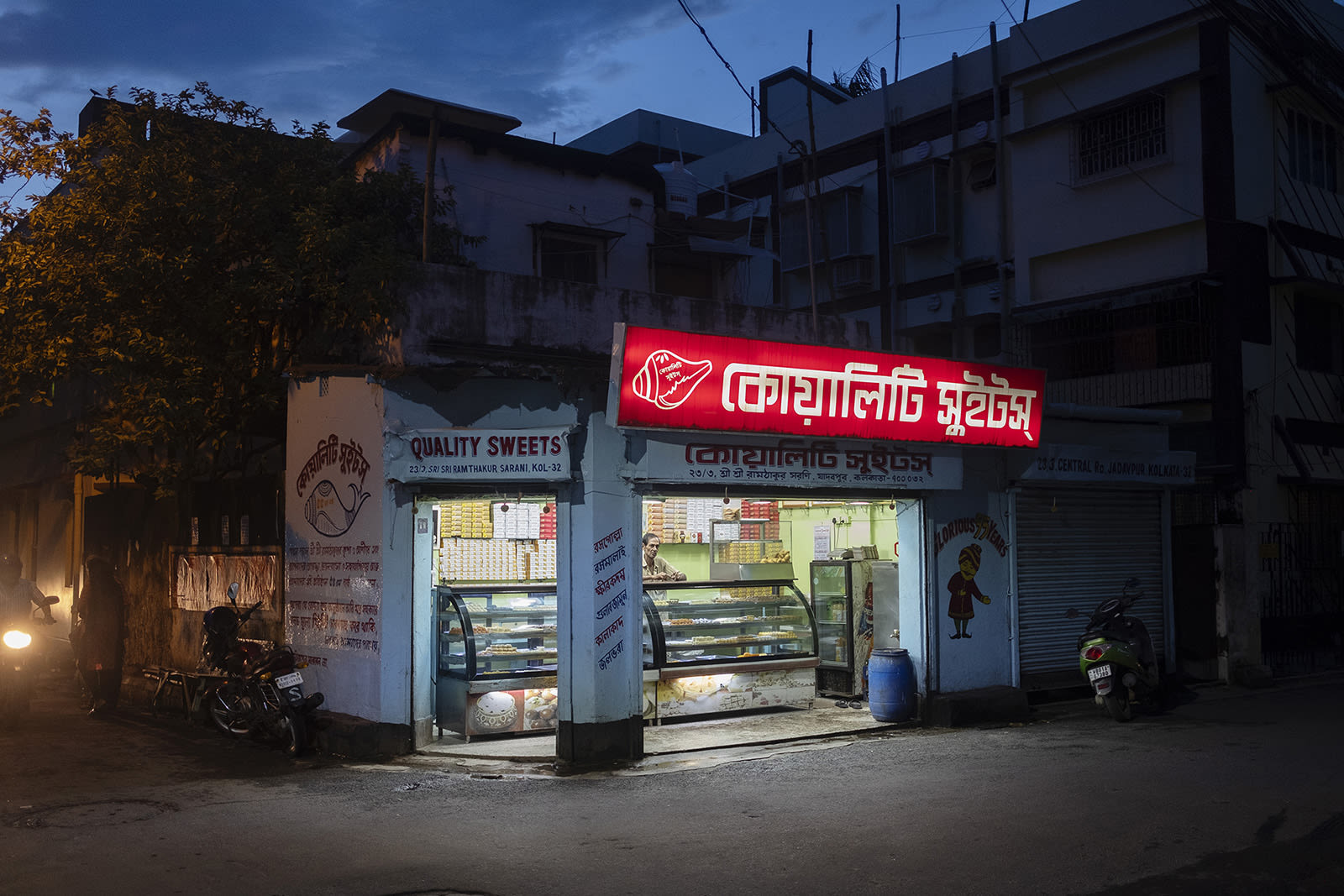
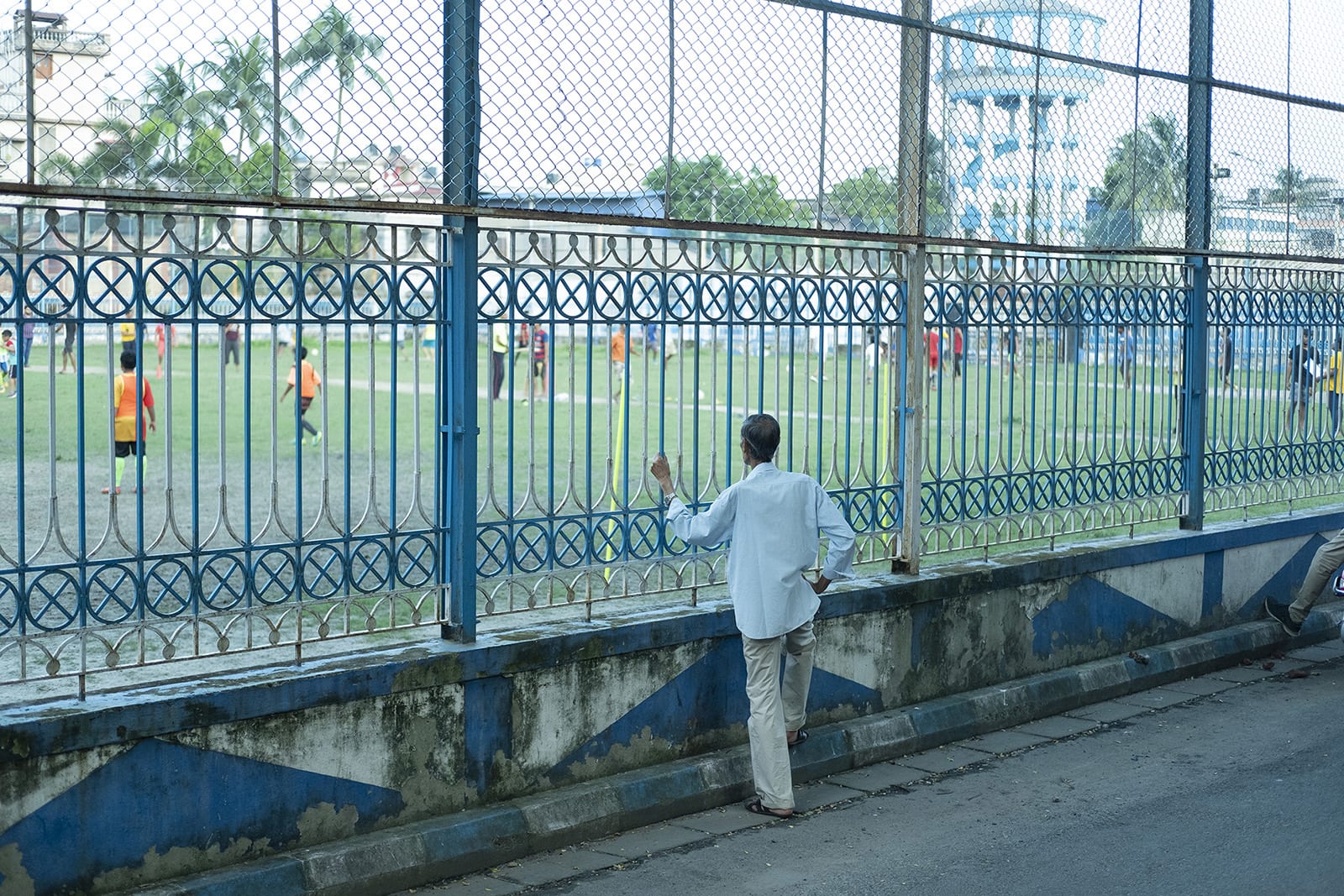
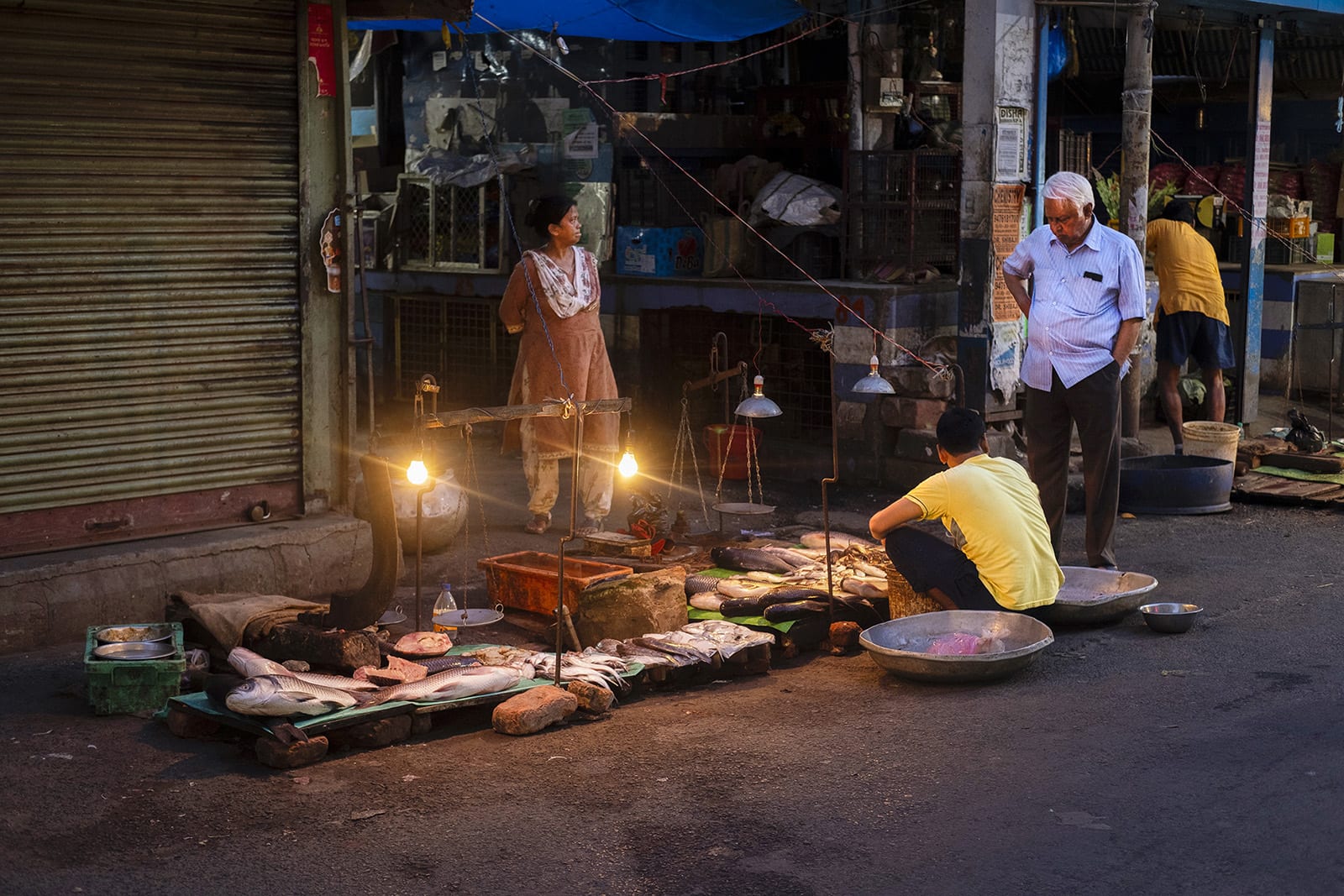
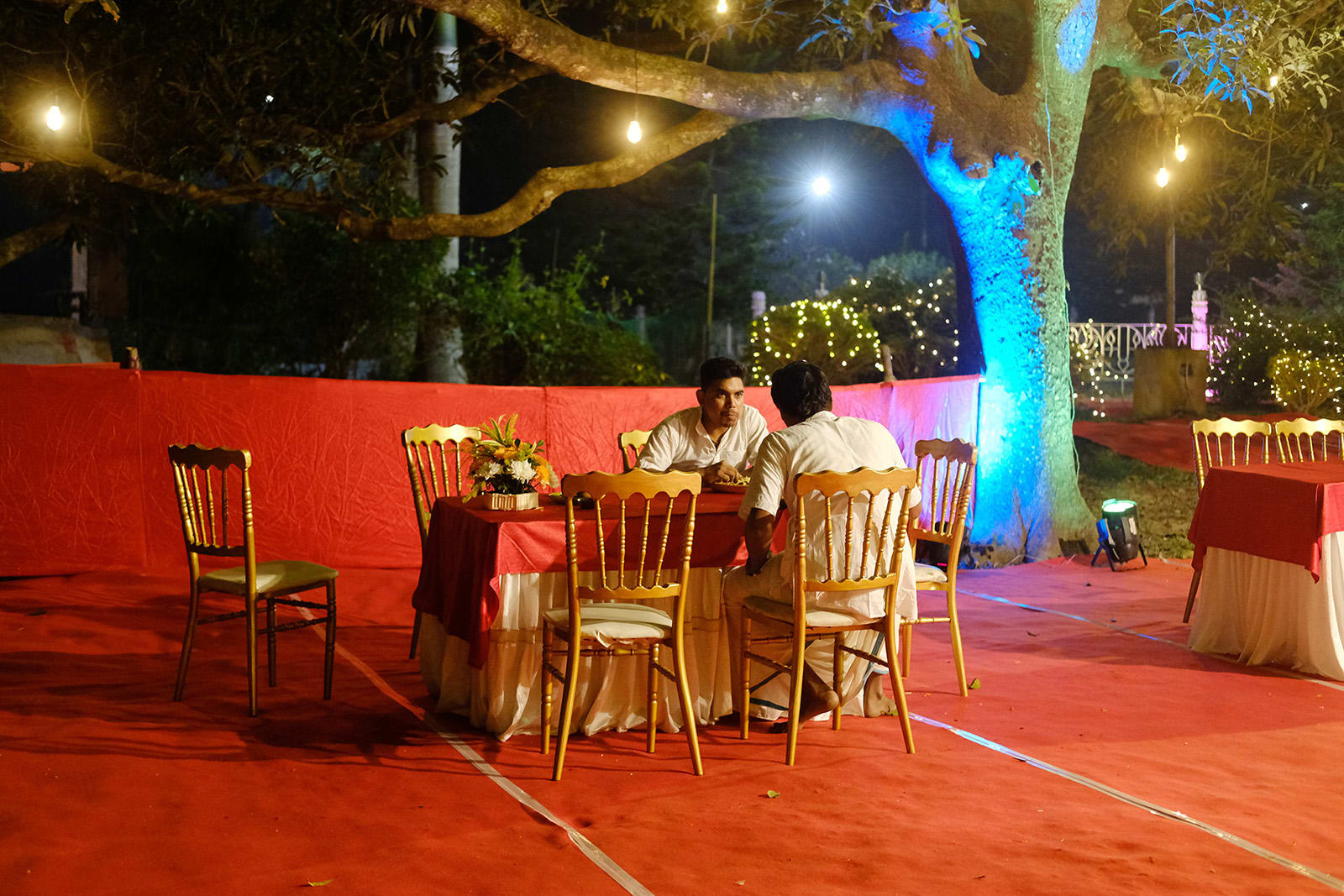
Armed with a camera, he would set out on countless ‘Evening Walks’ (2022-2024) in the bylanes of Jadavpur, his lens drawn to everyday moments of belonging and placemaking: a taxi driver resting his foot on the door and easing into a book; a well-lit 'sweet shop' standing like a lighthouse in a dark alley; and two middle-aged men chatting over a smoke at the end of their workday, relaxing before the demands of domestic life claim them again. While these moments may seem ordinary to a busy onlooker, they contribute heavily to the ‘identity’ of an area, a culture, and its people. Between 2024 and 2025, 'Evening Walks' was showcased in exhibitions across London, including the Safehouse in Peckham and Four Corners Gallery in Bethnal Green.
For Chatterjee, being able to explore these layers on his own was a separate prize in itself. The walks "became like a space for reflection, to think about ideas of family, what it means to build your own space, what it means to let go of some of the privileges that came with living with my Brahmin parents," he shared. He fondly recalls the community he found in Jadavpur: a cat who wouldn't stop sneezing, a "CCTV" neighbor whose hunger for gossip was never satisfied, and the friends and neighbors who looked after the cat. During our interview, he also delved into how "tea stalls or bazaars" became "little informal spaces... for community to come together, share, and take care of each other." Chatterjee laments the lack of 'third spaces' as the common parks in the city keep receding, shifting from turfs, housing kids' afternoon games to newly developed housing apartments.
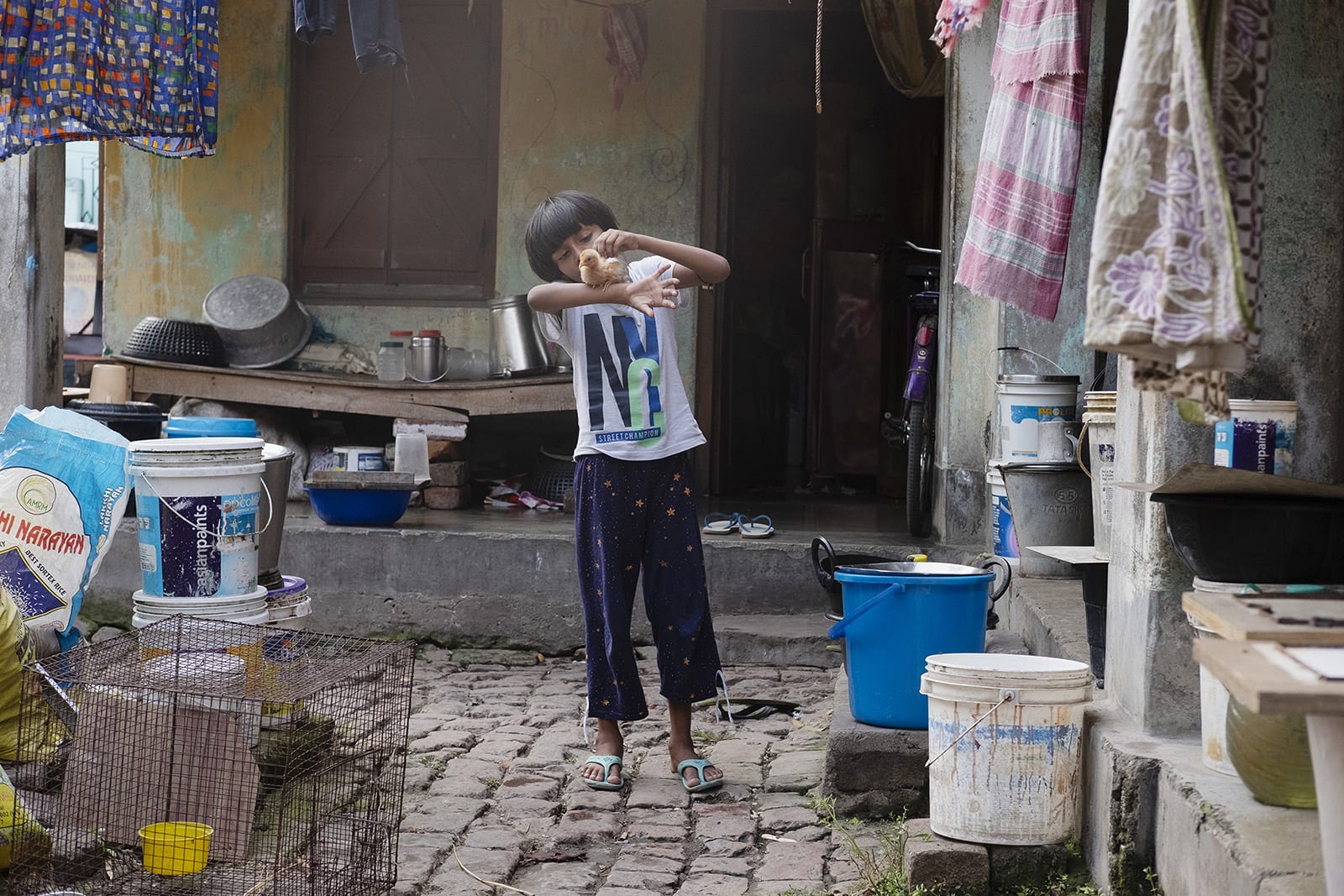
Contextualized with "journal entries" from the time, Chatterjee's work does not focus on glamor or perfection; his responsibility, he claims, is much bigger. “I am looking at the outside world, but what I'm trying to express is what's going on inside,” Chatterjee says. Together, using words and images, he asks, “How do the places we leave, inhabit, and return to shape who we are, our relationships, and our cultures?”
Being colorblind himself, Chatterjee mentored two visually impaired children, Ashraful and Rima, to create a folktale of their own — ‘The Mysterious Forest’ (2017-20). In one of their photos, Ashraful lies under a blanket of brown leaves, embodying the “lost boy” sprouting from the Earth, while the “forest spirit” (Rima) sits with her staff ready to anoint him. Using duotone backgrounds (a dull green-brown variation), soft lighting, and wide frames, the album’s only hints of color — a red crop of hair, a bright blue skirt — come from the two kids. This emphasizes how imagination runs amok inside a brain sidelined by society.
As the demands of life pile on, Chatterjee finds ways to keep cultivating art. “In 2023, when I first arrived in the UK, I was just travelling between three jobs and finding it hard to be creative. So, on my way to the job, I’d take my camera on a train and take photographs from train windows,” he confessed. Uncomplicated, simple art, especially when made by young people, regales him, and that is possibly why he currently mentors teenagers at the Phoenix Gallery in London. “I try to inspire the same amount of curiosity I have for the outside world,” he says.
Pursuing a Master of Arts in Photography from the University of the Arts, London, Chatterjee is currently teaming up with Photoworks, where he, along with Phoebe Wingrove, hosts 'What's Outside' for kids aged between 12 and 15. This free program delivers photography workshops to teenagers with complex learning needs, who have historically faced barriers or been unable to access art — a field widely considered elitist. His work in art education also includes supporting and photographing ‘community exchanges,’ a program from The Camberwell College of Arts, UAL, that develops artists to deliver creative workshops across diverse communities across London. He wants to liberate their artistic expression, hone their storytelling skills, and inculcate a real sense of curiosity — and empathy — for the ‘other.’ Chatterjee's relationship with photography, therefore, doubles as a quest for justice, recognition, and the basic dignity every human being is owed.
You can follow more of Sutirtha Chatterjee's work on his website
 Share on Facebook


