Talented woman couldn't figure out why no one was hiring her, so she made a 'veiled call' to her top reference — and uncovered the sabotage
The person realized that, despite everything else going smoothly, every interview fell apart after giving the reference of her previous company


The worst part of a broken job search isn't the rejection; it's the self-doubt creeping in that makes you believe your skills are not enough. For three grueling months, this was the reality for an employee (u/Wakanda_7), who was searching for senior design roles. However, while the person was getting several callbacks for interviews, given their solid resume and portfolio, they were getting ghosted in the end, making them question their abilities. It wasn't until later that the employee found out the exact reason. They took to Reddit to narrate their story in a post (now-deleted) on May 27, garnering over 15,000 upvotes.

The real culprit
At first, the rejections felt normal, given the brutal state of the job market. But once this happened a few times, the employee began to dig deeper and saw one common variable in all these rejections: references. The person realized that, despite everything else going smoothly, every interview fell apart after giving the reference of her previous company. It was then that they recalled that they had left a job about eight months ago because of a toxic creative director who stole credit for their work and hated it if anyone stood up to him.

"He told me that the industry is very small and that I would regret leaving his team," the person recalled. Although the employee didn't think much of it back then, they assumed he was the one sabotaging their career. Since it was just a theory, the person called their sister, who worked at another company, and asked her for a small favor to test if it was true.
The perfect trap
The sister used her burner email and number to call the director, acting as a talent acquisition specialist. "She told him I was the top candidate for a high-paying leadership role and that they just needed to verify my previous performance and reliability," the person wrote. Then the two put the phone on speaker to record the director's response. To their surprise, not only did he say that the employee was a bad fit, but he also began to trash their reputation and tell lies about them missing deadlines and so on.

They recorded his entire response, but didn't know whether they could do anything with it. But as it turns out, while bad reviews can be given by managers, giving false information, which he did, could cause them financial harm. So, the employee drafted a cold and formal email along with the audio file and the state statute and sent it to HR. Soon enough, the employee received a frantic call from the company with an apology. They also got a signed letter stating that their former boss could no longer handle their references, and as soon as that happened, the person landed a job.
Credit-stealing bosses
Turns out, several employees have dealt with credit-stealing bosses. According to BambooHR's Bad Boss Index, taking credit for an employee's work was ranked as the most unacceptable behavior a manager can exhibit. 88% of employees who quit a job cited at least one negative manager behavior as a factor in their decision. Among them, 28% said their boss taking credit for their work contributed to their decision to leave.
Similar experiences
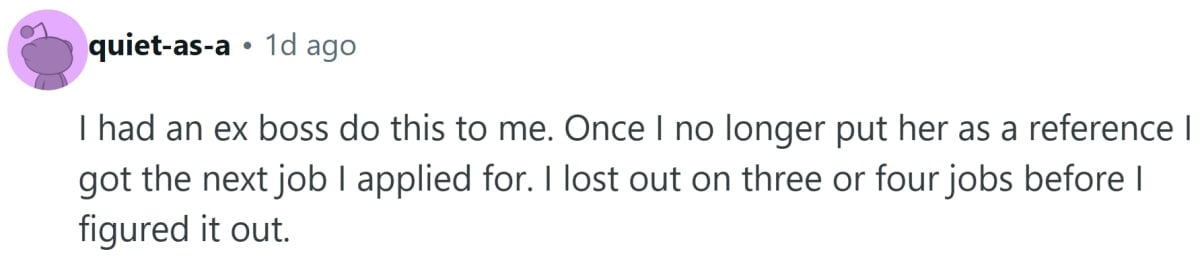
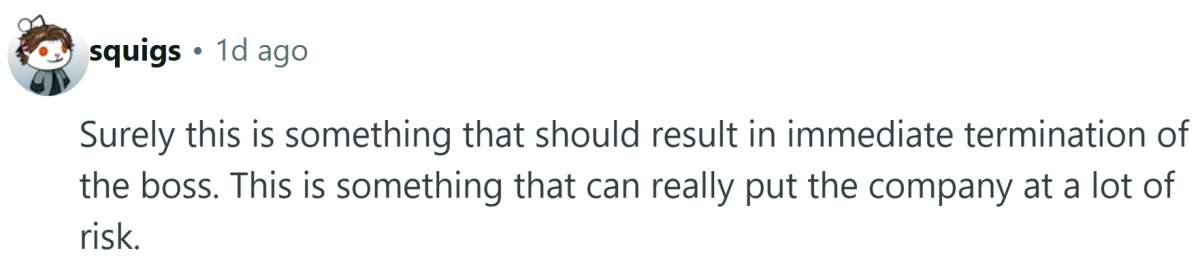
People in the comments not only supported the employee but also narrated similar bad experiences. u/Archway_nemesis701 wrote, "I'm so sorry you had that happen to you, but I'm glad to see you signed an offer letter. Unfortunately, I've had an ex-boss tarnish my name to potential employers as well." At the same time, u/honey_biscuits108 suggested, "You should still consult with an employment attorney and see what type of damages they could be facing. They caused financial damage by defaming your reputation and ruining your employment prospects for the future. You should be compensated for that harm."
More on Scoop Upworthy
Employee takes brave stand after manager forced them to talk about personal life in work meetings
 Share on Facebook