Danish library lets you 'borrow a human' for a free 30-minute session
The bestselling books are those that deal with topics like mental health, schizophrenia, bipolar disorder, autism, anxiety, and depression
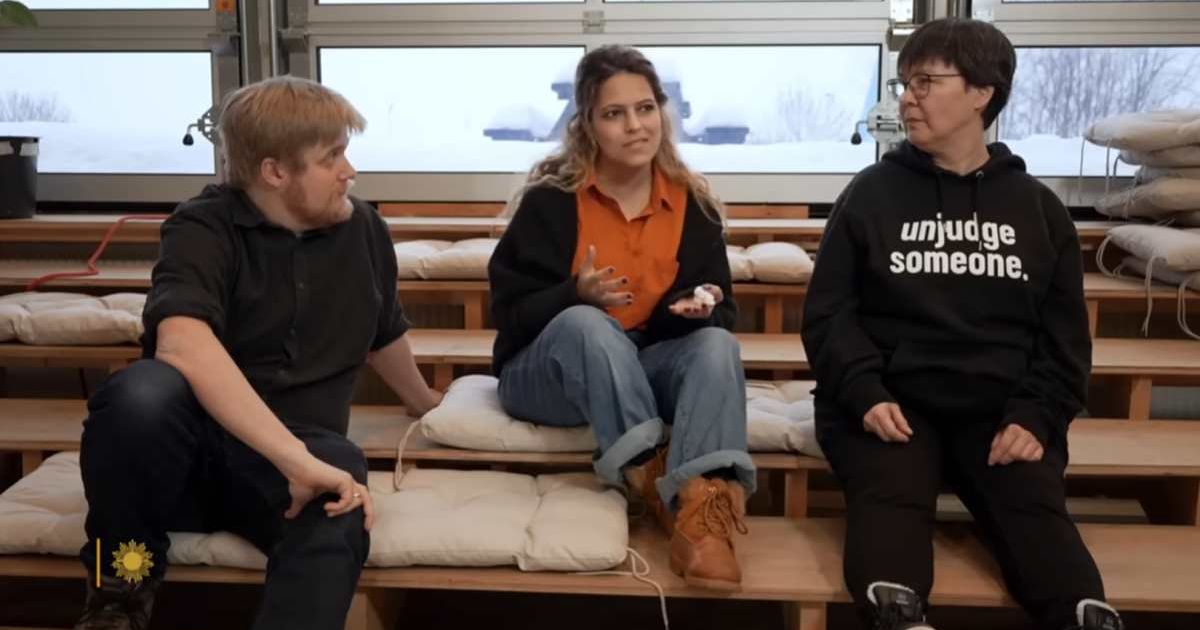
When we think of a library, we usually imagine a hall flanked by corridors with bookshelves and a signboard asking readers to be silent. However, the one in Copenhagen, Denmark, defies all the rules of a usual library. Well, the famous "Human Library" (@humanlibraryorganization) has no books or a librarian constantly asking people to keep quiet. In fact, the free library promotes profound conversations by allowing readers to "borrow" human beings, who then act as open books and respond to questions related to the topic they represent. Surprisingly, readers can experience the healing 30-minute sessions for free, CBS Sunday Morning reported on May 31, 2026.
People as 'open books'
In George Eliot's "The Mill on the Floss" (1860), she writes, "Don't judge a book by its cover." Now, that has become somewhat of an anthem, and the volunteers of this Human Library abide by it. They welcome people from all walks of life without judgment and foster open-minded conversations, especially on mental health issues. When Ronni Abergel founded the library 26 years ago, his goal was to “publish people as open books” so curious and tormented people could ask questions about their lives and understand their issues better.
Free access to 30-minute sessions
In this library, people are books, and readers are those who explore these books to understand their lives, process intense emotions, and communicate what they had been unable to. "The most popular books are typically books on mental health. Schizophrenia, bipolar, autism, anxiety, depression — all of these topics are almost global bestsellers," Abergel said. And although one cannot leave the premises with “books,” they have free access to 30-minute sessions where these books, a.k.a. volunteers, answer their questions based on their own knowledge and experience.
'Every book has its boundaries'
Another goal behind this library was to challenge stereotypes, as the official website says. Every "human book" represents people who have been subjected to prejudice, stigmatization, or discrimination, probably because of their lifestyle, diagnosis, belief, disability, social status, or ethnic origin. Talking about the volunteers, Abergel explained that he trains them to be open books and guide their curiosity to drive conversation forward. But not every book can answer all questions. "Every book has its boundaries. If you go beyond the boundaries of what they're comfortable talking about, they'll know to say to you, 'I'm sorry, but those pages have not been published yet,'" Abergel explained.
A global movement
The Human Library project currently spans 80 countries, with six locations in the United States, and according to media reports, is supported by private foundations and public donations. The not-for-profit has approximately 1,000 “human books” available for loan, per the World Economic Forum. Meanwhile, Forbes also reported that the initiative is inviting collaborations with the University of Glasgow, where 300 medical students will become readers in "The Human Library" to learn the skills necessary to become future doctors.
'Unjudge someone'
Emphasizing it, Dr. Lynsay Crawford, university lecturer, said, “To be truly effective and compassionate doctors, they need to develop more nuanced skills — communication, empathy, listening, reflection — and what better way to achieve that than through interactions and connections with people and their lived experience — the human books." At the end of the day, the Human Library is a metaphor for everyone to "unjudge someone.”
You can follow the Human Library (@humanlibraryorganization) on Instagram for more updates.
More on Scoop Upworthy
You can 'rent a grandma' in Japan for life advice, including breaking up with your boyfriend
This sustainable 'Library of Things' allows people to rent anything they want or need
Gen Z and millennials are 'discovering' the public library and falling in love with the process
 Share on Facebook