Her dad never talked about WWII. After he died, she found out he’d saved an entire German town
'This was the envelope I had encountered that serendipitous day,' Calvert recalled.

Growing up in North Carolina, Jennifer Calvert knew her father, optometrist Dr. Wallace Early, had fought in World War II. However, he rarely spoke a word about it. It was only after he passed away in 2014 that she dug through his old papers and stumbled upon a massive secret. Back in April 1945, standing on a ridge above the German village of Unterweissach, he looked down at the peaceful valley and ordered his troops to hold fire, saving an entire town. This story was reported by the PEOPLE on November 11, 2026.
Early life and mercy in Germany
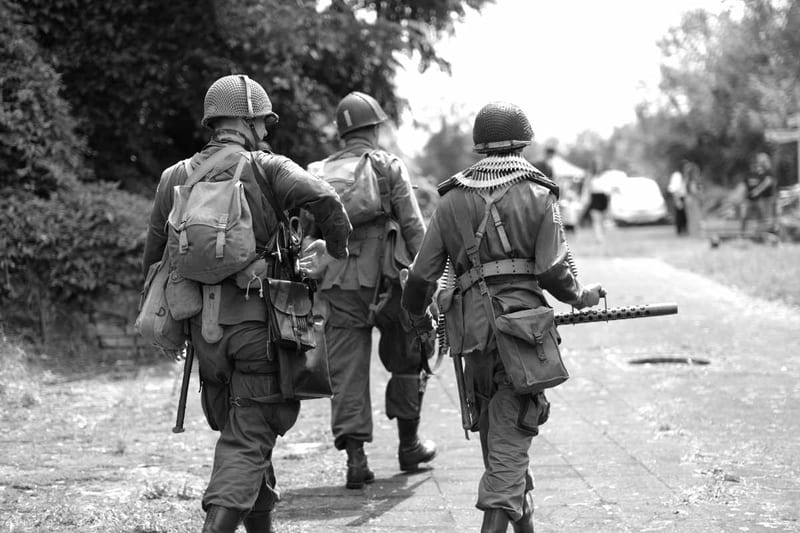
Growing up during the Great Depression, Dr. Early stepped up to help his struggling mother to feed six kids. Growing up during the Great Depression in a family of six children raised by a single mother, Early enlisted in the Army in 1938 at age 16. Later, he served with the 397th Infantry Regiment in Europe during World War II. It was during this time, in April 1945, that his unit marched down to the German village of Unterweissach. According to Calvert’s account of the documents, both German and Allied forces had destroyed towns during the war, but the beauty of Unterweissach gave the soldiers pause. Instead, Dr. Early looked at the untouched scenery and announced, "Hold your fire. This is a beautiful valley."
A lifetime of hidden kindness
After the war, Dr. Early came home, earned a Purple Heart, and became an optometrist in North Carolina. He never bragged about his past, however, and treated his service as a basic duty. His quiet generosity showed up at home, too. Calvert also recalled watching her father rush toward a car after it collided with a gasoline truck and exploded, pulling people from the wreck while others stood back. "I just really loved his mentality of paying it forward and trying to make a difference in his community," Calvert recalled. He also secretly paid college tuition for a young patient left paralyzed by a crash.

Uncovering the envelope
For years, the decision was associated with Early’s commander, Maj. William S. Preston Jr., who would normally have been the senior officer present. But Preston had been away getting supplies that day. Preston knew the truth, though. In 1993, he mailed the town's thank-you letters and a local news clipping straight to Dr. Early. He tucked the envelope away and never mentioned it. "This was the envelope I had encountered that serendipitous day," Calvert recalled after finding the stash in his home following his 2014 death.

Shaping the younger generation
Calvert's discovery also highlights how much family history can remain undocumented. According to an AARP survey of over 1,300 U.S. adults, conducted between August 15 -18, 2025, a staggering 63% of grandparents haven't recorded their stories. In fact, just 9% of them have regularly recorded their stories. Meanwhile, another 25% have done so a few times. On the bright side, 36% of them have confirmed they are planning to record their legacy soon.
Setting the record straight
Determined to honor her dad, Calvert teamed up with AARP’s Wish of a Lifetime program. This past September, she and her husband, David, flew to Germany to meet the town's mayor and share the real story. Locals even drove the couple up to the exact ridge where Early had stood eight decades prior. "They didn’t have to do that," she said. "They did that just because they wanted to honor us." Standing there, Calvert felt a deep wave of pride for the quiet men who fought for freedom without ever seeking praise.
More on Scoop Upworthy
Man thought he’d lost everything until a historian found his parents’ 1957 wedding album
Woman discovers family heirloom 20 years after it disappeared while cleaning a house
 Share on Facebook