Crying during movies is actually good for your health, research finds
Though it may momentarily bring us down emotionally, researchers say that viewers who cried during a sad movie felt more relaxed afterwards.

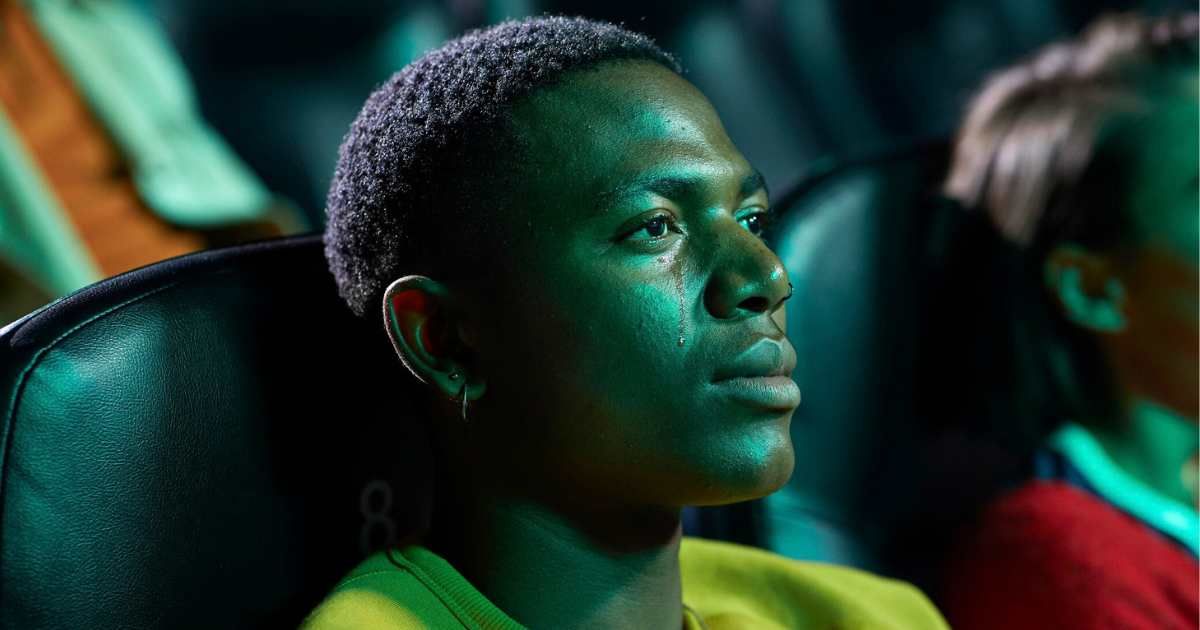
Are you someone who can't stop crying while watching a sad movie? Then you must be that person who also feels embarrassed by it. Surprisingly, however, you're actually doing yourself a favor by not suppressing your tears. In fact, you unknowingly become a more empathetic person by allowing yourself a good cry. Yes, that's right! Neuroscientist Paul J. Zak says watching an emotional movie releases more oxytocin (the empathy hormone) and cortisol. This, in turn, makes us feel more connected to the characters and the emotional depiction. Though it may momentarily bring us down emotionally, researchers say that viewers who cried during a sad movie felt more relaxed afterwards.
Researcher Zak and his colleague Jorge Barraza wanted to determine whether movies would cause oxytocin release. So they made two videos featuring a father and a son. The first version showed the father talking to the camera while his 2-year-old son, with terminal brain cancer, plays in the background. The second video, however, didn't mention any illness. It was simply a video of the same father and son spending a day at the zoo, but the boy was shown bald because of chemotherapy. Then the researchers made people watch both versions and took blood samples before and after they watched one of them. Results showed that the people who had watched the first dramatic version had higher levels of cortisol and oxytocin than those who had watched the second video. Similarly, Researchers at the University of Tilburg in the Netherlands discovered a direct relationship between watching a sad movie and feeling better afterwards. They surveyed a group of people and found that initially they felt depressed, but regained equilibrium a little after, and after about 90 minutes felt emotionally recharged.

But how does feeling more empathetic result in us feeling better? To understand this, let's look at another study on burned-out medical students. Researchers surveyed 588 students and found that those with higher empathy experience less burnout. In fact, those with more empathy also showed more resilience, which further led to lower burnout. In fact, both Hippocrates and Aristotle saw crying as a way to cleanse the mind; they associated it with releasing inner distress. This further connects back to the philosophical idea that emotions are relative and that we can genuinely feel happiness only if we have ever experienced sadness. There is another way to understand how crying leads us to feel more empathetic and eventually makes us want to help others benefit ourselves. For this, we have to refer to C. Daniel Batson's Empathy-Altruism Hypothesis.
He found that people report greater empathetic concern only when they perceive similarities between themselves and someone else. This means altruistic behavior in them is often born out of genuine empathy, and such people don't expect anything in return. Now, when we do something with no or fewer expectations, we unconsciously reduce our emotional and psychological stress. That means when altruistic behavior is not tied to anticipated outcomes, individuals are less likely to experience disappointment or internal conflict.
More on Scoop Upworthy
Dad explains why he is unapologetic about his child crying in public places: 'It is not illegal'
Mother explains how parents can develop their child's capacity for empathy with patience
This 3-year-old's sweet gesture and empathy towards her mom has the internet crying
 Share on Facebook