'90s video games like 'Mario Kart' were better for children’s brains, mental health counselor claims
'Everything is a game or task, and the need for ranking gives them an inferiority complex.'

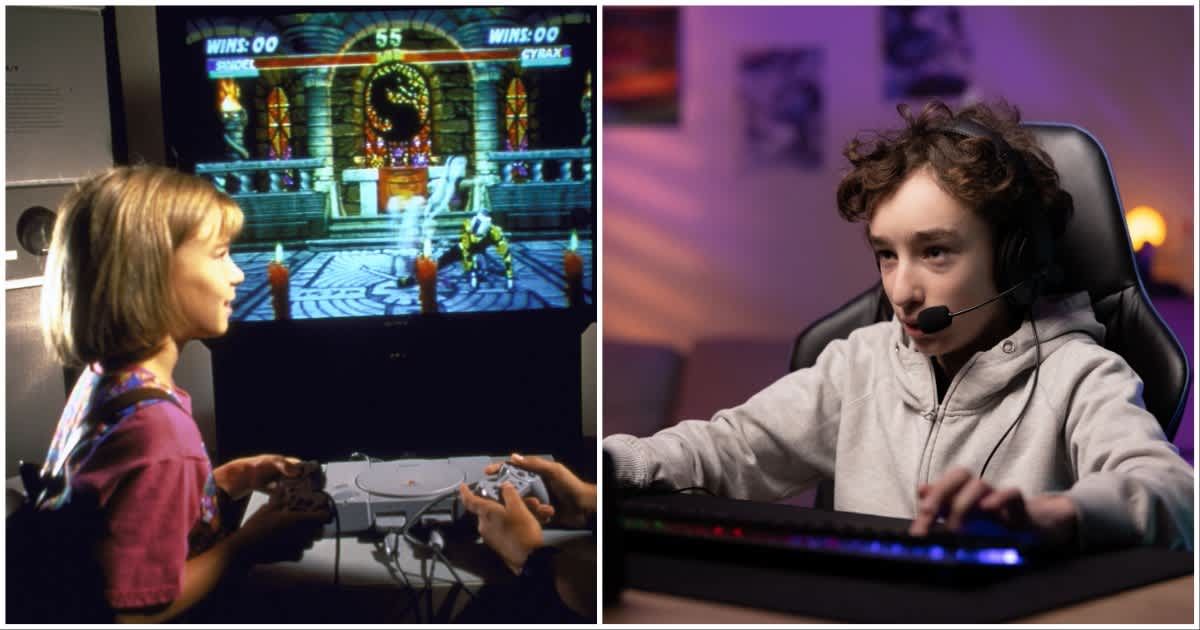
Millennials and Gen X grew up in the '90s playing memorable video games like Mario Kart, Pokémon Red Version, and Pokémon Blue Version. However, when Gen Z plays games such as Roblox, a fairly recent addition, they experience nostalgia for the games of their own era. Today's gaming world looks nothing like the days when video games came on solid cartridges and chunky disks. While modern games bombard kids with notifications and run on faster hardware, Veronica Lichtenstein, a licensed mental health counselor, revealed on December 7 that these games have reshaped how children's brains develop, making it harder for them to understand reward systems, per Newsweek.
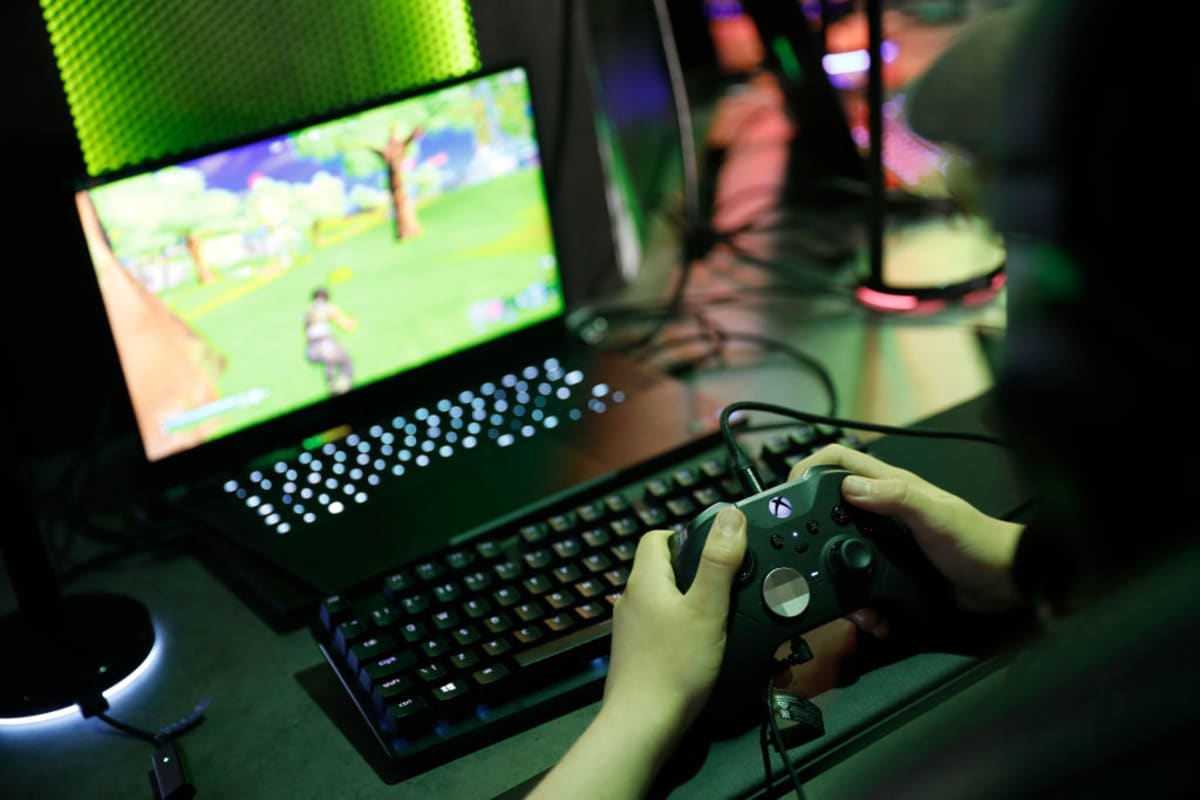
Former teacher Veronica Lichtenstein recalled the difference between winning a game in the '90s and today. She told Newsweek, "You fought through levels, memorized patterns, and finally saw the ending." She stated that beating a '90s game came with a lasting dose of satisfaction to one's brain. However, that isn't the case with modern games. Since modern games operate on spending enough money, and monitoring each player's move to feed into its algorithm and design customized ads to keep kids from quitting, Lichtenstein states, "There's no real 'end' so you never get closure."
Describing it as "junk-food dopamine," the mental health counselor believes that modern games push kids to crave faster stimulation rather than a slow and steady game that has an end. Besides, she also raised concerns over the lack of critical thinking required for video games today. "Today, if people get stuck on a game, all it takes is a quick Google search, and they'll have the answer on how to beat that part."

According to her son, "Pokémon Red and Green (from 1996) offered one optional tutorial before throwing players into the wild; Pokémon Sun and Moon (from 2016) required players to march through tutorial-heavy gameplay for the first quarter of the game." Lichtenstein's concerns have been raised in the 2022 study published in BMC Psychology, which found that video game addiction was associated with lower cognitive and learning skills performance. The study was conducted with 169 children aged 9 to 13 in Egypt who met the inclusion criteria, and their mothers provided responses to the questionnaire. It noted that these games have also been found to have a significant negative impact on a child's learning skills.
Weighing in on the contrast between the video games from two, licensed clinical social worker and executive director of Victory Bay, Melissa Gallagher explained that games in the '90s offered "bounded entertainment experiences." Unlike today, there was no social media pressure or endless scrolling; hence, kids had time to play games, spend time with friends, or take a break. Today's games blur those boundaries.

"Everything is a game or task, and the need for ranking gives them an inferiority complex. This generates pressure, erratic sleep patterns and makes too much noise on their minds," she said. Built on "track, exploit and addict," Lichtenstein added that while games of the '90s helped in building one's skills, today it is boiled down to testing one's psychological resistance.
More on Scoop Upworthy
Deaf gamer's review of video game that made her feel included 'even though I died' is way too funny
Mother teaches two sons an important lesson about consent through a game and it's ingenious
Man finds innovative way to teach tech skills to low-income youth using video games
This article originally appeared 4 months ago.
 Share on Facebook