Cognitive scientist says 'love at first sight' is impossible, reveals what really happens instead
Thomas brings up 'pattern recognition' and how our muscles loosen around a 'template' we're familiar with


Love at first sight sounds too good to be true, but those who claim to experience it aren't lying. In fact, Berit Brogaard, a Danish–American philosopher and cognitive scientist, linked it to observable changes that occur when your brain perceives someone you're attracted to as familiar. This is "pattern recognition," Jonny Thomson (@philosophyminis), an author and a former professor of philosophy at Oxford, says. In a video, he breaks down Brogaard's observations to unravel the mystery behind the butterflies in one's stomach.
Brogaard, who analyzed brain changes that occur when a person feels romantically attracted to somebody, observed the direct link to what we call "pattern recognition." When we meet someone, we first observe their physical appearance, conduct, etc., and instantly compare them to a template built by people (whether real or fictional) who matter to us. Our brain combines all those impressions to define what love, attraction, or the ideal person looks like. So, when you experience an instant connection with someone, it's because that person matches the template in your mind. "You are not falling in love with a person but a pattern," Thomson explained.

This is precisely why Brogaard explained that first love feels so intense yet fragile. She said we basically fall in love or are attracted to personalities fitting our history. Then how do we differentiate between real love and mere attraction? Well, with time, even when the pattern starts to fade, you still feel strongly for a person, and that's the only indication of true love. "It's when they stop being familiar and stop being strange, because that is when you can actually choose to love them. Choosing to love a person as they actually are is the only love that is real," Thomas added.
In 2018, speaking to Norm Goldman, Dr. Brogaard further delved into her observations. She confirmed that love at first sight is real, but evidence suggests the attraction is mainly because of physical appearance, combined with the excitement of meeting a new person.
The debate over whether love at first sight is real or not may go on forever, but a YouGov survey (of 1,000 adults) found that nearly half of Americans (46%) have experienced it. Now, among those who admitted to having fallen for someone at first sight, the majority were men (50% vs. 42%). Young people (18-29 age group) emerged as the majority group (51%) who admitted to falling in love at first sight.
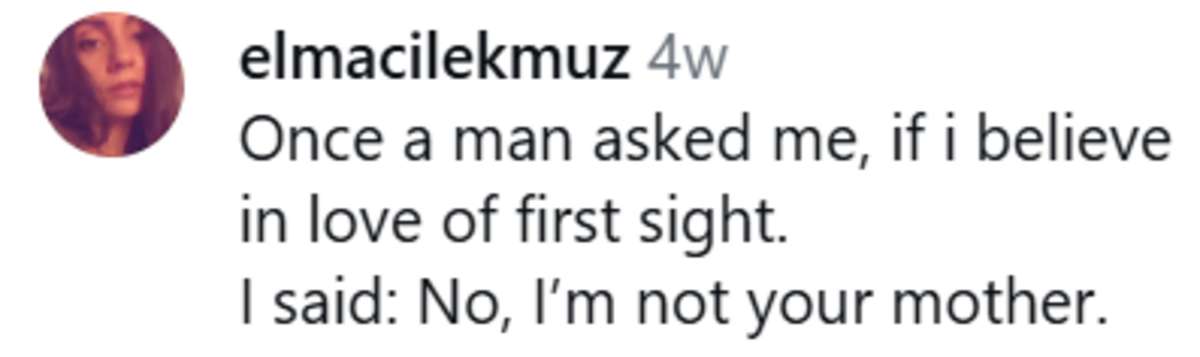
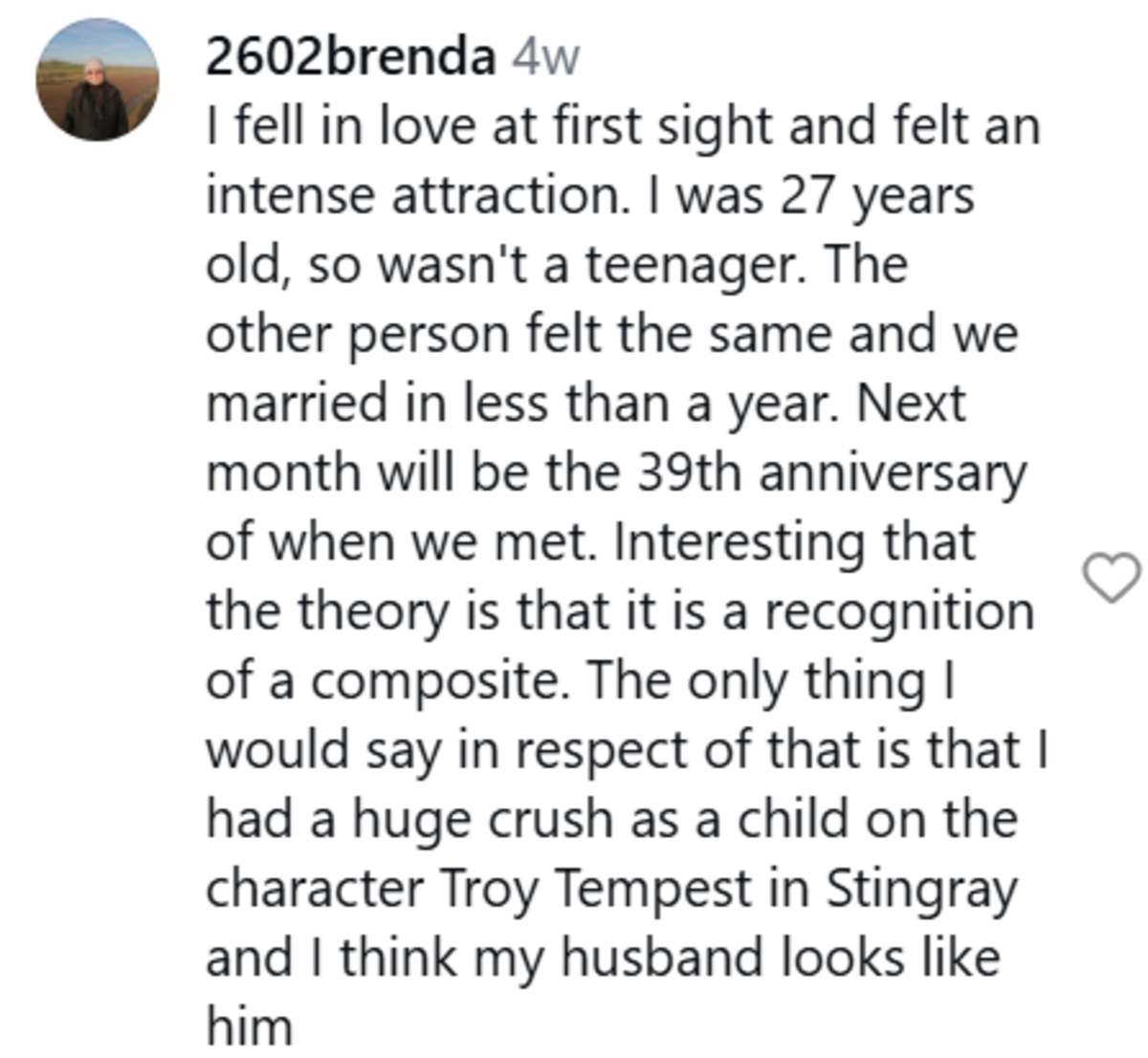
Meanwhile, reacting to the love-at-first-sight theory, @nig_mus commented, "There is love at first sight. Not sight, not looks, but sometimes some people feel like… the warmest, safest space — exactly out of nowhere. It doesn’t have to be 'love at first sight,' but it's the unexplainable moment when a person starts to sing and takes your hand in his. And there's 0 logical explanation for that, only a wave of 'Oh f*ck, I am in love.'" Similarly, @stassieeeeeeeeeee shared, "It’s attraction, not really love at first sight. There’s no such thing. It’s all an illusion of the brain. People don’t understand how powerful the brain and nervous system are and how our subconscious runs most of our thoughts and behaviors."
More on Scoop Upworthy
Women redefine love by revealing 10 wholesome moments they have experienced with their partners
Dating experts analyze and explain how 'orange peel theory' might affect relationships
This article from 1938 breaking down the concept of love is relevant even today
 Share on Facebook