Child psychologist reveals what really goes on in teens’ brains when they disrespect teachers
Dr. Krawczyk shared that she wished teachers understood an important aspect about teenagers.

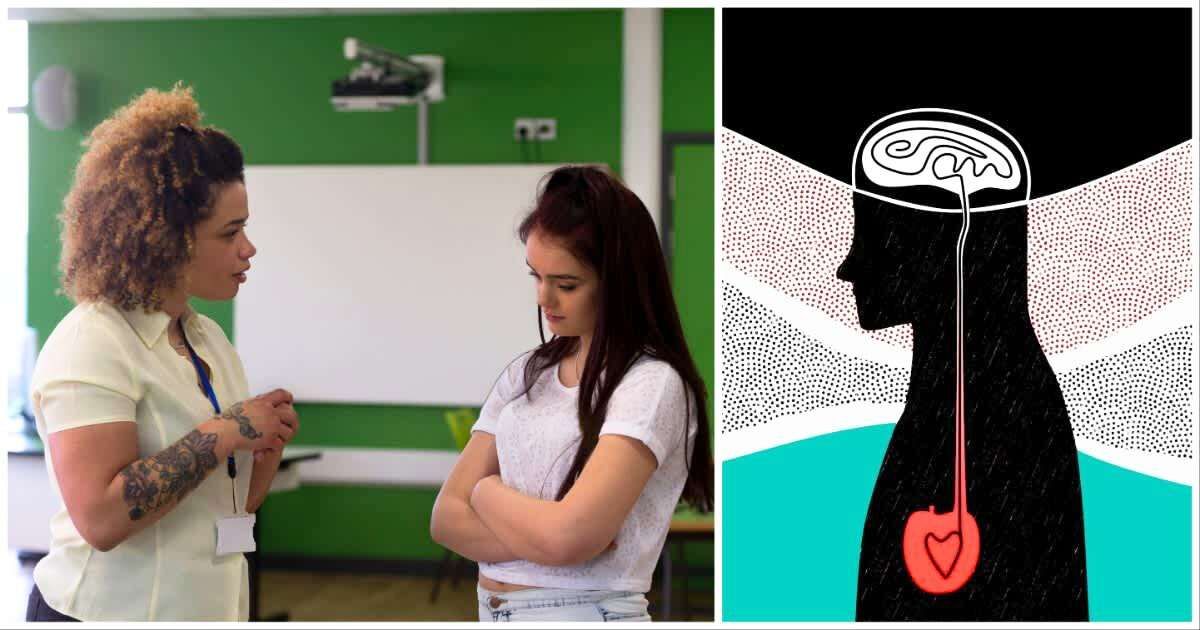
When a once-compliant student becomes unfamiliar, teachers often blame it on the teen's upbringing or on not being disciplined enough. However, child psychologist Dr. Kirsten Krawczyk (@dr.Kirsten.Krawczyk) weighed in on teachers learning how disrespect interacts with teenagers on December 4. Dr. Krawczyk explained that although hormones play a huge part in their behavioral changes, it’s mostly what goes on inside a teenager's brain.

Dr. Krawczyk shared that she wished teachers understood an important aspect about teenagers. The child psychologist believes that understanding a teenage brain will make teachers refrain from saying that teens are disrespectful. "I do sometimes even come across their mind and ask why teens can be so disrespectful sometimes. Unlike popular opinion, that they are awful, although I do recognize they behave in that way. And it’s also not the parents' fault for poor discipline, which is a word that I quite know you think it does by the way," she explained. According to Dr. Krawczyk, more than hormones, a teenage brain plays a huge role in dictating a child's behavior. "Amygdala, the emotional centre of the brain, where being disrespected triggers a threat response like fight, fright or flight," she shared.
She further explained that for neurodivergent teens, this reaction can be more intense due to increased sensitivity to social cues. "During adolescence, the prefrontal cortex, which is the decision-making part, undergoes major development. It's an area of the brain that governs executive functioning like impulse control, planning, and organization," she revealed. The child psychologist said that due to these changes, teens find it challenging to manage their responses to disrespect. She also pointed out the irony of asking teenagers to be respectful to others, and yet adults in schools or homes, when disrespected, think it's acceptable to respond disrespectfully. "And their (adults) brain isn't undergoing all the neurological change that is happening, I find that interesting."

Well, what's the solution, you may wonder? Dr. Krawczyk urges adults to encourage mindfulness and emotional regulation when a young person is in a regulated state, which promotes betterment of the prefrontal cortex that controls all sorts of reactions. "Of course, we have to communicate in empathic and respectful ways. When we do that, it eases the brain's threat response, providing a safe place for growth for our teenagers. It really isn't complicated. We've all been teenagers at some point. We do need to just think about how we would like to be spoken to, and when we're met with disrespect, wonder why," she noted. A 2017 report by Diana Divecha noted that what adults often interpret as teenage disrespect may actually reflect a strong need for autonomy and genuine respect. The researcher noted that when teens are treated with respect and meaningful choice, they tend to show better motivation, mental health, and cooperation.
You can follow Dr. Kirsten Krawczyk on Instagram (@dr.kirsten.krawczyk) for more knowledge on children's behavior.
More on Scoop Upworthy
If your teen's being sarcastic, it's probably because they're intelligent
Having a sister boosts a child’s mental health and self-esteem, suggests study
Dad refuses to change the pink paint of his house after his teen son finds it 'embarrassing'
This article originally appeared 1 month ago.
 Share on Facebook


