CEO transforms 540 employees' lives after selling the company for $1.7 billion — and handing them one piece each
Graham Walker made a pact with the buyer that 15% of the proceeds would go to the 540 full-time employees


When a company is acquired by a bigger player, its CEO usually has little say over what happens next to the business or its employees. Yet in the heart of Minden, Louisiana, the "friendliest city in the South," CEO Graham Walker found a way to defy that expectation. When his company, Fibrebond, was acquired by the power-generation giant Eaton, he left the employees with a massive windfall. Instead of abandoning them in a fractious and stressed state, he showered them with bonuses totaling over $240 million, according to a December 2025 report by The Wall Street Journal (WSJ).
@nbcnews Graham Walker, the outgoing CEO of Fibrebond, gifted his 540 full-time employees 15% of the proceeds of his company's sale — coming out to $443,000 each, paid out over the next five years if they stay with the company.
♬ original sound - nbcnews - nbcnews
'Stickiest retention packages in recent memory'
Walker sold his company to Eaton in early 2025 for $1.7 billion. To ensure that the employees stayed, he made a pact with the buyer that 15% of the proceeds from the sale of the company would go to the 540 full-time employees. The step was critical, not just for rewarding the loyal employees, but also for retaining them, so the transition happened smoothly. With this move, Walker made it difficult for the employees to leave the company, at least for the next five years. The cash infusions were supposed to be made over five years as long as the employee remained with the company, with the exception being employees over 65.
According to Fortune, this was one of the “largest and stickiest retention packages in recent memory,” with each employee receiving $443,000. Workers with long tenures received even greater amounts. Interestingly, the bonuses were based solely on Walker’s generosity; the employees didn’t own any shares in the business. In conversation with NBC News, he revealed that he wanted to allow people to share in the good part of it as well.
They were reduced from 900 to 320
Fibrebond was founded in 1982 by Walker’s father, Claud Walker. During the beginning, the company had about a dozen employees who built shelters for electrical and telecom equipment, eventually pivoting to concrete enclosures and cellphone towers in the 1990s. Following the dot-com explosion in 1992 and a factory fire in 1998, the company almost collapsed, forcing layoffs. It was left with just three clients, and employees were reduced from 900 to a mere 320. The turnaround happened with the arrival of cloud computing, whose demand surged during the pandemic, inviting greater acquisition interests from bigger players.

Incentives actually help the employer
This is not the first time an employer has used financial incentives as a tool to retain employees. According to a survey by Deloitte, financial incentives are one of the top five (44%) strategies to retain employees. A study published by the National Bureau of Economic Research also specified that profit-sharing is associated with an average productivity increase of 4-5%. These incentives are not just a key to retaining the employees, but also crucial to the employer. As PeopleKeep mentions, the average cost of turnover per employee can be tens of thousands of dollars, approximately 50% to 200% of the employee’s annual salary. If the company fails to offer incentives, it might blow the company’s budget.

'I can live now'
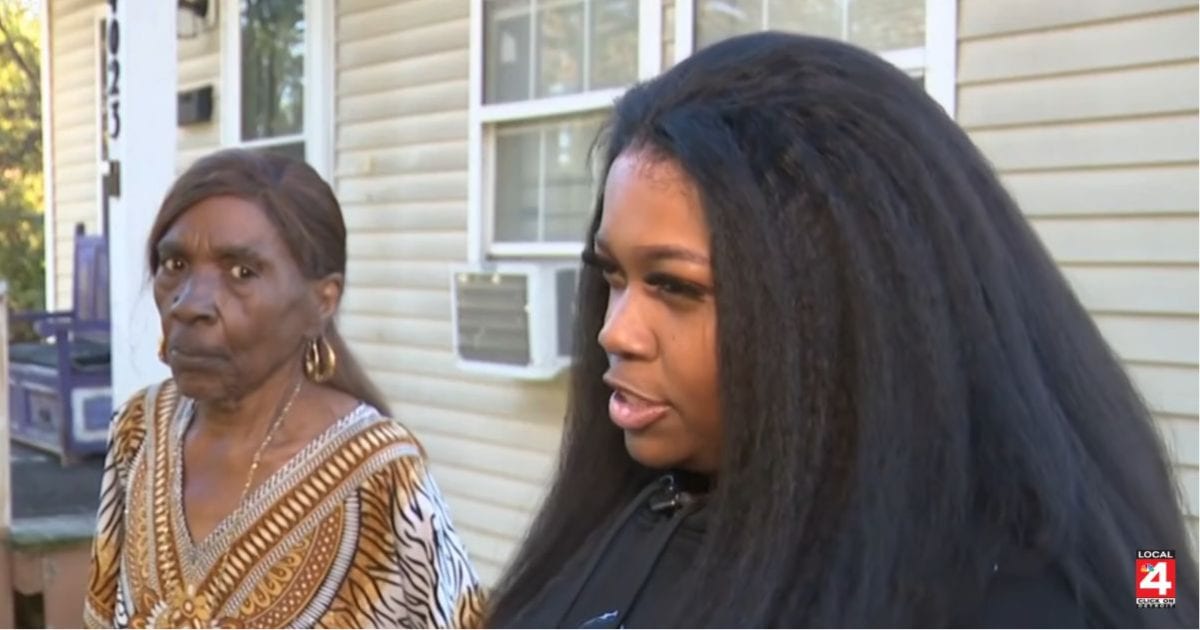
Lesia Key, Fibrebond’s 29-year-old employee, who started working here in 1995 at $5.35 per hour, broke into happy tears after opening her envelope. The 51-year-old employee used her bonus to pay off her mortgage and open a clothing boutique, which was her dream. “Before, we were going paycheck to paycheck,” Key said. “I can live now.” Another employee used the bonus to take his family on a trip to Cancún, Mexico. An employee named Hong “TT” Blackwell admitted that the taxes took a heavy slice of their bonuses, but the net amount was still life-changing.
More on Scoop Upworthy
CEO took a 90% pay cut to raise staff's minimum salary to $70K and the company is now thriving
CEO who gives employees $2,000 for vacations reveals why it's a brilliant idea for everyone
 Share on Facebook