Job-seeker suspected nobody was reviewing the coding tests. One deliberate error helped him expose the truth
The incident highlighted the dark side of the recruitment industry


Applying for a job is often an emotionally exhausting experience. It demands hours of preparation, dedication to test assignments, and the courage to put yourself through a nerve-wracking interview process, knowing it may end up in rejection. The frustration can increase tenfold when, amidst an already intense situation, a company fails to respond. On May 29, 2026, a candidate (u/pistachioloft8) shared a similar instance that brilliantly exposed the company's flawed recruitment process. The post has since gone viral with over 1,000 upvotes on Reddit.
I set a simple notification trap in my test task and caught the company lying to my face
by u/PistachioLoft8 in jobsearchhacks
A quiet trap
The individual says they spent an entire Sunday doing a small project for a hiring company that was looking for someone with “attention to detail.” They had been ghosted by recruiters so many times that this time they decided to use a trick to know whether this company, too, was ghosting them without giving it a real shot. Well, the candidate inserted a tiny script into the application that would send them a notification on their phone almost immediately if the recruiter opened it. They planted this “massive, glaring error” right at the very beginning of the main file. “It was the kind of error that would make the whole thing fail the second you try to launch it. If anyone at that company had spent even ten seconds trying to run my work, my phone would have buzzed immediately with an alert,” the candidate recalled.

Caught red-handed
On Monday, the candidate sent the application to the company and received a rejection email within less than two hours. The recruiter told them that their senior staff had finished a detailed review of their submission and decided that their technical approach “did not align” with the company’s current needs. Confused, the candidate then checked their phone logs and found no notifications or alerts. It meant that the recruiter had rejected them without even opening their application file. “They literally just saw that I sent an email, waited a bit to make it look like they thought about it, and then hit the reject button,” the job seeker lamented. Moreover, they said they are now considering a link to a dead page in their next application to verify whether the company is telling the truth. " I sent a follow-up asking why they did not mention the massive error I left in the code, but of course, they just went completely silent," the employee added.
When hiring becomes harrowing
Behaviors such as ghosting and lying often negatively affect an individual’s thoughts about the company. In fact, it breaks their trust, leaving them in circles of uncertainty and doubt. According to Criteria Corp’s 2026 Candidate Experience Report (as cited on Pin Blog), nearly 53% of job seekers were ghosted by an employer within the past year. Similarly, 61% of job seekers reported getting ghosted by employers after their final interview, according to a survey of 2,400 workers by Greenhouse.

In most cases, the reasons behind ghosting or blatant lying are budget freezes, fear of potential backlash, shifting hiring priorities, or fear of unveiling bad news. While the candidate couldn't understand the reason behind the company's inappropriate behavior, their experience highlights the darker side of the recruitment industry.
'Put a review on Glassdoor'
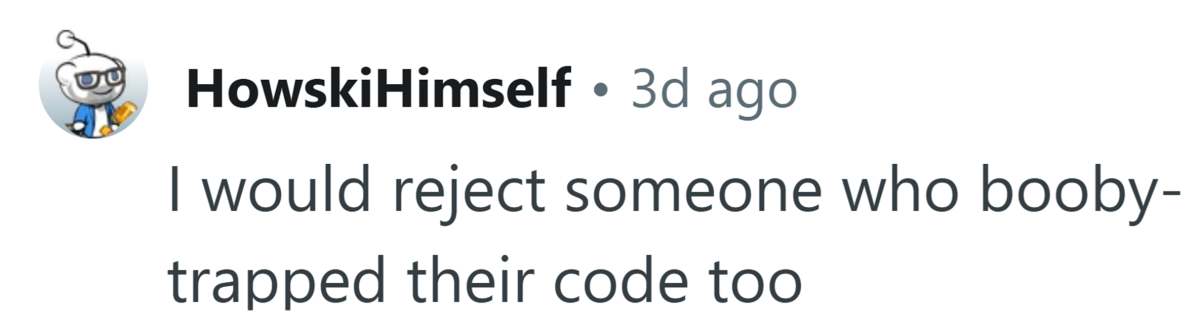
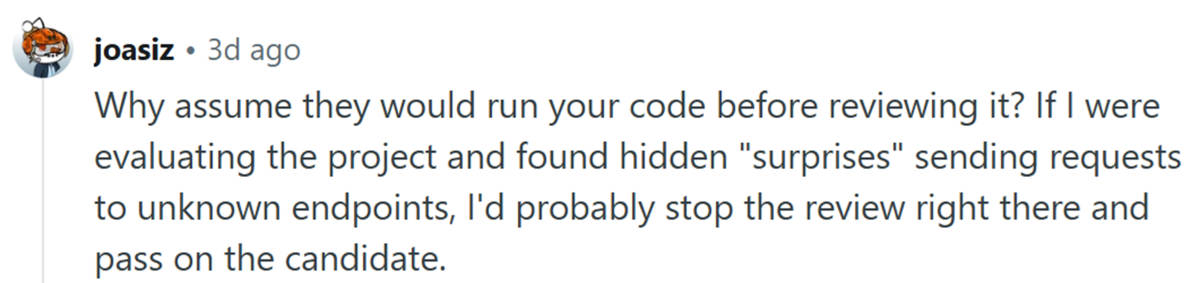
Meanwhile, the Reddit story received mixed responses. For instance, u/glad_bodybuikswey suggested, “Call them out, then name and shame, and put a review on Glassdoor." Similarly, u/ramblingjosh questioned, “So basically, you sabotaged your own application because you thought the people hiring you are idiots.” Whereas, u/lenswipe remarked, “He probably opened the code, saw a request to an unknown endpoint, and mopped it up."
More on Scoop Upworthy
Job seeker creates a 'fake male CV' to expose gender discrimination present in the hiring process
Recruiter rejects influencer candidate who featured her in a video without permission, sparks debate
Company rejects dream job candidate for being 'money-motivated' and it just sums up the economy
 Share on Facebook