Cambridge professor explains why you should always say 'please' and 'thank you' to your AI chatbot
Fry noted how users need to be sure of 'who they are' in order to get the chatbot to respond similarly


We’re so used to using ChatGPT, Gemini, and other AI tools to get an answer to practically anything in the back of our mind. But how are we interacting with the system?
A math professor from Cambridge, Hannah Fry, revealed why it might be a good idea to talk to your chatbot in a friendly way, with manners. In her post, she explained why we should say “please” and “thank you” while entering our prompts. She also dug into how the language models are influenced by the use of our language and interactivity. So consider adding this to your routine before you ask a question.
Fry first cleared a misconception that the "polite” attitude is to save us from the bots should an apocalypse happen. That’s not the case. The way we speak and the tone and words we use can influence the language model and thus manipulate results. Think of it this way: when you speak to someone, the way you interact affects the flow of conversation. If you are polite, respectful, and knowledgeable, the opposite person will render the same tone while speaking. This is somewhat the case for AI, just that it revolves around databases and algorithms rather than human feelings and emotions.
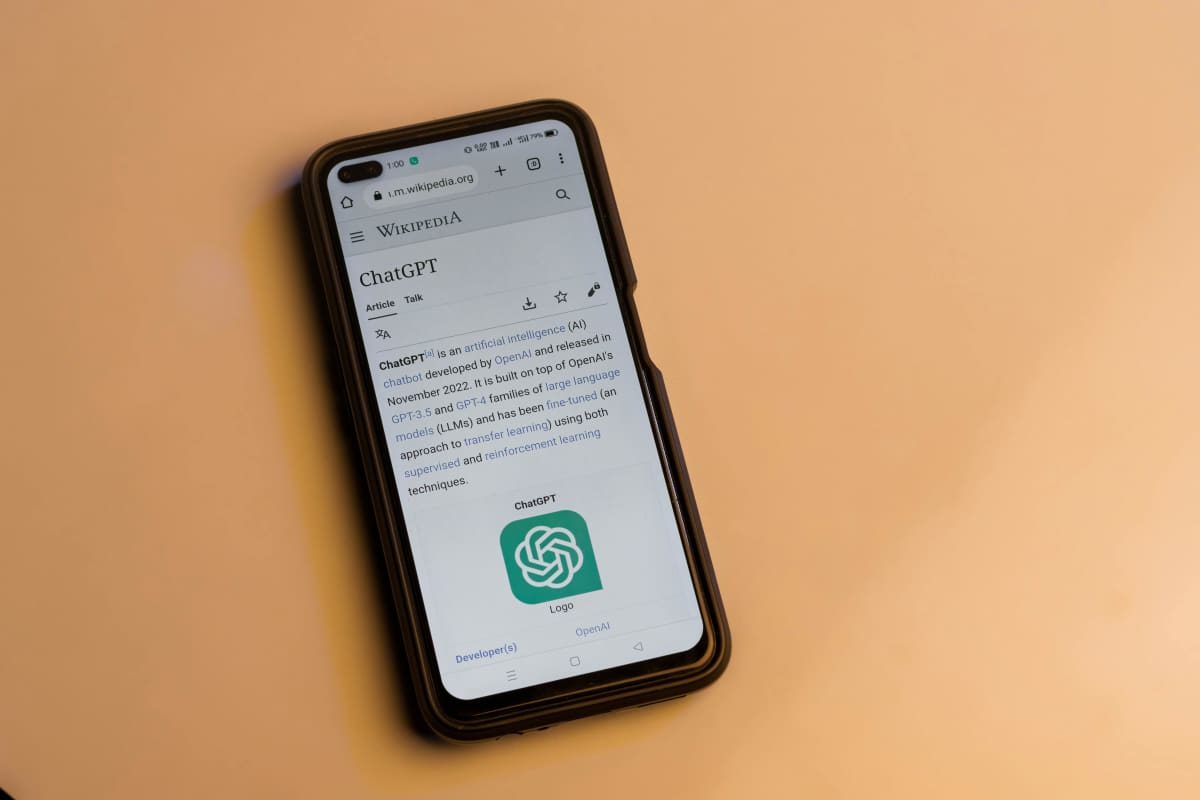
The professor noted how many experts tell us what prompts to use to get the best information out of the chatbot. However, she mentioned that all of those aren’t as powerful as AI's capacity to “role-play.” The system is developed such that it models the language and tone we use to give elaborative answers. “So you shouldn’t talk to it like it's a Google Search or like it's Wikipedia.” She explained that the systems are designed to respond not just from a database but rather from the language used by sources, as well as the prompt generated. “It doesn’t have a fixed identity, it doesn’t have a worldview, it doesn't have personal beliefs,” she noted.
Instead, Fry asks that we think of the system as an "improvisational actor” that can adapt to any role. For instance, if you enter the prompt in old English like Shakespeare, it will deliver prompts based on that. If you ask for something in an in-depth manner, it will give detailed responses. The same applies the other way around. If you just enter the prompt casually, it will deliver a casual response. “It’s still performing a role, and you’re effectively restricting what it can do,” she added. The professor asked that we think of ourselves as filmmakers and AI as the character we want it to play and give prompts accordingly. As for the “please” and “thank you,” you want to be polite to your characters, right?

A 2025 survey by Tech Radar showed that 1 in 2 people use AI. That's around 51% of people in the U.S., and a majority are polite. 82% said they were ethical with prompts out of courtesy; 18% said they just wanted to save themselves from the so-called robot apocalypse. According to the BBC, Jules White, a computer science professor who studies generative AI, noted that no “magic words” can manipulate the language model. “It's about how you fundamentally express what you're trying to do,” she explained.
@boysfromthebalticstar tried the role-playing and said, “It's doing a pretty good job at playing a VERY broad version of you.” @kathryn_ananda added, “I absolutely do this. And also call it out on its shit.”
You can follow Hannah Fry (@fryrsquared) on Instagram for more content on lifestyle, AI, and more.
More on Scoop Upworthy
AI robots caught 'flirting' on camera have us cracking up over the cheesiness of their exchange
ChatGPT has the perfect 'girl's girl' response when woman asked to analyze her date's texts
 Share on Facebook


