He lost the ability to dream due to epilepsy. Two nights after surgery, the dreams came back
Gray Douglass had been living with this state since he was just nine weeks old

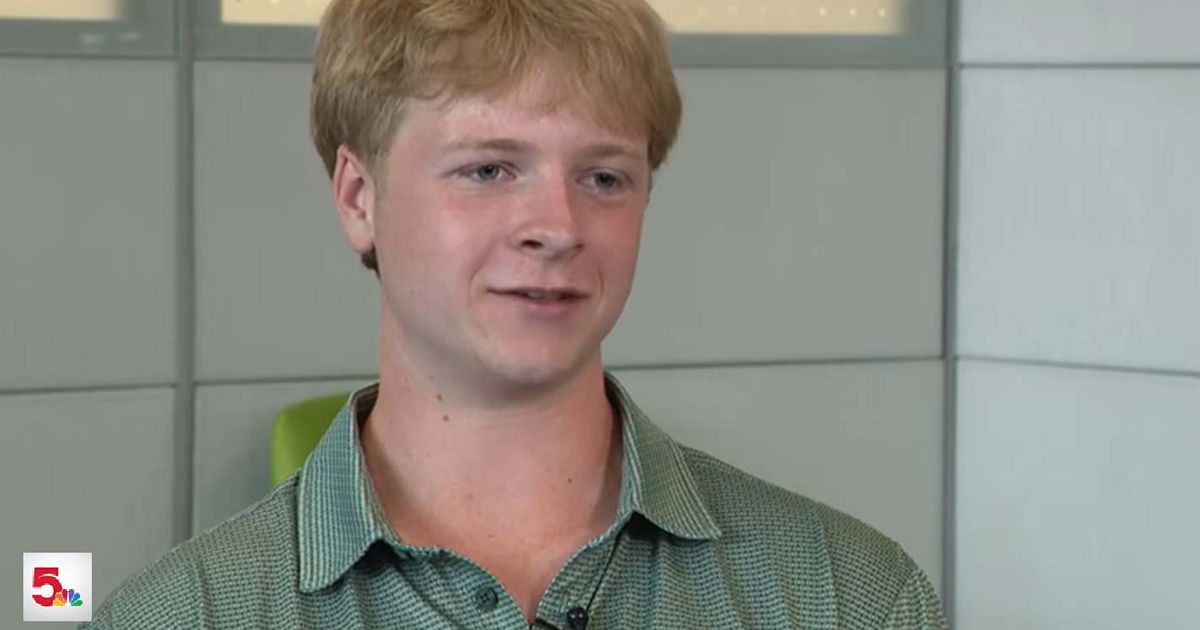
Living with epilepsy means the brain can suddenly experience abnormal electrical activity. These episodes can overwhelm the brain and leave a person feeling tired and drained. High-school boy Gray Douglass had been living with this state even before he learned to tie his shoelaces. At one point in time, his reality started to feel like a dream as he lost his ability to dream altogether. However, thanks to the doctors at St. Louis Children’s Hospital who clipped a tiny sliver of his hyperactive brain, he can now dream again, according to a July 26, 2026 report by KSDK.
Unusual forgetfulness
Louisa, Douglass' mother, shared that the problem came to attention when he was just nine weeks old. He was experiencing “focal motor seizures.” His left arm would bend at the elbow, he would zone out and shake for a few seconds, and then return to normal. Life turned out to be ordinary, and nothing bothered him. But as he grew up, he started to feel that something was very wrong with him. By the time he entered high school, he realized that he was beginning to forget things that he ought to have remembered. "I mean, I was just confused. I just wasn't performing as I should have. I could definitely tell that there was a change," Douglass recalled.

Medical mystery solved
Doctors later diagnosed him with epilepsy, but the diagnosis itself wasn’t enough information to perform a surgery. They needed a detailed map of his brain to understand what was going on. Finally, the doctors at Washington University performed a procedure called stereoelectroencephalography, or SEEG. Dr. Rejean Guerriero, the director of the WashU Medicine Pediatric Epilepsy Center at St. Louis Children's Hospital, explained that they planted electrodes in his brain to extract the information. The map gave a green light to perform the surgery.

"There really wasn't a chance to be scared or a chance to be worried or have the conversation of the 'what-ifs' because he couldn't go on living the way he was," Louisa said. Two nights after the surgery, Douglass experienced something he hadn’t since elementary school: dreams. "That night I had a dream that just felt really vivid. More like almost real life," he described. His brain had finally settled into quiet and rest. "He's like a new yet old kid again," Louisa admitted, laughingly.
When life feels like a distant movie
In January 2025, researchers published a study of 300 epilepsy patients in the Journal of Sleep Research. 43.7% aged over 17 reported that they were diagnosed with epilepsy in adulthood, and 28.6% said they had been experiencing seizures more than once a month. 8.7% reported experiencing symptoms of seizures during dreams. In another study published in Frontiers in Neuroscience, researchers revealed that epilepsy reduces a patient’s ability to recall dreams. These patients usually have darker, more negative dreams, and most of these dreams feature recurring settings. Clinical research found that epilepsy patients recall dreams on an average of 1.6 days per week.
Dreams come true
As a case in point, Douglass hasn’t had a single seizure since the surgery. And as he has recovered his ability to dream, he is dreaming again. A few weeks ago, he successfully graduated from high school and carved out a pathway for his career, a pathway he never thought he would follow. "I want to become like the doctors who help me," Douglass said. "I want to help other people (and) pass it on."
Meanwhile, Dr. Guerriero confirmed that the prognosis has turned out really good. While Douglass will remain on medication for some time, it won’t interfere with his day-to-day activities, and he will be able to lead a normal life.
More on Scoop Upworthy
Stranger's gut instinct saved boy suffering seizure after friends abandoned him for 'faking it'
Man who got surgery because he could never smell has the wildest reactions to everyday scents
 Share on Facebook


