Boss gave a fired employee 5 options for a 'reduced payout' after 20 years of work. One detail he forgot made him pay every penny — and 10% more
The employee cleverly took advantage of the 7-day delay in payment and ended up snagging 10% extra pay from their greedy boss.


Firing an employee backfired on a boss who was reluctant to pay their full salary. The employee (u/TrantorX) had worked at the company for nearly 20 years and had been waiting to get fired rather than quit, because dismissal would entitle them to severance and other payments they would otherwise lose. One day, they indeed got fired, but with strings attached. The boss then presented five options — ranging from receiving the full mandatory payment over six months to accepting just 20% immediately in exchange for a recommendation letter and saying they had quit voluntarily. The employee was left hot under the collar, so they used a cool strategy to extract the payment with an additional 10% sum. Their September 9, 2026 post has snagged over 7,700 upvotes.
Waiting to get fired
The incident happened a long time ago in a South America-based big textile company where the employee worked under a money-minded "sociopathic" boss. The boss was a penny-pincher and mostly reluctant to pay his employees. According to the employee, workers in their country could receive significant financial protections when dismissed, while voluntarily quitting would mean giving up some of those benefits. So although the employees were sick of working under their boss, they were waiting to get fired so the payment wouldn’t be missed. Then one day it happened. Their boss finally gave them a notice that they were “too expensive and not needed.” Good for them, but there was more to the situation.

Quietly discarded
Their boss wasn’t firing them yet. Instead, he put them on a special government status that would grant them 2 months of paid leave. According to him, this period would allow the company to decide whether they actually needed the employee and, if not, then whether they were prepared to pay off their salaries. The employee nonchalantly enjoyed the two months on the government’s pay while doing no work for the company. Meanwhile, the boss was playing his own set of cards. The boss repeatedly sought extensions to the government-funded leave, with the employee signing the requests as well. The employee believed the boss hoped they would eventually find another job and leave voluntarily, allowing the company to avoid the dismissal payout.

The strategy eventually backfired when the boss submitted an extension request too late. It was rejected, meaning the company had to cover the employee’s pay for the previous two months even though they had not worked during that period. He finally decided to fire them. Not without conditions, though. He laid out five options for the employee to choose from. The employee could either choose to receive reduced payment in less time or less payment immediately with a recommendation letter. This wasn’t fair on the part of the employee. So they made an equally shrewd strategy to draw out the money from the avaricious boss.
Why the payout mattered
At first, the employee obtained written evidence from the boss saying that they were fired. After getting the dismissal confirmed in writing, the employee waited. Their boss failed to follow up before the legal payment deadline passed. When they finally reached out to the boss, he had crossed an extra 7-day limit of the payment window. Once the deadline had passed, the employee rejected all five options and demanded the full mandatory payment along with the additional 10% late-payment penalty they said was required under local law. The employee tried to send him a “thank you” note, but by that time he had blocked them.

The employee did not reveal which South American country the story took place in, so the exact labor rules in their case cannot be independently confirmed. But severance protections can be substantial across parts of the region. For example, a 2025 OECD report notes that in Argentina, employees dismissed without cause are generally entitled to one month of salary for every year of service, while newer unemployment-insurance-style systems are also being introduced as alternatives in some sectors. That helps explain why an employee with nearly 20 years at the same company might be determined to wait for a formal dismissal rather than quit voluntarily and risk losing benefits.
Well played!

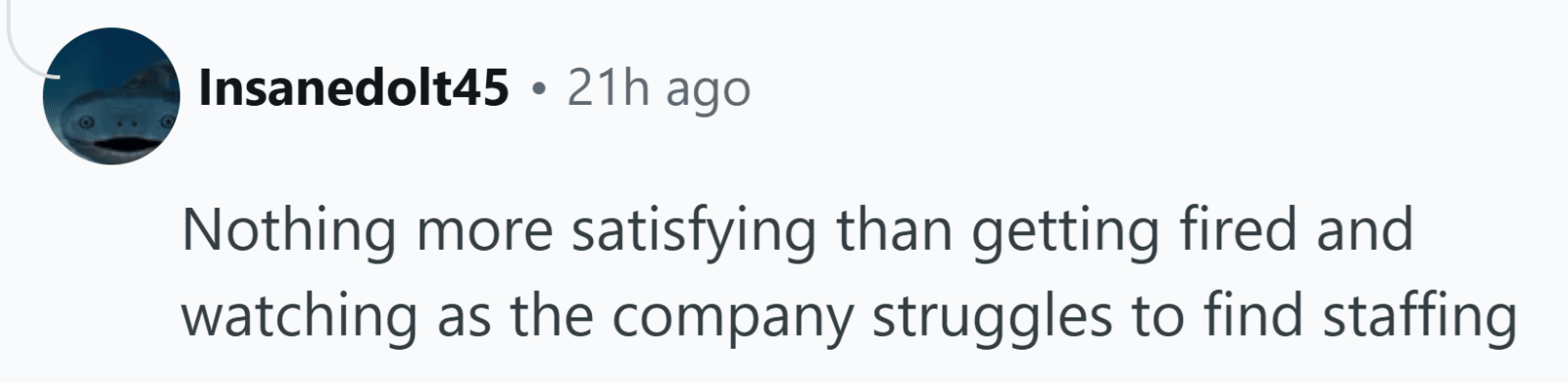
u/RailHawk commented, “I can't believe how underhanded he was. You were really smart to play along and not fall for it.” u/Untestedmethod said, “What a sleazy greaseball trying to trick you with those ‘options’.” u/JC3DS shared a similar episode: “Man, I wish. I quit my job, and they never paid me anything for my last 2 months. I already looked at all legal recourse, but there's nothing I can do.”
More on Scoop Upworthy
Micromanaging boss punishes employee for following work process, ends up regretting it immediately
 Share on Facebook