In a 1986 experiment, a body language expert found 4 subtle signs that reveal upper-class people
Pease mentioned how going up and down on your heel can signal the desire to stand 'taller' than the lower class

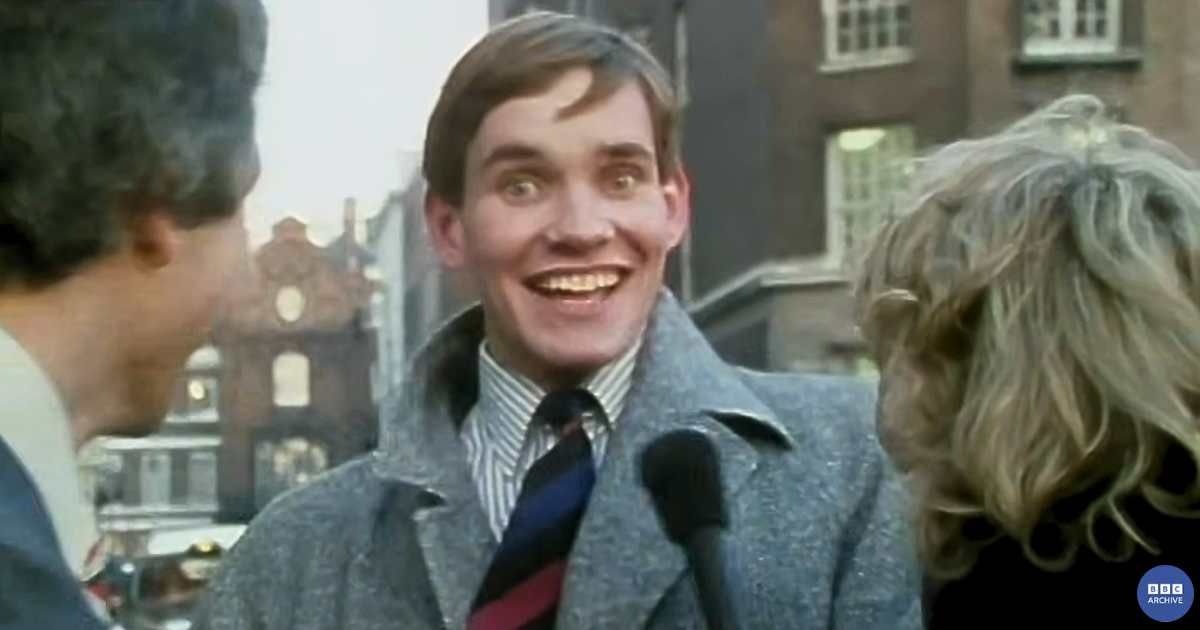
BBC Archive (@BBCArchive) shared a video of former BBC presenter Esther Rantzen, who said during one of her segments in 1986 that the British upper classes are getting harder to spot because of how well people can imitate them. With this in mind, they invited Australian body language expert Allan Pease to help identify the elites. Pease believed that you can tell if someone is upper class simply by observing their body language. According to him, there are four ways you can identify an upper-class person.
Pease shared with Rantzen the four different tells since body language is usually one of the biggest giveaways of one's social standing. These include going up and down on the soles of the feet, to try and gain a little height over the other person, usually someone from a lower class. The second tell is keeping one's hands behind their back, one palm inside the other. Pease compared it to the way the Royals fold their hands. The third tell is a quick blink of the eyes to "eliminate people out of your sight," Pease explained. And lastly, tightening the top lip and speaking with a plum, the British idiom for speaking with an upper-class accent.

They decided to test the four hints on random people walking on Park Lane. Rantzen asked a woman who was walking down the block if she was upper class, to which the stranger replied, "Oh, frightfully." However, judging by the way she spoke, Pease said that she did not sound upper-class to him, and he was correct. They even asked an American woman, but concluded that she could not be upper class, since the class system does not exist in America.
They also spoke to a man who thought that someone was upper class by their drawl when they said the word 'okay.' He even demonstrated the way the word is stretched. The fourth woman was asked to stop moving her upper lip to resemble the elite accent, which she agreed made her sound posh. Rantzen walked next to a man to compliment his superior walk, which could be an indicator that he was upper class, but he humorously denied it, saying it was just his Scottish upbringing.
Accents play a huge role, especially in the UK. A study revealed that accents can help determine a person's region, culture, age, and social class. In some cases, it can even determine a person's socio-economic status. In the UK, accents have the ability to impact "social mobility." The study revealed that 35% of students have accent anxiety because of the bias that exists about certain accents. 41% of the population from the northern part of England expressed their concerns and worries that their accent might limit their career growth. Surprisingly, 76% of employers admitted that they are guilty of discriminating based on accents.
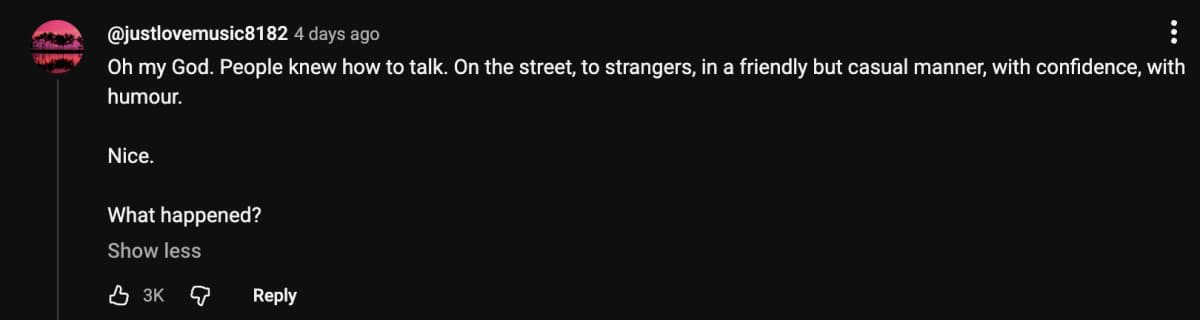

The BBC Archive interview was conducted four decades ago, and so much has changed. People in the comments praised the passersby for their wit and humor, and in some cases, their sense of style. @fonmunoz commented, "London'86 and London'26 are two worlds apart." @swordandlionpictureclassics noted, "Prior to the internet and social media, people had such a great sense of humor and that intangible 'spark' of life. Look at people today, the lights are off, and no one is home. Eyes glazed over and fixated on the tiny screen in their hand."
You can follow BBC Archive (@BBCArchive) on YouTube for more videos from the past.
More on Scoop Upworthy
Behavior expert shares a simple trick to tell if she's attracted to you — watch her eyes
Different shape of our faces determines if we are 'rich' or 'poor,' new study suggests
 Share on Facebook